

In a significant ruling on maintenance proceedings under criminal law, the Supreme Court has clarified that a husband's objection under Section 125(4) of the Code of Criminal Procedure (CrPC), alleging that his wife is living in adultery, cannot automatically be postponed until the final hearing of the maintenance case. Instead, the court hearing the matter must examine such an application on its own merits while allowing interim maintenance to continue unless there is clear and convincing evidence establishing the allegation at the outset.
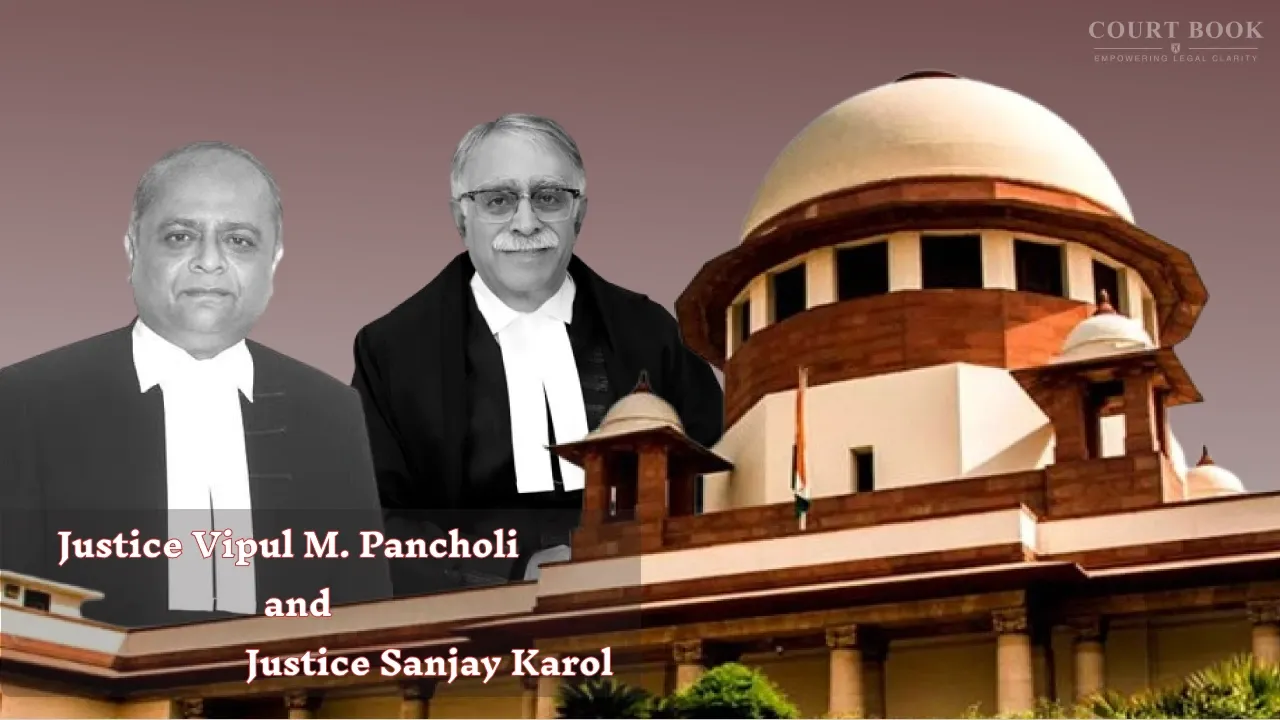
A Bench of Justice Sanjay Karol and Justice Vipul M. Pancholi delivered the judgment while allowing an appeal filed by Himanshu Chordia against a Rajasthan High Court order.
Background of the Case
The dispute arose after matrimonial differences led the parties to live separately. The wife filed an application seeking maintenance under Section 125 CrPC before the Special Additional Chief Judicial Magistrate, Udaipur. The husband opposed the claim by filing an application under Section 125(4) CrPC, alleging that the wife was living in an adulterous relationship and was therefore not entitled to either interim or final maintenance under the statutory bar contained in the provision.
The trial court declined to decide the adultery plea at that stage, observing that the authenticity of the material relied upon by the husband could only be examined after evidence was formally led during the main proceedings. It proceeded with the maintenance matter, and the High Court also refused to interfere, holding that the issue of adultery was a disputed question of fact to be decided only during final adjudication.
The husband challenged that approach before the Supreme Court.
Court's Observations
The Supreme Court explained that Section 125 CrPC is a welfare-oriented provision intended to prevent destitution and provide financial support to dependants who are unable to maintain themselves. Because of this objective, maintenance proceedings are summary in nature and meant to be decided expeditiously.
At the same time, the Bench noted that Section 125(4) expressly bars maintenance if a wife is proved to be living in adultery. Therefore, the provision cannot be rendered ineffective by postponing its consideration until the very end of the proceedings.
As the Bench observed,
"If adultery is established, the wife claiming maintenance would not be entitled to the same as an interim measure and therefore, obviously, not even as a final measure."
However, the Court clarified that merely filing an application alleging adultery does not suspend interim maintenance.
It explained that
"The pendency of a 125(4) application would not per se bar the applicant from receiving interim maintenance."
Interim maintenance would continue unless the husband produces clear and cogent evidence that, on the face of it, establishes adultery.
The Bench further held that where allegations depend upon disputed electronic evidence or other material requiring detailed proof, the trial court must evaluate that evidence before deciding whether interim maintenance should continue or be vacated.
Concern Over Private Detectives and Electronic Evidence
While dealing with the record, the Supreme Court noticed that the husband had relied on numerous photographs and videos allegedly showing the wife's relationship outside marriage. This prompted the Court to express concern over the increasing use of private investigators in matrimonial disputes.
The judges observed that there is presently no statutory framework regulating private detective agencies, despite growing reliance on them for collecting evidence. The Court raised questions about the legality of surveillance, privacy rights, storage of personal data, authenticity of electronic material and safeguards against misuse.
Recognising the larger public importance of the issue, the Bench directed that a copy of its judgment be forwarded to the Ministry of Law and Justice and the Law Commission of India for consideration of an appropriate regulatory framework governing private investigators.
Court's Decision
The Supreme Court held that both the trial court and the Rajasthan High Court had erred in concluding that the husband's application under Section 125(4) CrPC could be decided only at the stage of final disposal of the maintenance proceedings.
Setting aside the High Court's judgment dated February 4, 2025, the Court remanded the matter to the trial court for a fresh decision on the husband's application under Section 125(4) on its merits, in accordance with the principles laid down in the judgment.
The appeal was accordingly allowed.
Case Details
Case Title: Himanshu Chordia v. State of Rajasthan & Anr.
Case Number: Criminal Appeal of 2026 (Arising out of SLP (Crl.) No. 3171 of 2025)
Judge: Justice Sanjay Karol and Justice Vipul M. Pancholi
Decision Date: July 31, 2026


