The Gauhati High Court has acquitted four men who had been convicted in a decades-old murder case from Karbi Anglong, holding that the trial court relied mainly on confessional statements that were not recorded in accordance with legal safeguards.
The division bench observed that the confessions were recorded while a police officer remained present in the room, a circumstance that violated settled legal principles governing voluntary confessions under Section 164 of the Code of Criminal Procedure.
Background of the Case
The appeal challenged a 2018 judgment of the Sessions Judge, Karbi Anglong at Diphu, which had convicted the accused under Sections 302/34 of the Indian Penal Code for the alleged killing of a man in 1989.
During the appeal, one of the accused was declared a juvenile and his matter was transferred to the Juvenile Justice Board.
Counsel for the appellants argued before the High Court that the conviction rested entirely on confessional statements recorded under Section 164 CrPC and on alleged extra-judicial confessions. The defence claimed those statements were legally defective because police personnel were present when the confessions were recorded.
The prosecution, however, contended that all major procedural safeguards had been followed and maintained that the confessions, along with alleged admissions made before witnesses, justified the conviction.
Court’s Observations
After examining the records, the High Court found that the magistrate who recorded the confessions had specifically noted the presence of a police officer in the courtroom during the proceedings.
The bench referred to the Supreme Court’s ruling in Rabindra Kumar Pal v. Republic of India, which clearly states that no police official should remain present when a confession is being recorded.
“The confessional statements cannot be said to have been properly recorded and as such, they are inadmissible as evidence,” the bench observed.
The court also noted that two of the accused had been kept in the custody of an armed police constable during the reflection period before recording their statements, which further weakened the prosecution’s case.
On the issue of extra-judicial confessions allegedly made before the sons of the deceased, the court found no independent corroboration from other witnesses.
The bench relied on several Supreme Court decisions to reiterate that extra-judicial confessions are considered weak evidence and ordinarily require strong corroboration.
Decision
Setting aside the conviction, the High Court held that there was no reliable evidence apart from the defective confessional statements linking the appellants to the crime.
The bench ultimately ruled that the conviction under Sections 302/34 IPC was unsustainable and directed that the appellants be released from custody immediately, provided they were not wanted in any other case.
Case Details
Case Title: Jiten Engti & Ors vs The State of Assam & Anr
Case Number: Crl.A./74/2018
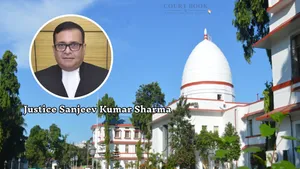
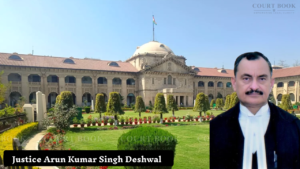
Judge: Justice Michael Zothankhuma and Justice Sanjeev Kumar Sharma
Decision Date: 25 May 2026