The Supreme Court has ruled that promotions in the Andaman & Nicobar Police Department must be governed by the recruitment rules in force at the time the promotion process is considered, and not by the rules that existed when vacancies first arose.
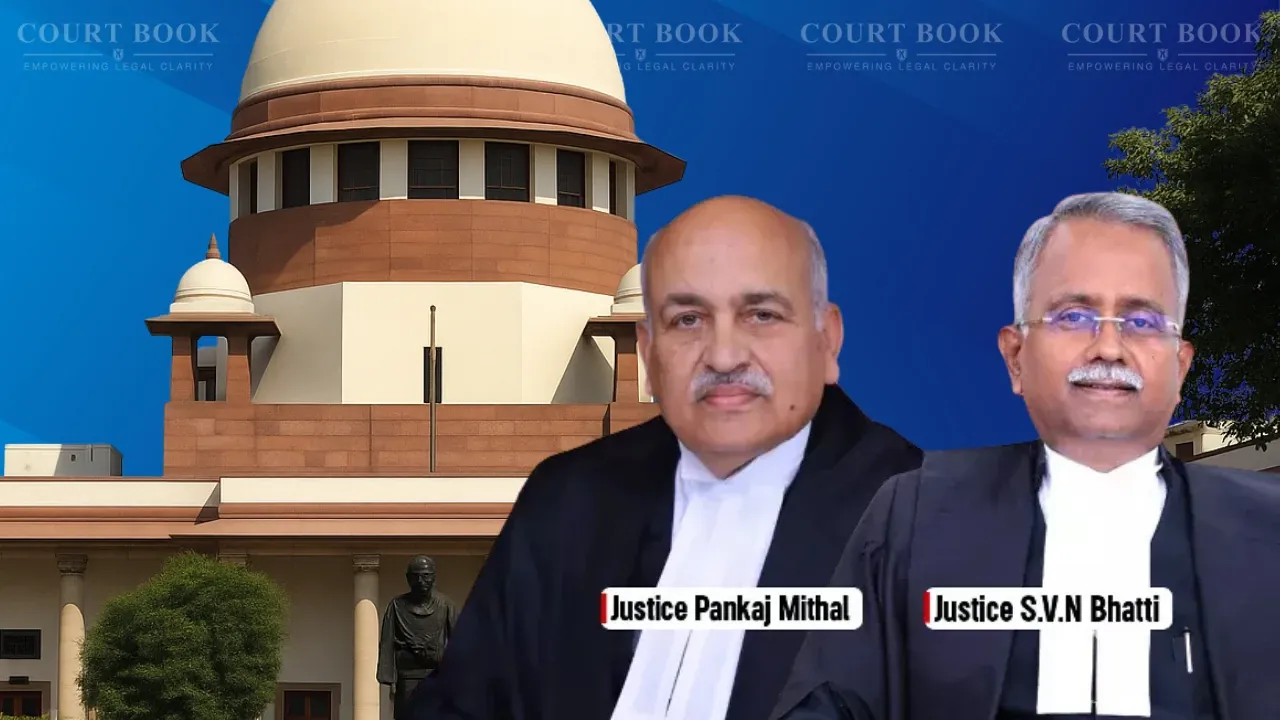
A Bench of Justices Pankaj Mithal and S.V.N. Bhatti delivered the judgment while allowing an appeal filed by a group of Head Constables challenging an earlier Calcutta High Court order.
Background of the Case
The dispute arose from promotions to the post of Assistant Sub-Inspector (Executive) in the Andaman & Nicobar Police Department.
Under the 2008 and 2010 recruitment rules, 66-2/3% of promotional posts were to be filled through a selection process requiring matriculation qualification and tests, while 33-1/3% posts were to be filled on the basis of seniority-cum-fitness.
Several Head Constables challenged these rules before the Central Administrative Tribunal in 2014, arguing that promotions earlier depended only on seniority and fitness, and that the new educational requirement unfairly blocked many officers from promotion.
During the pendency of the dispute, the Administration amended the rules in 2016 and restored the earlier system of 100% promotion through seniority-cum-fitness, removing the matriculation requirement and selection test.
High Court’s View
The Calcutta High Court had held that vacancies which arose before the 2016 amendment should still be filled under the old 2010 Rules. It relied on earlier Supreme Court precedent stating that vacancies must be filled according to the rules existing when those vacancies arose.
The High Court therefore directed the Administration to fill accumulated vacancies using the rules applicable at the time each vacancy occurred.
Supreme Court’s Observations
The Supreme Court disagreed with that approach and relied on later judgments which clarified that government employees do not have a vested right to be considered for promotion under repealed rules.
The Bench observed that the earlier principle laid down in Y.V. Rangaiah had already been overruled by a three-judge Bench in State of Himachal Pradesh v. Raj Kumar.
“The right to be considered for promotion is governed exclusively by the Rules in force at the time the promotion is considered,” the Court noted while discussing the precedent.
The Court also examined the ad-hoc promotions granted in 2014 and found that they were temporary in nature and expressly made subject to the outcome of the pending litigation.
Referring to the language of the promotion order, the Bench said the officers had no permanent or vested right flowing from those ad-hoc appointments.
The Court further held that the 2016 Rules, introduced by substitution, effectively replaced the earlier regime and therefore governed future consideration for promotion.
Court’s Decision
Allowing the appeal, the Supreme Court set aside the High Court judgment and held that the existing vacancies of ASI-Executive must be filled under the 2016 Rules.
The Court directed the Administration to complete the process of filling the vacancies within two months.
Case Details
Case Title: Jagdish Prasad and Others v. P.M. Manoj Kumar and Others
Case Number: Civil Appeal No. 9041 of 2019
Judges: Justice Pankaj Mithal and Justice S.V.N. Bhatti
Decision Date: May 27, 2026




-300x169.webp)
-300x169.webp)