

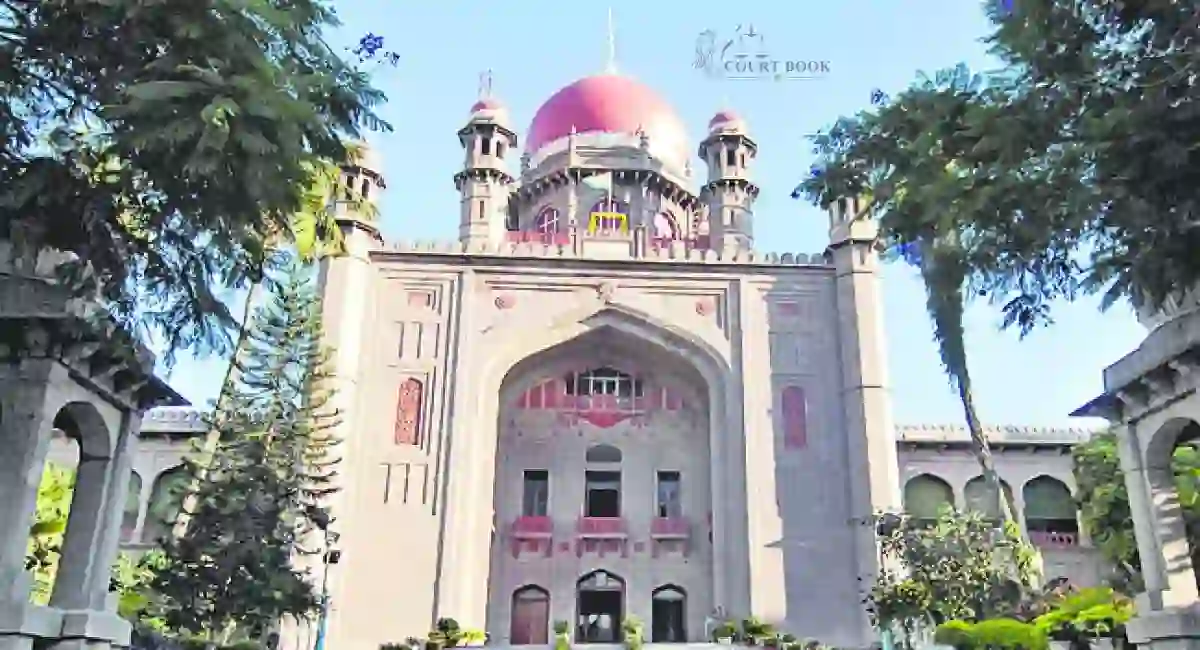
In a significant ruling concerning voluntary retirement benefits, the Telangana High Court has directed the State Bank of India (SBI) to pay VRS benefits to the legal heirs of an employee who died after his application for voluntary retirement had been accepted but before the scheme's effective retirement date.
Justice Namavarapu Rajeshwar Rao delivered the judgment on May 6, 2026, while deciding a writ petition filed by the family members of late K.S.R. Sastry.
Background of the Case
K.S.R. Sastry joined SBI in November 1971 and served the bank for nearly three decades. When SBI introduced its Voluntary Retirement Scheme (VRS) in December 2000, eligible employees were invited to apply.
Sastry submitted his application on January 15, 2001. According to the records placed before the court, the application was scrutinized and accepted by the competent authority. However, before the retirement scheme became effective on March 31, 2001, Sastry died of a heart attack on February 27, 2001.
After his death, his wife and children sought payment of VRS benefits. SBI declined the request, stating that the employee had not survived until the effective retirement date and that the acceptance of the VRS had not been formally communicated to him before his death.
The petitioners argued that all necessary formalities had been completed and the employee's application had already been approved. They contended that denying benefits merely because the employee passed away a month before the retirement date was unfair.
SBI, on the other hand, maintained that VRS operated on contractual principles and that retirement under the scheme could take effect only after formal communication of acceptance and upon the employee remaining in service until March 31, 2001.
The bank relied on Supreme Court decisions concerning the nature of voluntary retirement schemes and argued that no enforceable right had accrued to the deceased employee.
After examining the records, Justice Rajeshwar Rao noted that the employee's application had already been scrutinized and accepted and that the withdrawal period under the scheme had also expired.
The Court observed that the situation would have been different if the application had still been pending consideration. However, in the present case, the acceptance process had been completed before the employee's death.
Referring to a similar provision under the State Bank of Hyderabad Employees' Voluntary Retirement Scheme, the Court noted that legal heirs were entitled to receive benefits where an employee died after acceptance of the VRS request.
The bench further relied on the Supreme Court's decision in Assistant General Manager v. Radhey Shyam Pandey, emphasizing fairness in the implementation of retirement schemes by public sector banks.
"The denial of VRS benefits to the petitioners cannot be justified," the Court observed while discussing the circumstances of the case.
Allowing the writ petition, the Telangana High Court held that the petitioners, being the legal heirs of the deceased employee, were entitled to receive benefits under the SBI Voluntary Retirement Scheme.
The Court directed SBI to calculate and release the payable VRS amount after adjusting any sums already paid to the family.
The exercise must be completed within four months from the date of receipt of the order.
Case Details:
Case Title: Smt. K. Kalyani & Others v. The Managing Director & CDO, HRD Department & Others
Case Number: W.P. No. 13509 of 2002
Judge: Justice Namavarapu Rajeshwar Rao
Decision Date: 06 May 2026


