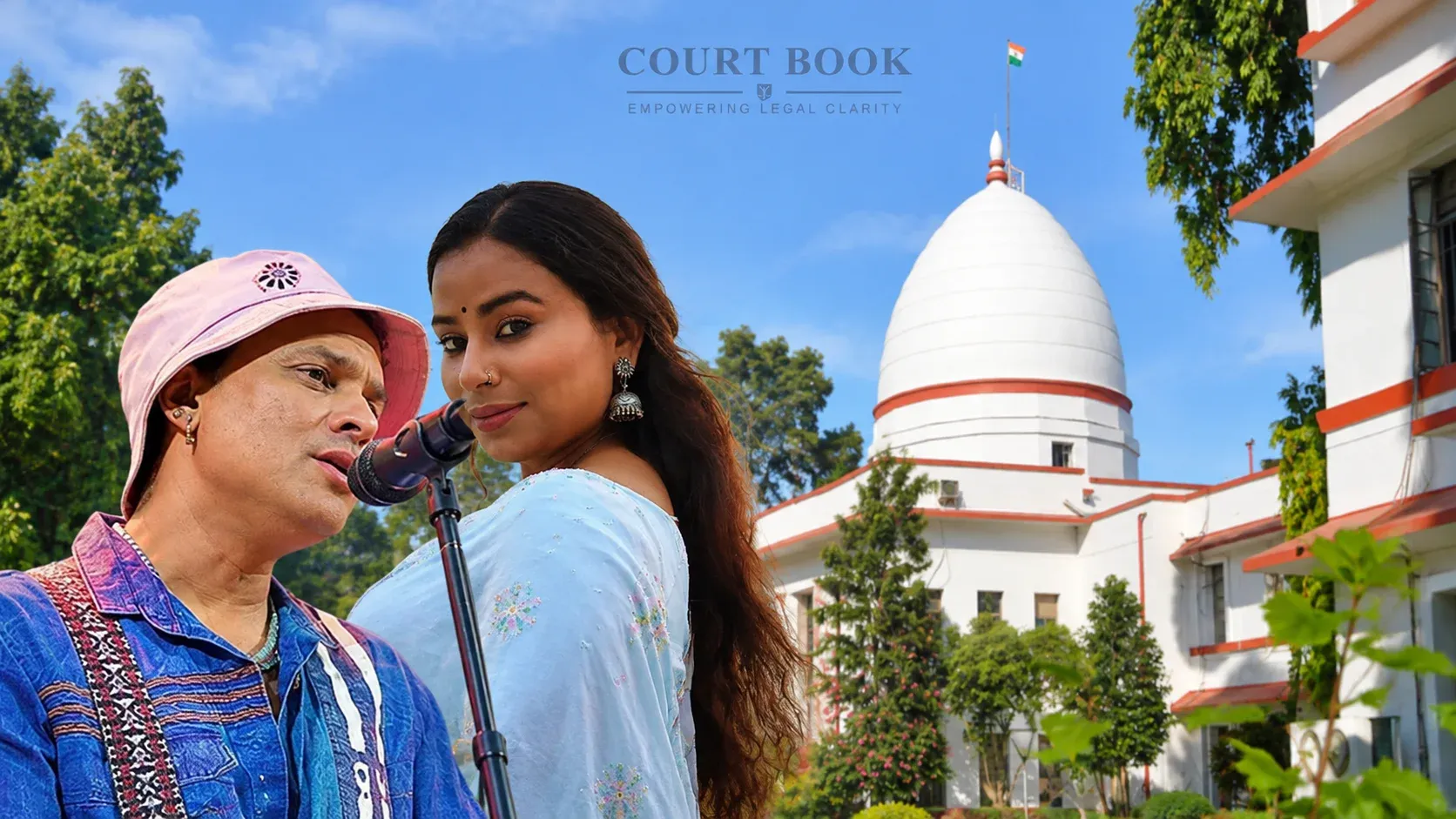
The Gauhati High Court has granted bail to, accused number four in the case concerning the death of Assamese singer Zubeen Garg in Singapore, observing that the investigation materials and trial testimony examined so far did not disclose a prima facie case against her. Justice Pranjal Das passed the order on October 9, 2026, taking into account the evidence available at this stage, the progress of the trial and Mahanta’s prolonged undertrial detention.
Background
Zubeen Garg died on September 19, 2025, after a swimming incident in Singapore. Following complaints alleging a conspiracy behind his death, the Assam Police’s Criminal Investigation Department registered a case and constituted a Special Investigation Team. A chargesheet named seven accused, including Mahanta, against whom charges were framed under provisions of the Bharatiya Nyaya Sanhita (BNS).
The prosecution alleged that the accused conspired to murder Garg and attributed a role to Mahanta in providing him alcohol before the yacht trip. She denied the allegations. By the time the High Court considered her bail application, 124 prosecution witnesses had been examined. Mahanta had remained in custody since October 3, 2025.
Justice Das examined witness statements recorded during the investigation, documents accompanying the chargesheet and testimony presented during the trial. The Court noted that the material reviewed did not establish that Mahanta had supplied alcohol to Garg or played a role in arranging his Singapore trip, changing accommodation, organising the yacht outing or encouraging him to swim without a life jacket.
The Court also considered the prosecution’s reliance on witness accounts and other materials concerning the alleged conspiracy. It found no material, at the stage of bail adjudication, attributing an overt or covert act to Mahanta in furtherance of the alleged conspiracy.
The judgment emphasised the evidentiary basis required to establish a conspiracy. Referring to the Supreme Court’s decision in CBI v. K. Narayana Rao, the Court reproduced the principle:
“An offence of conspiracy cannot be deemed to have been established on mere suspicion and surmises or inference which are not supported by cogent and acceptable evidence.”
The Court clarified that its assessment was limited to the bail application and would not determine the ultimate question of guilt, which remains for the trial court.
The High Court also considered that Mahanta had no previous criminal antecedents, was a woman and had spent almost a year in undertrial detention. It referred to the special provision for granting bail to women under Section 480(1) of the Bharatiya Nagarik Suraksha Sanhita (BNSS), alongside the principles governing bail in serious criminal cases.
Highlighting the distinction between detention and punishment, the Court observed:
“Any temptation to use pre-trial or under-trial detention as a punishment should be resisted. Using under-trial detention or pre-trial detention as a punishment, in the long run, invariably damages the credibility of the criminal justice system.”
Allowing the bail application, the Gauhati High Court directed that Amritprava Mahanta be released on a bail bond of ₹50,000 with two sureties of the same amount each, subject to the satisfaction of the trial court.
The Court directed her to cooperate with the remaining trial, refrain from tampering with evidence or influencing witnesses, take precautions for her safety and not travel abroad without the trial court’s permission.
It further clarified that violation of the conditions could lead to cancellation of bail. The order does not decide the merits of the ongoing trial.