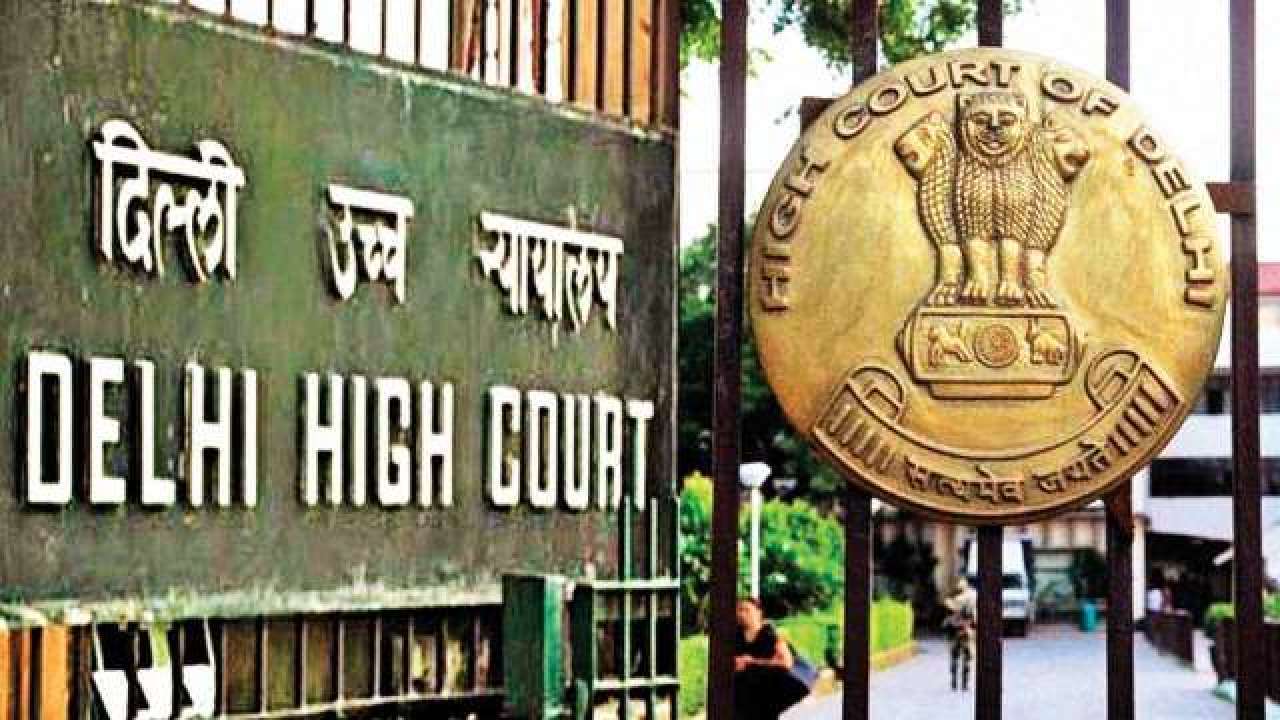
The Delhi High Court has set aside the conviction and life sentence of Mukesh Kumar in a decades-old murder case arising out of a stabbing incident inside a Delhi Transport Corporation (DTC) bus in 1983. The Court held that the prosecution failed to establish his involvement beyond reasonable doubt and found serious weaknesses in the evidence relied upon by the trial court.
The judgment was delivered by a Division Bench of Justice Navin Chawla and Justice Ravinder Dudeja on June 18, 2026, in Mukesh Kumar v. State (NCT of Delhi).
Background of the Case
The case stemmed from an incident that occurred on December 1, 1983, in a DTC bus on Route No. 431 near Gupta Market, Lajpat Nagar. According to the prosecution, a group of young men allegedly misbehaved with two women passengers. When Vinod Kumar and his friends objected, a violent altercation followed.
Vinod Kumar suffered knife injuries and was taken to AIIMS. He later died from those injuries. An FIR was registered, and several persons, including Mukesh Kumar, were arrested later that month. The trial court eventually convicted Mukesh Kumar under Section 302 read with Section 34 of the Indian Penal Code and sentenced him to life imprisonment in August 2004.
Challenge to Identification Evidence
A major issue before the High Court concerned the identification of the appellant.
The prosecution relied on witness identification and the appellant's refusal to participate in a Test Identification Parade (TIP). However, the High Court found that there were serious doubts about whether the accused had been seen by witnesses before the TIP process.
The Bench noted that several witnesses admitted seeing the accused in court premises before the identification proceedings. It also observed that records indicated the accused were present in "open face" during relevant proceedings.
Referring to Supreme Court precedents, the Court held that when the fairness of a TIP is doubtful, refusal to participate cannot automatically lead to an adverse inference against the accused.
The Bench observed that the authenticity of the identification process was “under a serious cloud of doubt,” making it unsafe to rely on subsequent courtroom identification.
Court Finds Contradictions in Witness Testimony
The High Court also examined the statements of the alleged eyewitnesses and found several inconsistencies.
It noted variations regarding the seating positions of passengers, the sequence of events inside the bus, the role of individual accused persons, and the timing of the alleged exhortation attributed to Mukesh Kumar.
The Court further questioned the conduct of some witnesses after the incident. Certain witnesses claimed to be close friends of the deceased but did not immediately provide statements to police despite visiting the hospital.
According to the Bench, the testimony of the eyewitnesses could not be described as wholly reliable or of “stellar quality.”
Common Intention Not Established
The prosecution case against Mukesh Kumar was not that he stabbed the deceased. Instead, it alleged that he stood at the rear of the bus and shouted the words “Maro Sale Ko,” which was treated as evidence of a shared intention with the principal assailant.
The High Court carefully examined whether this allegation was sufficient to attract liability under Section 34 IPC, which deals with acts done in furtherance of a common intention.
The Bench observed that no weapon was attributed to the appellant and no direct assault by him had been proved. It also noted that there was no evidence showing that he knew other accused persons were carrying knives.
Quoting settled legal principles, the Court said that exhortation alone is generally a weak form of evidence unless supported by clear and reliable proof.
“The prosecution has not been able to show that the appellant was sharing a common intention with accused Balvinder,” the Bench held.
Decision
After reviewing the evidence, the High Court concluded that the prosecution had failed to prove its case against Mukesh Kumar beyond reasonable doubt.
The Bench held that the appellant was entitled to the benefit of doubt and that the trial court had erred in recording his conviction.
Setting aside the judgment of conviction dated August 10, 2004, and the order on sentence dated August 19, 2004, the Court acquitted Mukesh Kumar of all charges and discharged his personal bonds and sureties.
“The appellant is entitled to be accorded the benefit of doubt,” the Court stated while allowing the appeal.
Case Details:
Case Title: Mukesh Kumar v. State (NCT of Delhi)
Case Number: CRL.A. 602/2004
Bench: Justice Navin Chawla and Justice Ravinder Dudeja
Decision Date: June 18, 2026





 Act (UAPA)-300x169.webp)