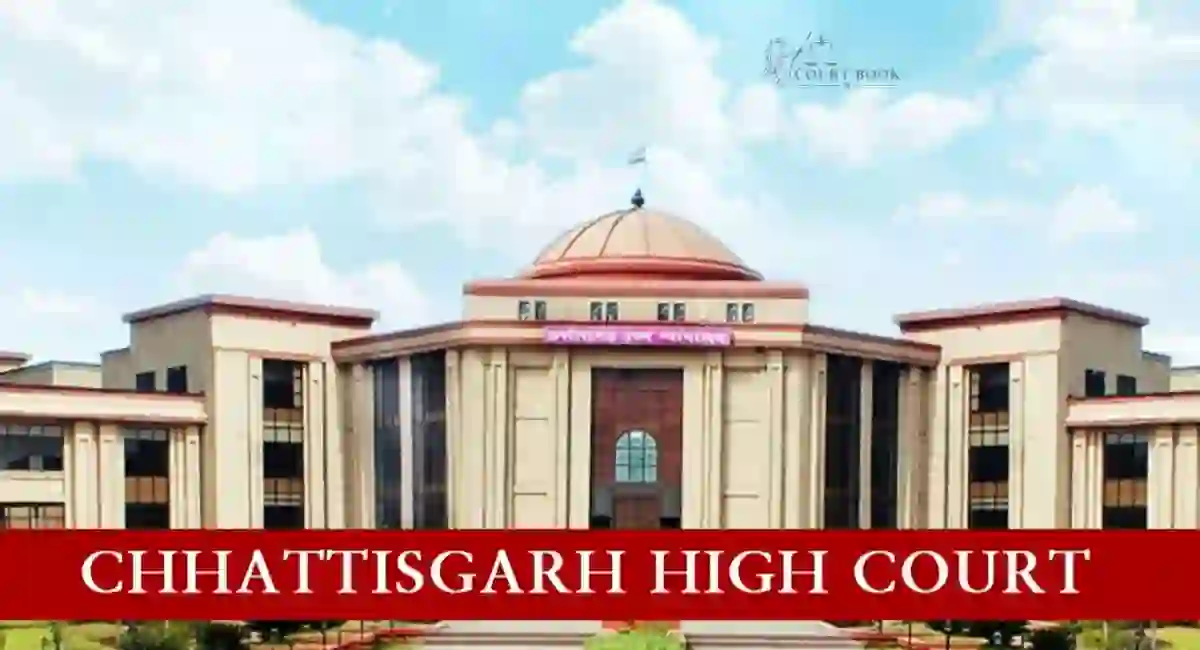
The Chhattisgarh High Court has upheld the conviction and sentence awarded to a man found guilty of rape, house trespass and abetment of suicide in a case dating back to 2004. Dismissing the appeal filed by Vijay Kumar, the Court held that the prosecution had successfully established the charges beyond reasonable doubt and found no reason to interfere with the trial court’s findings.
Justice Narendra Kumar Vyas delivered the judgment on June 15, 2026, in Criminal Appeal No. 305 of 2005.
Background of the Case
According to the prosecution, the incident took place on August 22, 2004, in village Koliha. It was alleged that the deceased was alone at home when the accused entered the house after her family members had gone to the fields.
The prosecution claimed that the accused committed forcible sexual intercourse with the woman. Soon afterwards, her brother allegedly returned home and found the accused inside the premises. The woman later suffered severe burn injuries after setting herself on fire and died while being taken for medical treatment.
Following an investigation, police registered offences under Sections 376(1), 450 and 306 of the Indian Penal Code. The trial court convicted the accused in March 2005 and sentenced him to ten years' rigorous imprisonment for rape, along with separate sentences for house trespass and abetment of suicide.
Appeal Before the High Court
The appellant argued that he had been falsely implicated and that the prosecution relied mainly on testimony from the deceased's relatives. It was also contended that an important witness had not been examined and that there was insufficient evidence to establish either rape or abetment of suicide.
The defence further claimed that the deceased and the accused were involved in a consensual relationship and referred to letters allegedly written by the deceased. It was argued that the woman took the extreme step after being seen in a compromising situation and that the essential ingredients of abetment were absent.
Court's Observations
After re-examining the evidence, the High Court found that the testimonies of the deceased's brother and sister-in-law remained consistent and reliable. The Court noted that the deceased had immediately disclosed the incident to her family members and that their evidence was supported by forensic material collected during the investigation.
Rejecting the argument that the witnesses should be disbelieved merely because they were relatives, the Court observed that relationship alone does not make a witness "interested" in the legal sense.
The Court also rejected the defence theory of a consensual relationship. It noted that the material collected during investigation, including the condition of the victim's clothing and forensic findings, did not support that claim.
Referring to the evidence on record, the Court concluded that the prosecution had proved the offence of rape beyond reasonable doubt.
Findings on Abetment of Suicide
While examining the conviction under Section 306 IPC, the Court considered whether there was a direct connection between the accused's conduct and the woman's decision to take her own life.
Justice Vyas observed:
“The deceased might have been left with extreme mental trauma and humiliation on account of the forcible act committed by the appellant.”
The Court further held that the suicide occurred on the very day of the incident and that the circumstances established a direct nexus between the accused's actions and the deceased's decision to end her life.
Accordingly, the Court found that the requirements for abetment of suicide were satisfied in the facts of the case.
Decision
Dismissing the appeal, the High Court affirmed the conviction and sentence imposed by the trial court under Sections 376(1), 450 and 306 IPC.
“The prosecution has been able to prove the charges against the appellant beyond reasonable doubt,” the Court held while rejecting the challenge to the conviction.
Since the appellant was on bail during the pendency of the appeal, the Court cancelled his bail bonds and directed him to surrender before the trial court within two months to serve the remaining sentence.
It also directed the trial court to take necessary steps to secure his custody if he failed to surrender within the stipulated period.
Case Details:
Case Title: Vijay Kumar v. State of Chhattisgarh
Case Number: CRA No. 305 of 2005
Judge: Justice Narendra Kumar Vyas
Decision Date: 15 June 2026









 Act (UAPA)-300x169.webp)