

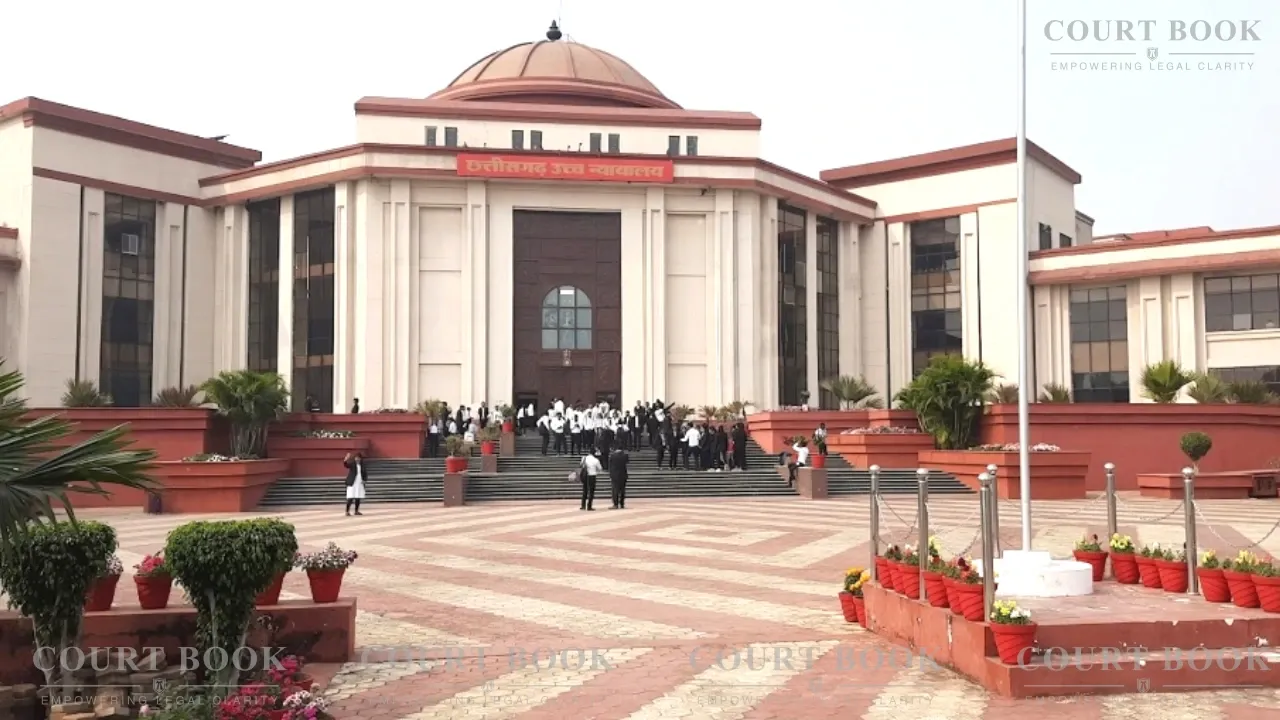
The Chhattisgarh High Court has dismissed a writ petition challenging the State Government's decision to introduce the recitation of Sanskrit prayers and moral verses in government schools from the 2026–27 academic session. The Court held that the petition was based only on apprehensions and that the petitioners had failed to demonstrate any actual violation of constitutional rights.
Justice Amitendra Kishore Prasad observed that the government order did not compel students to act against their religious beliefs or conscience and therefore did not justify judicial interference at this stage.
Background of the Case
The petition was filed by Abdul Salam Rizvi, former Chairman of the Chhattisgarh Waqf Board, Mahendra Chhabda, former Chairman of the Minority Department, and Shafique Ahmed.
They challenged the School Education Department's circular dated June 12, 2026, which directed government schools to include the National Anthem, National Song, Deep Mantra, Saraswati Vandana, Guru Mantra, Shanti Mantra, Rajya Geet and Gayatri Mantra during daily school assemblies.
The petitioners argued that the circular violated Articles 14, 21, 25, 28(1), 29 and 30 of the Constitution. According to them, requiring students to recite prayers associated with one faith could infringe the rights of students belonging to minority communities and was inconsistent with India's secular constitutional framework.
The State Government opposed the petition, contending that the challenge was speculative and politically motivated. It argued that the prescribed verses reflected India's cultural heritage and universal moral values rather than religious instruction. The State also informed the Court that the circular had already been implemented in government schools and no complaints had been received from students, parents or teachers.
Court's Observation
After examining the government order, the Court concluded that it did not contain any mandatory or coercive direction compelling students to participate in activities against their faith.
The bench observed,
"The contents of the impugned order, read as a whole, do not disclose any express requirement obligating students to participate in any activity that would interfere with their constitutionally protected freedom of religion or freedom of conscience."
The Court further noted that the petitioners had not placed any material before it showing that any individual student had suffered an actual injury or that any fundamental right had been violated.
On the argument based on Article 28(1) of the Constitution, the Court clarified that the constitutional prohibition applies to religious instruction in educational institutions wholly maintained by State funds. However, it explained that the provision does not prohibit moral instruction that is detached from denominational religious teachings.
The bench observed,
"Article 28(1) does not ban moral instruction, disassociated from any denominational doctrines, which remains an essential part of training in citizenship, maintenance of law and order in the State and growth of social cohesion."
Court's Decision
Holding that the challenge rested only on anticipated harm rather than any established infringement of rights, the High Court dismissed the writ petition as premature.
At the same time, the Court granted liberty to the petitioners to file a fresh petition in the future if any actual grievance arises, provided it is supported by cogent and relevant material.
Case Details:
Case Title: Abdul Salam Rizvi & Ors. v. State of Chhattisgarh & Ors.
Case Number: WPC No. 3372 of 2026
Judge: Justice Amitendra Kishore Prasad
Decision Date: July 2, 2026


