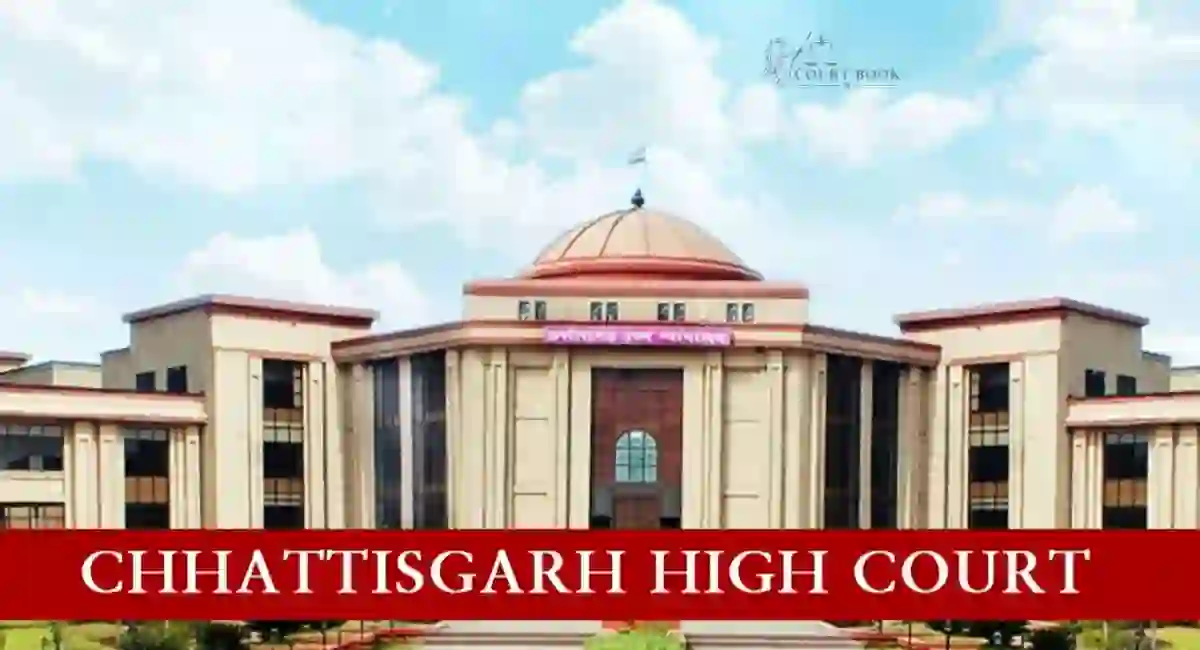
The Chhattisgarh High Court has dismissed an appeal filed by a government employee whose appointment was cancelled after authorities found that she had been appointed against a post that was not part of the vacancies originally advertised. The Division Bench of Chief Justice Ramesh Sinha and Justice Ravindra Kumar Agrawal held that public appointments must remain confined to the vacancies notified in the recruitment advertisement and cannot be extended to subsequently sanctioned posts without a fresh selection process.
Background of the Case
The case was filed by Prasanti, an Assistant Grade-III employee, challenging the dismissal of her writ petition by a Single Judge in March 2026. She had questioned the cancellation of her appointment by the authorities.
During the hearing, both sides informed the court that a similar issue had already been decided by the same Bench in another case, where the court had upheld the cancellation of appointments made against additional posts sanctioned after the recruitment process had concluded.
The original recruitment advertisement, issued in 2012, notified a fixed number of vacancies. After those vacancies were filled, certain additional posts were sanctioned. Instead of conducting a fresh recruitment exercise, authorities made appointments from the existing select list prepared for the earlier advertisement. Prasanti was among those appointed against such subsequently sanctioned posts.
Court’s Observations
The Division Bench, headed by Chief Justice Ramesh Sinha, reiterated that recruitment to public posts must be restricted to the vacancies advertised.
Referring to the earlier judgment, the court observed,
“The issue is not whether the posts were sanctioned, but whether those posts could legally be filled without issuing a fresh advertisement and without affording an opportunity to all eligible candidates.”
The Bench noted that once the advertised vacancies are filled, the recruitment process stands exhausted. Any appointment made thereafter against newly created or subsequently sanctioned posts without a fresh advertisement would deny other eligible candidates their opportunity to compete for public employment.
The court also relied on Supreme Court precedents which have consistently held that appointments cannot be made beyond the number of vacancies notified in an advertisement and that inclusion in a select list does not create an automatic right to appointment.
Addressing the argument that the employee had served for several years, the court stated that the length of service alone could not validate an appointment found to be contrary to established recruitment norms.
“The constitutional requirements governing public employment cannot be overridden by sympathetic considerations,” the Bench noted while referring to the earlier ruling.
Decision
After examining the record, the court found that the facts and legal issues involved in Prasanti’s case were identical to those considered in the earlier appeal decided on June 16, 2026.
The Bench said it saw no reason to take a different view and adopted the findings recorded in the previous judgment. Consequently, the writ appeal was dismissed and the cancellation of the appellant’s appointment remained undisturbed.
Case Details:
Case Title: Prasanti v. State of Chhattisgarh
Case Number: WA No. 497 of 2026
Judges: Chief Justice Ramesh Sinha and Justice Ravindra Kumar Agrawal
Decision Date: June 19, 2026