

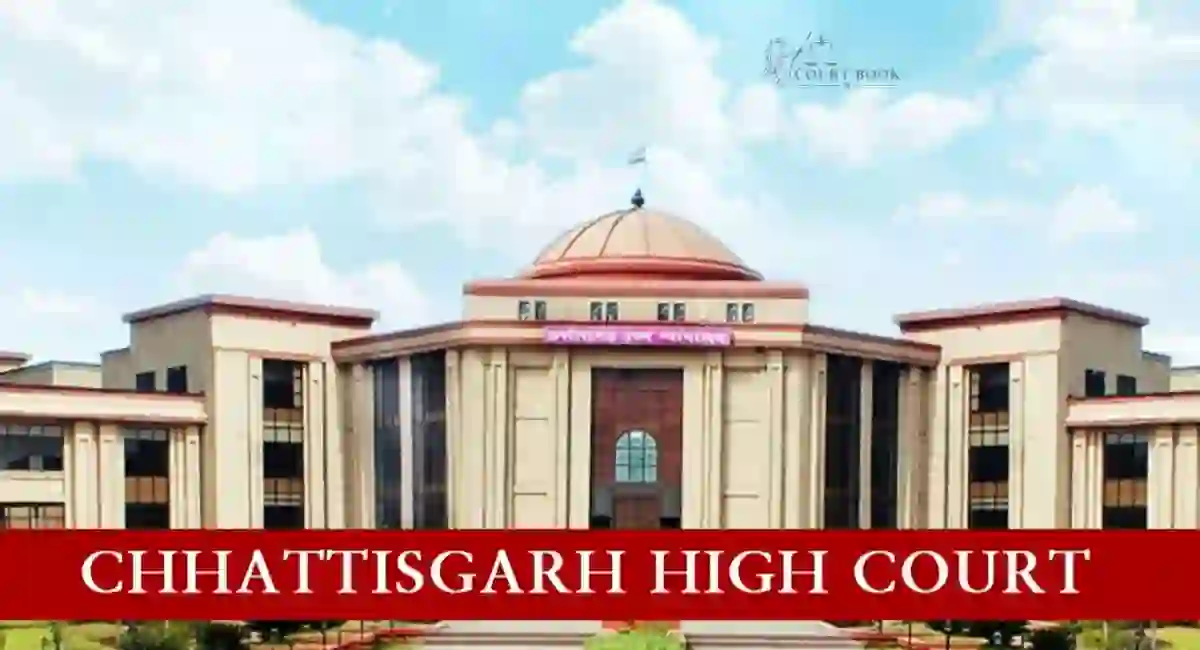
The Chhattisgarh High Court has set aside the conviction of two education department officials in a corruption case, holding that the prosecution failed to establish one of the most essential ingredients of an offence under the Prevention of Corruption Act proof of demand for illegal gratification. The Court found several inconsistencies in the prosecution's evidence, including doubts over electronic recordings and the sequence of events surrounding the alleged trap operation.
Background of the Case
The case arose from allegations that the salary of a Shiksha Karmi (Education Worker) had been withheld for several months. Her husband approached the Anti-Corruption Bureau (ACB), alleging that a clerk had demanded ₹5,000 on behalf of the then Block Education Officer to facilitate the release of the pending salary.
Following the complaint, the ACB arranged a trap operation. According to the prosecution, tainted currency notes worth ₹5,000 were recovered from the pocket of one of the accused officials. A Special Judge under the Prevention of Corruption Act convicted both officials in September 2017 and sentenced them to three years' rigorous imprisonment along with a fine.
Court's Observations
Justice Rajani Dubey carefully examined the trial court record and found significant shortcomings in the prosecution's case.
The High Court noted that the complainant had filed two separate complaints and that the salary cheque had already been received before the trap proceedings took place. This sequence of events raised doubts about the prosecution's version regarding the alleged demand for illegal gratification.
The Court also found the electronic evidence unreliable. It observed that the voice recorder remained in the complainant's custody for several days before being handed over to investigators. No voice samples of the accused were collected, no forensic voice examination was conducted, and the prosecution failed to produce the mandatory certificate under Section 65-B of the Indian Evidence Act for the electronic record.
The bench observed:
“In the absence of a certificate under Section 65-B of the Indian Evidence Act, 1872, and in the absence of any voice sample or FSL report, the voice recording cannot be relied upon.”
The Court further noted that the transcript of the alleged conversations was prepared based on the complainant's identification of the voices, while investigators themselves admitted that multiple voices were audible and no expert verification had been carried out.
Demand of Bribe Must Be Clearly Proved
Relying on several Supreme Court precedents, the High Court reiterated that recovery of tainted money alone is insufficient for conviction under the Prevention of Corruption Act.
The bench observed:
“The prosecution has utterly failed to prove the demand of bribe.”
It held that unless the prosecution establishes the complete chain of demand, acceptance and recovery beyond reasonable doubt, a conviction cannot be sustained. The Court also found that the trial court had failed to properly appreciate these material inconsistencies while recording the conviction.
Court's Decision
Allowing the criminal appeal, the High Court set aside the judgment of conviction and sentence dated September 8, 2017, passed by the Special Judge under the Prevention of Corruption Act.
The Court acquitted both appellants of all charges, holding that the prosecution had failed to prove its case beyond reasonable doubt and that the accused were entitled to the benefit of doubt.
The appellants, who were already on bail, were directed to furnish personal bonds of ₹25,000 each under Section 481 of the Bharatiya Nagarik Suraksha Sanhita (BNSS), which will remain effective for six months in the event of any further proceedings before the Supreme Court.
Case Details
Case Title: Anil Markende & Another v. State of Chhattisgarh
Case Number: CRA No. 1423 of 2017
Judge: Hon'ble Justice Rajani Dubey
Decision Date: 23 June 2026


