

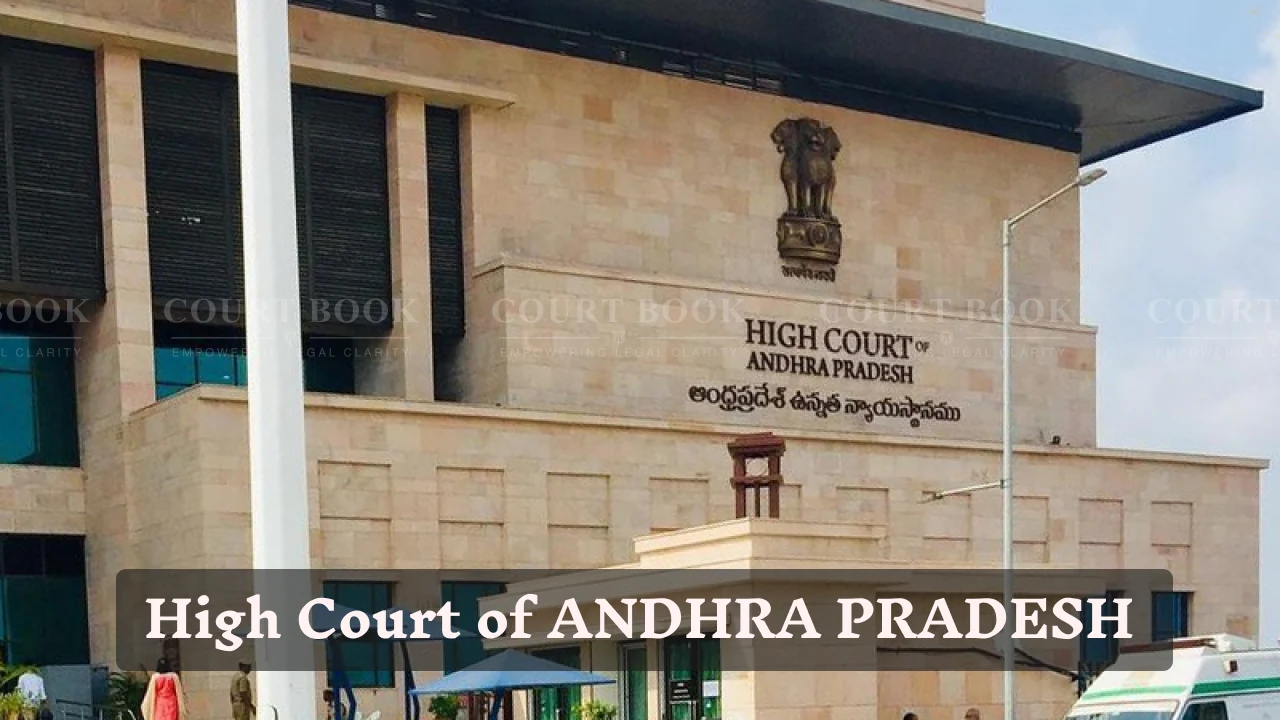
Sitting in a quiet courtroom at Amaravati, the Andhra Pradesh High Court on Tuesday declined to reopen a dowry death case that had ended in acquittal nearly eighteen years ago. The State’s appeal, seeking conviction of a husband and his parents for the death of a young woman by burns, failed to persuade the Court that the trial judge had gone wrong. The Bench made it clear-suspicion, however serious, cannot replace proof.
Background
The case traces back to 2004, when Matcha Lakshmi was married in Srikakulam district. According to the prosecution, cash and household articles were given at the time of marriage. A year later, Lakshmi died after sustaining extensive burn injuries at her matrimonial home.
Read also:-Patna High Court Sets Aside Suicide Abetment Conviction, Says Marriage Discord Alone
Her family alleged harassment for additional dowry, and the police charged the husband and in-laws under Section 304B of the IPC, which deals with dowry death. However, in 2007, the Assistant Sessions Judge acquitted all three, citing lack of reliable evidence. The State then approached the High Court, challenging that acquittal.
Court’s Observations
Justice T. Mallikarjuna Rao, after going through the record, was not convinced that the trial court’s view was either illegal or unreasonable. A key issue was the dying declaration recorded by a Magistrate. While such statements can be crucial, the Bench noted that Lakshmi’s declaration did not mention any demand for dowry.
Read also:-Madhya Pradesh High Court Steps In, Scraps Railway-Constituted Arbitral Tribunal in Cable
“The alleged demand for additional dowry is conspicuously absent in the dying declaration,” the Court observed, pointing out that this was a serious gap in the prosecution story. Family members and neighbours who testified in court also did not support claims of harassment. Some even stated that the couple lived peacefully.
The Court also addressed the reliance placed by the prosecution on statements recorded during investigation. These, the Bench clarified, are not substantive evidence by themselves. “A conviction must rest on evidence given on oath before the court, not on prior statements alone,” it remarked.
While rejecting the trial court’s doubt that a person with severe burns could speak at all, the High Court still found that the dying declaration, standing alone and unsupported by other witnesses, was unsafe to rely upon.
Read also:-Tripura High Court Flags Seven-Day Delay in Maintenance Revision, Issues Notice in Abdul
Decision
In the end, the High Court refused to interfere. It held that the Sessions Court had taken a plausible view based on the evidence available and that appellate courts should be slow to overturn acquittals unless there is clear perversity.
“The prosecution has failed to prove the guilt of the accused beyond reasonable doubt,” the Bench said, dismissing the State’s appeal and confirming the acquittal of all three accused. With that, the long-pending criminal appeal came to a close.
Case Title: The State of Andhra Pradesh vs Matcha Jayanthi Rao & Others
Case No.: Criminal Appeal No. 1151 of 2009
Case Type: Criminal Appeal against Acquittal (Dowry Death – Section 304B IPC)
Decision Date: 23 December 2025


