

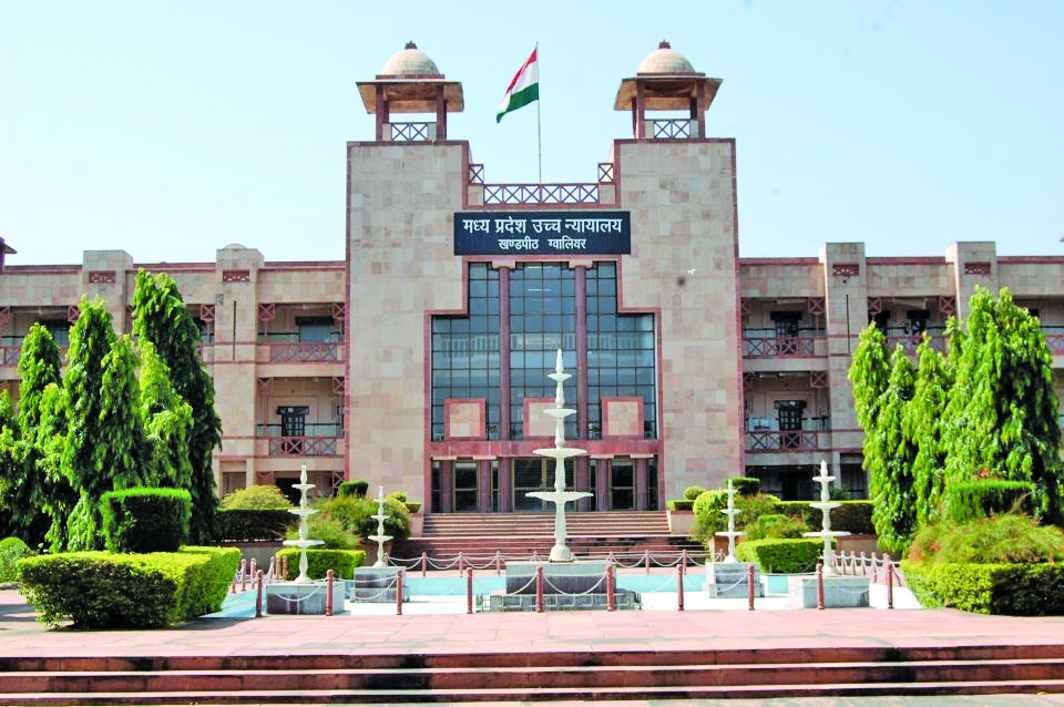
The Madhya Pradesh High Court at Jabalpur on Monday brought a running railway arbitration to a halt, holding that the arbitral tribunal set up by the Railways lacked legal sanctity from the very start. The case involved Continental Telepower Industries Limited, a contractor supplying underground signalling cables, and the Union of India through Indian Railways. After hearing both sides, the court terminated the mandate of the existing tribunal and moved to appoint a fresh arbitrator.
Background
The dispute traces back to a contract for supplying PVC insulated armoured underground signalling cables to the Railways. Differences cropped up during execution, prompting the contractor to seek arbitration.
As per procedure, the Railways asked the company whether it was willing to waive a key legal safeguard under the Arbitration and Conciliation Act - a provision meant to ensure neutrality of arbitrators. The contractor clearly said no.
Despite this refusal, the Railways later sent a panel of four names, all ex-Railway officers, asking the company to choose two. Continental Telepower complied under protest, but soon objected when the Railways constituted a three-member tribunal entirely comprising retired Railway officers. The company flagged the issue early, calling the tribunal “non-est and void”, but the arbitration still moved ahead. Left with little choice, the contractor approached the High Court.
Court’s Observations
Justice Vivek Jain did not mince words. The court noted that the contractor had consistently refused to waive the protection against potential bias and had objected almost immediately after the tribunal was formed.
“The situation would have been different if the petitioner had agreed to or acquiesced in the appointment,” the bench observed, stressing that consent must be clear, express, and in writing after disputes arise.
The Railways argued that a recent Supreme Court ruling on similar clauses applied only prospectively, and since the tribunal here was appointed earlier, it should be allowed to continue. The High Court was not convinced. It pointed out that the contractor’s refusal to waive neutrality safeguards pre-dated the tribunal’s constitution and could not be brushed aside.
Citing a Delhi High Court ruling, the court also underlined that an arbitrator who is legally ineligible makes the entire process void from inception. As the judge put it in effect, justice must not only be done but must also appear to be done - especially when one party controls the panel.
Read also:-Uttarakhand High Court Grants Bail to Convict Sirmour Singh During Appeal
Decision
Allowing the petition under Section 14 of the Arbitration Act, the High Court held that the arbitral tribunal constituted by the Railways was unilateral and legally unsustainable. The mandate of all three arbitrators was terminated. The court clarified that any fees already paid would not be clawed back, but no further claims could be made.
To ensure continuity of the dispute resolution process, the court decided that a substitute arbitrator must step in. Since the original appointment mechanism itself was flawed, the court chose to intervene directly. It proposed appointing a former Chief Justice as the sole arbitrator and directed the court registry to obtain his consent and statutory disclosures, listing the matter for further directions in early January.
Case Title: Continental Telepower Industries Limited vs Union of India & Others
Case No.: Arbitration Case No. 91 of 2025
Case Type: Petition under Section 14, Arbitration and Conciliation Act, 1996
Decision Date: 22 December 2025


