

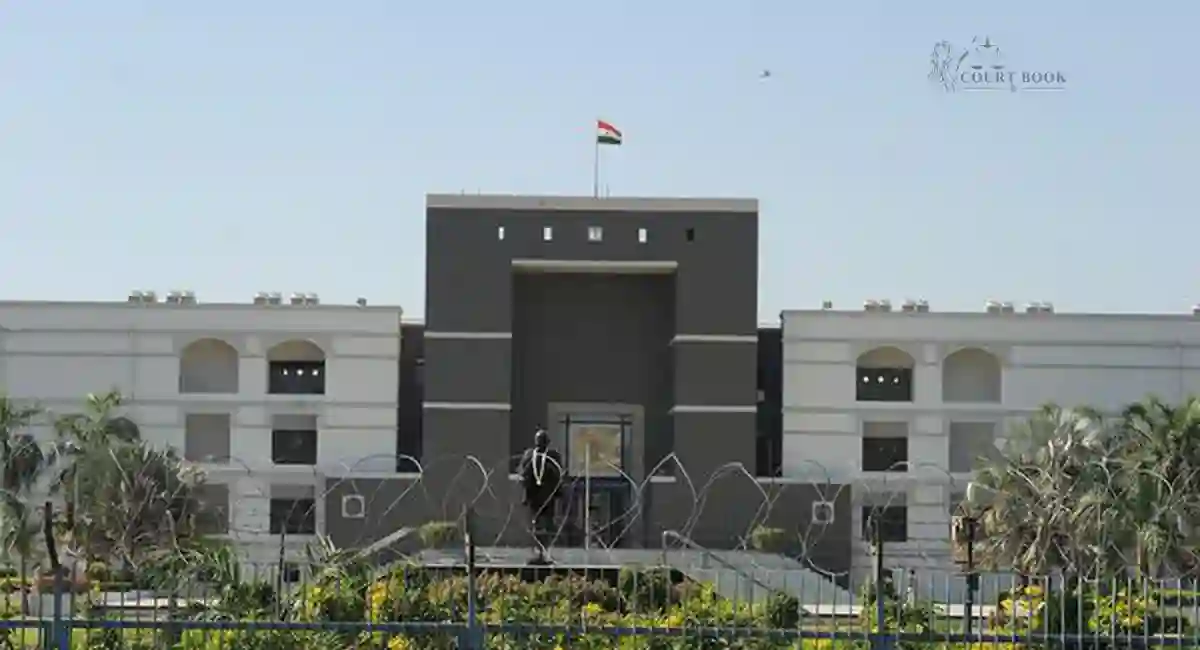
In a closely watched family property dispute from Vadodara, the Gujarat High Court has refused to throw out a daughter’s suit seeking administration of her late parents’ estate and a share in several immovable properties. The Court also declined to interfere with a trial court’s interim order directing parties to maintain status quo over key properties, including parts of the “Jumeirah Park” development.
The judgment was delivered by Justice J. C. Doshi in a batch of civil revision applications and appeals arising from Special Civil Suit No. 132 of 2021.
Read also:-Madras High Court Judge Recuses in CBI Case After ₹50 Lakh Bribery Allegation Letter Sent to Centre
Background of the Case
The dispute is between siblings - the daughter as plaintiff and her brothers as defendants. The plaintiff, daughter of late Valimohammad Kaduji and Ayeshabibi Valimohammad, approached the civil court seeking:
• Administration of her parents’ estate under Muslim law
• Share in properties listed in the suit (referred to as Lot-3A and Lot-3B)
• Alternatively, ₹50 crore as compensation
• Declaration that past sale deeds are not binding on her
She alleged that several properties were either purchased by her father or acquired in her brothers’ names using his earnings. Some ancestral lands, she claimed, were later sold and the proceeds used to acquire further properties.
According to her, the brothers had assured her that she would receive her share. However, when certain lands at Tandalja were developed into “Jumeirah Park” apartments and other properties were sold, she realised that her share was being denied.
Read also:-Supreme Court Rules Spectrum Is National Asset, Says Insolvency Code Cannot Wipe Out Govt Telecom Dues
The brothers opposed the suit. They argued that:
• A family arrangement was executed in 1983.
• Revenue entries were mutated in their favour in 1984.
• Properties were openly sold between 1999 and 2005.
• The suit, filed in 2021, was hopelessly barred by limitation.
They filed applications under Order VII Rule 11 of the Civil Procedure Code seeking rejection of the plaint. The trial court rejected those applications. They also challenged an interim injunction order that directed maintenance of title and ownership status over certain properties.
High Court on Rejection of Plaint
Before the High Court, the defendants argued that the suit was filed nearly 37 years after the father’s death and was clearly time-barred.
Justice Doshi explained that when a court considers an application to reject a plaint, it must assume that all statements in the plaint are true. The defence cannot be examined at that stage.
The Court noted that the plaintiff had pleaded that she realised her exclusion only when the defendants began developing the Tandalja property and allegedly refused to honour earlier assurances.
“The question of limitation in the peculiar facts becomes a mixed question of law and fact and cannot be decided at the threshold,” the Court observed.
The Court further held that whether she was truly excluded decades earlier, whether the family settlement binds her, and whether revenue entries extinguished her rights are matters requiring trial.
As a result, both civil revision applications seeking rejection of the plaint were dismissed.
High Court on Interim Injunction
The defendants also challenged the trial court’s order partly allowing the plaintiff’s injunction plea. They argued that:
• She remained silent for decades.
• Third-party rights had already been created.
• She could be compensated in money if she succeeded.
Read also:-Supreme Court Orders Regularisation of Income Tax Casual Workers, Slams Discrimination in 2006 Poli
The High Court referred to settled law on appellate interference in injunction matters. Citing Supreme Court precedents, the Court reiterated that an appellate court should not interfere with a discretionary order unless it is arbitrary, capricious, or perverse.
Justice Doshi observed that the parties are siblings governed by Muslim personal law. The plaintiff is an undisputed legal heir. Her claim that properties were acquired from her father’s earnings and from ancestral sales cannot be brushed aside without evidence.
The Court noted that revenue entries, by themselves, do not extinguish title. The genuineness and legal effect of the alleged family settlement also require examination at trial.
Importantly, the trial court had restricted the injunction to properties still in the hands of the defendants and unsold portions, rather than disturbing completed transactions.
The High Court found no perversity in the trial court’s approach.
“The discretion exercised by the Trial Court cannot be said to be arbitrary or contrary to settled principles,” the bench observed.
Read also:-Supreme Court Cancels Anticipatory Bail of Absconding Murder Accused in 2017 MP Political
Decision
The Gujarat High Court:
• Dismissed Civil Revision Application Nos. 48 and 49 of 2023
• Dismissed Appeal from Order Nos. 41, 42 and 43 of 2024
• Upheld the trial court’s refusal to reject the plaint
• Confirmed the interim order directing maintenance of status quo over specified properties
The suit for administration of the estate and related reliefs will now proceed before the trial court on merits .
Case Title: Yusufbhai Walibhai Patel & Ors. v. Zubedaben Abbasbhai Patel & Ors.
Case No.: R/Civil Revision Application No. 48 of 2023 (with connected matters)
Decision Date: 10 February 2026


