

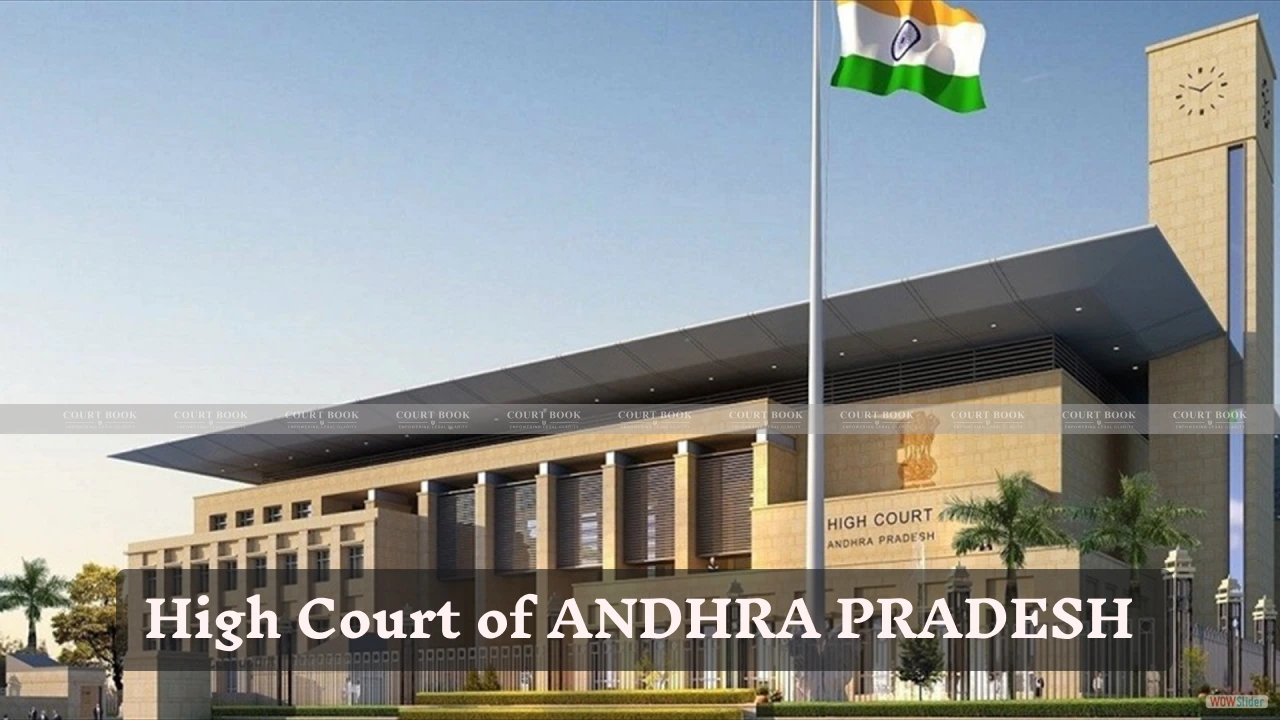
The Andhra Pradesh High Court has set aside a Family Court order that refused to advance proceedings in a mutual consent divorce case, holding that the statutory six-month cooling-off period under the Hindu Marriage Act can be waived in appropriate circumstances.
Justice Venkateswarlu Nimmagadda observed that when spouses have genuinely resolved all disputes and there is no possibility of reconciliation, insisting on the waiting period serves no meaningful purpose.
Background of the Case
The petitioners, a husband and wife from Prakasam District, were married in December 2022 and have a daughter born in September 2023. Due to matrimonial differences, they had been living separately for about a year and later filed a petition seeking divorce by mutual consent under Section 13-B of the Hindu Marriage Act.
After filing the divorce petition, the couple informed the court that they had amicably settled all pending issues. According to the settlement, the husband agreed to pay ₹62 lakh towards permanent alimony and the interests of the minor child, apart from transferring certain properties. The wife also agreed to withdraw criminal proceedings initiated against him.
The parties then sought an early hearing of the divorce petition. However, the Family Court rejected their request, stating that the six-month cooling-off period was necessary to allow time for reconsideration and possible reconciliation.
Before the High Court, counsel for the petitioners argued that the purpose behind the cooling-off period had already been fulfilled because the parties had settled all disputes and consciously decided to end the marriage. Reliance was placed on Supreme Court decisions holding that the waiting period is directory and not mandatory.
Accepting the submission, Justice Nimmagadda noted that the settlement covered all major issues, including permanent alimony, child welfare, and property distribution.
The Court observed,
“The object of Section 13-B(2) is to provide a reasonable opportunity to the parties to reconsider their decision and explore the possibility of reunion.”
However, where spouses have been living separately, have settled all disputes, and have firmly decided to part ways, continuation of the statutory period would only prolong their hardship.
The Court further relied on the principles laid down by the Supreme Court in Amardeep Singh v. Harveen Kaur and Amit Kumar v. Suman Beniwal, which recognize the power of courts to waive the cooling-off period in deserving cases.
Allowing the revision petition, the Andhra Pradesh High Court set aside the Family Court's order dated 12 April 2026.
The Court directed the Family Court, Prakasam District, Ongole, to take up the application for advancement of the matter and pass appropriate orders on the request for dissolution of marriage by mutual consent in accordance with law as expeditiously as possible.
Pending miscellaneous petitions were also ordered to stand closed.
Case Details
Case Title: X and Y
Case Number: Civil Revision Petition No. 1405 of 2026
Judge: Justice Venkateswarlu Nimmagadda
Decision Date: 04 May 2026


