

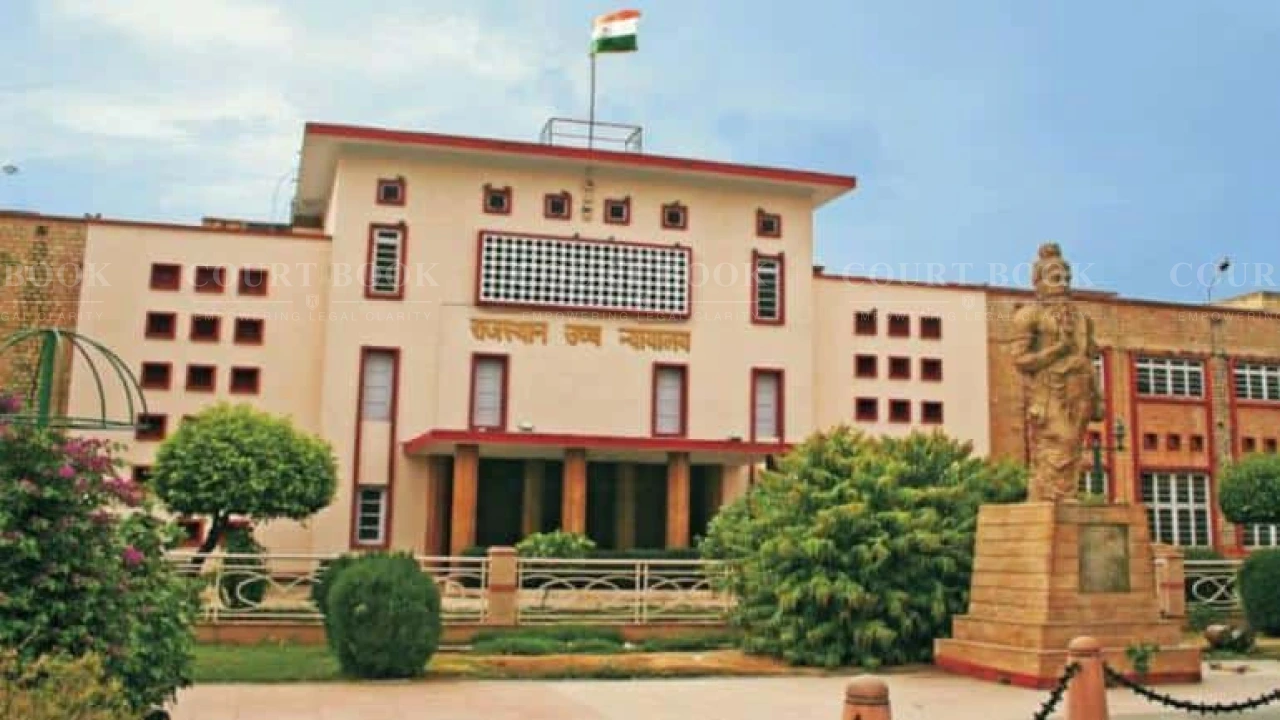
The Rajasthan High Court has taken suo motu cognizance of alleged large-scale violations of liquor shop closing hours in Jodhpur after a newspaper investigation reported that liquor was being sold beyond the prescribed time limit through concealed openings and partially shuttered outlets.
A Division Bench of Justice Pushpendra Singh Bhati and Justice Nupur Bhati observed that effective enforcement of excise regulations is closely linked to public health, public order and citizens' right to live in a safe environment.
Background of the Case
The Court acted on a report published in Rajasthan Patrika on 16 May 2026. The report claimed that several liquor vends in Jodhpur continued selling liquor after the mandated closing time of 8:00 PM through what were described as "emergency windows" and other concealed access points.
According to the report cited in the order, liquor sales allegedly continued at locations including Jaljog Chauraha, Milkman Colony and areas near Ashok Udhyan despite shutters appearing to be closed. The report suggested that such practices may not be isolated incidents but part of a recurring pattern.
The Bench noted that liquor trade is not an ordinary business and operates under strict regulatory control because of its impact on public health, road safety and public order.
The Court observed that alleged violations of licence conditions and prescribed closing hours, if left unchecked, could undermine the rule of law and weaken statutory safeguards designed in public interest.
In a significant observation, the Bench stated,
“When statutory safeguards and licensing conditions framed in public interest are openly and systematically disregarded, it not only undermines the rule of law but also renders the constitutional objectives under Articles 21 and 47 illusory.”
The Court also expressed concern over what it described as apparent enforcement failures and possible administrative lapses in monitoring liquor vends operating beyond permitted hours.
Finding a prima facie case warranting judicial scrutiny, the High Court ordered registration of a suo motu writ petition and issued notices to the State Government, Excise Department, Police authorities and district administration.
The Court directed all respondents to submit detailed status reports addressing action taken against liquor vendors named in the newspaper report, inspection records from the last three years, enforcement mechanisms currently in place and measures proposed to prevent future violations.
The Bench also sought information regarding technological safeguards such as CCTV surveillance, digital billing systems, e-POS integration and mechanisms to prevent sales through concealed openings.
Pending further consideration, the Court directed the Commissioner of Police, Jodhpur and the District Excise Officer to constitute special enforcement teams for surprise inspections during late evening hours.
Authorities have also been asked to examine the feasibility of installing high-resolution CCTV systems, implementing timestamp-based closure verification and establishing a centralized complaint mechanism for reporting violations.
The Rajasthan High Court formally took suo motu cognizance of the alleged systemic violations of liquor vending hours and directed the matter to be registered as a Public Interest Litigation under Article 226 of the Constitution.
Notices were issued to the concerned authorities, detailed status reports were sought, interim enforcement directions were passed, and the matter was listed for further hearing on 6 July 2026.
Case Details
Case Title: In Re: Systemic Violations of Liquor Closing Hours and Excise Regulations in Jodhpur City
Judges: Justice Pushpendra Singh Bhati and Justice Nupur Bhati
Decision Date: 22 May 2026


