The Delhi High Court has dismissed a petition filed by Savitri Devi, widow of a deceased Bank of Maharashtra employee, seeking the benefit of the bank's family pension scheme introduced in 2010. The Court held that although she fell within the category of eligible beneficiaries, eligibility alone did not create a legal right. Since the prescribed option was not shown to have been exercised within the stipulated time, the benefit could not be granted.
Background of the Case
Savitri Devi's husband, Late Ramesh Chand, joined the Bank of Maharashtra in March 1985 and died while in service on February 12, 2006. Following his death, the bank settled the provident fund and gratuity benefits under the contributory provident fund scheme.
In 2010, after a Settlement/Joint Note dated April 27, 2010, the bank offered a one-time opportunity to eligible serving employees, retired employees and families of deceased employees to switch to the pension scheme. Under the circular issued on August 18, 2010, eligible family members had to submit the prescribed option form by October 18, 2010.
Savitri Devi contended that she submitted the option form on March 2, 2011 and later requested the bank to inform her of the amount required to be deposited under the scheme. She also relied on internal correspondence exchanged by the bank in January 2014, arguing that it showed the bank was aware of her claim.
The bank, however, maintained that the option form was submitted after the deadline, carried no acknowledgment of receipt, and was never found in its official records. It also argued that the writ petition, filed in 2025, suffered from unexplained delay.
Court's Observations
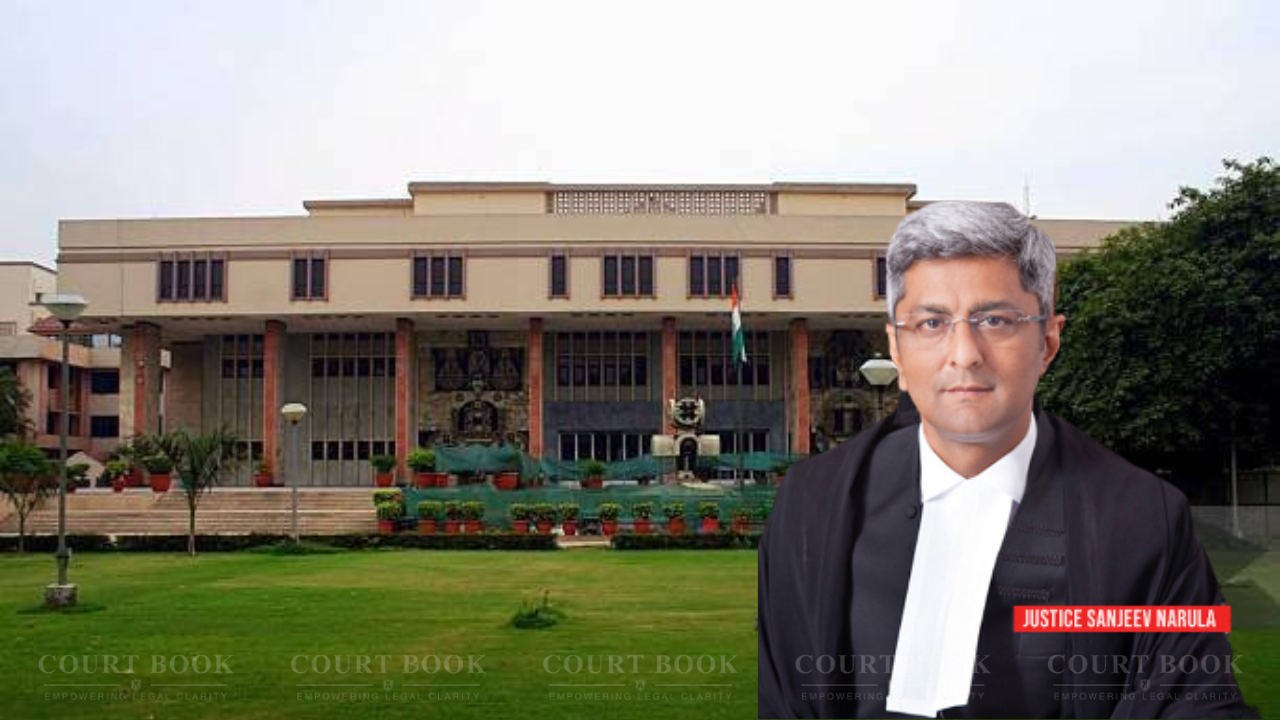
Justice Sanjeev Narula observed that a writ of mandamus can be issued only when a person establishes an existing legal right and a corresponding legal duty on the authority concerned.
The Court noted that while the petitioner was undoubtedly eligible to opt for the pension scheme,
"eligibility by itself did not confer a right to pension."
The benefit remained conditional upon exercising the prescribed option within the stipulated period and in the manner laid down under the scheme.
Examining the documents, the Court found that the option form relied upon by the petitioner was dated March 2, 2011, well beyond the cut-off date of October 18, 2010, and did not bear any acknowledgment or branch receipt proving its submission.
The bench observed,
"The requirement of exercising the prescribed option within the stipulated period is not merely procedural; it is constitutive of the right claimed under the Scheme."
The Court further held that the internal correspondence exchanged by the bank in January 2014 did not amount to acceptance of the petitioner's claim or condonation of delay. At best, it reflected administrative uncertainty and an attempt to verify the records.
While acknowledging that the bank could have communicated its position more clearly in 2014, the Court said administrative lapses could not create a substantive right where none existed under the governing scheme.
The High Court also found that the petition was barred by delay and laches. It observed that the petitioner was aware of the pension scheme by at least March 2011 and that correspondence had taken place in 2014. Despite this, no legal proceedings were initiated for more than a decade.
The bench observed that repeated representations or RTI applications could not revive a stale claim, particularly where the dispute concerned entry into a one-time pension scheme rather than payment of an already sanctioned benefit.
Decision
Holding that Savitri Devi failed to establish a legally enforceable right to the family pension scheme and that the writ petition was also hit by gross delay and laches, the Delhi High Court dismissed the petition.
Case Details:
Case Title: Savitri Devi v. Bank of Maharashtra and Anr.
Case Number: W.P.(C) 10777/2025
Judge: Justice Sanjeev Narula
Decision Date: July 7, 2026



-300x169.webp)


 Act (UAPA)-300x169.webp)