

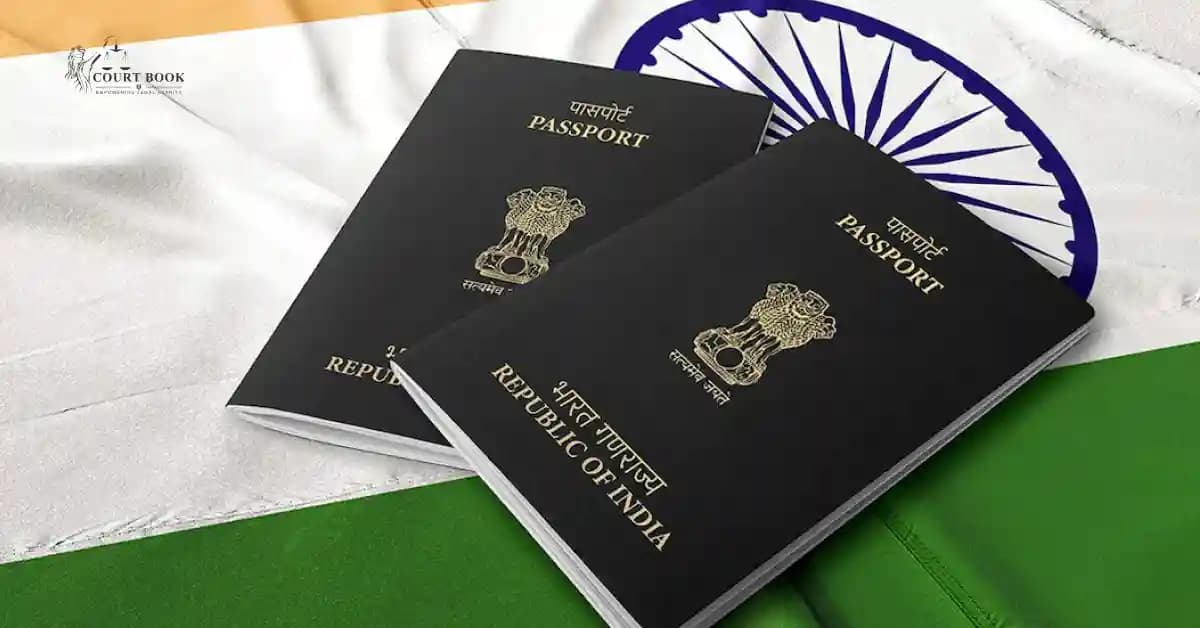
The Delhi High Court has ruled that merely because the Ministry of External Affairs (MEA) is headquartered in Delhi, the Court cannot hear every passport-related dispute. The Court held that when the entire cause of action arises in another State, the petition must be filed before the appropriate High Court having territorial jurisdiction.
Background of the Case
The petitioner approached the Delhi High Court seeking correction of the date of birth recorded in the passport and removal of the "Emigration Check Required (ECR)" status.
According to the petition, the birth certificate initially contained an incorrect date of birth, which was later corrected by the competent authority. However, the passport continued to reflect the earlier date because the original certificate had been used during the passport application process. When the petitioner later sought correction, the Regional Passport Office rejected the request, leading to the present writ petition.
Court Examines Territorial Jurisdiction
Before considering the merits of the dispute, the Delhi High Court first examined whether it had the authority to hear the matter.


The petitioner argued that since the Ministry of External Affairs is based in Delhi and the Regional Passport Office functions under its administrative control, the Delhi High Court had territorial jurisdiction.
The Union opposed this contention, submitting that every material event connected with the dispute had taken place in Uttar Pradesh. The birth certificate had been issued and corrected there, the passport had been issued and renewed there, and the communication rejecting the correction request had also originated from the Regional Passport Office in Ghaziabad.
Court's Observations
Justice Swarana Kanta Sharma referred to Supreme Court precedents explaining that territorial jurisdiction depends on where the cause of action arises, not merely where a government ministry is located.
The Court observed:
"The mere fact that the office of the Ministry of External Affairs is situated in Delhi cannot, by itself, confer territorial jurisdiction upon this Court."
The Court further noted that all authorities directly connected with the petitioner's grievance were situated in Uttar Pradesh and the petitioner was also a resident of that State. Therefore, no part of the material cause of action arose within the territorial jurisdiction of the Delhi High Court.
Decision
Holding that it lacked territorial jurisdiction, the Delhi High Court dismissed the writ petition as not maintainable before it.
However, the Court granted liberty to the petitioner to pursue appropriate legal remedies before the competent forum, including the Allahabad High Court.
Case Details
Case Title: Chintan Agrawal v. Union of India & Ors.
Case Number: W.P.(C) 8743/2026
Judge: Justice Swarana Kanta Sharma
Decision Date: 09 July 2026



