

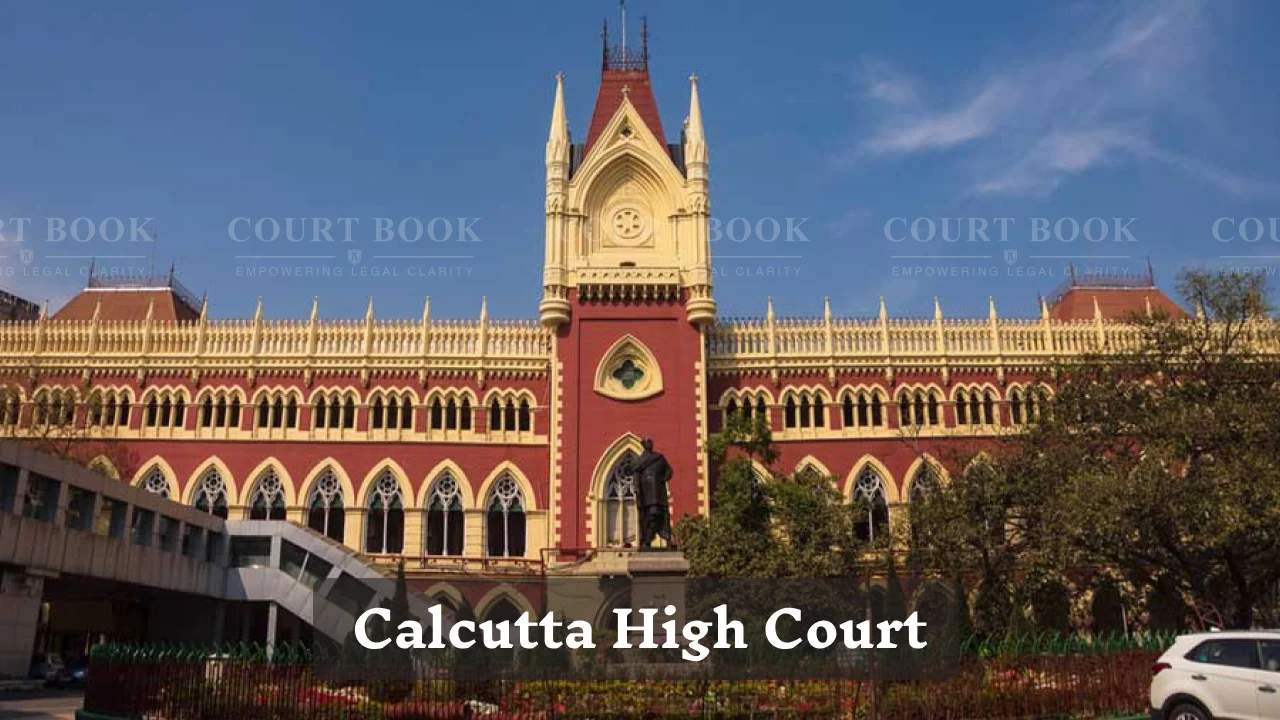
The Calcutta High Court has refused to entertain a writ petition filed by a Kuwait-based petrochemical exporter challenging India’s anti-dumping investigation into Mono Ethylene Glycol (MEG) imports. The Court held that it lacked territorial jurisdiction, as no material part of the dispute arose within West Bengal.
Justice Om Narayan Rai dismissed the petition after an extensive hearing, making it clear that apprehended business loss in the State cannot, by itself, create a cause of action under Article 226 of the Constitution.
Read also:-Cooling-Off Period Not Mandatory: Gujarat High Court Revives Mutual Consent Divorce Appeal
Background of the Case
The petition was filed by Equate Petrochemical Company K.S.C.C., a company incorporated in Kuwait. The firm challenged the Final Findings dated September 23, 2025, issued by the Directorate General of Trade Remedies (DGTR), which recommended the imposition of anti-dumping duty on MEG imports from Kuwait, Saudi Arabia, and Singapore.
The investigation was initiated on an application by the Chemicals and Petrochemicals Manufacturers Association of India. Injury data for the domestic industry was supplied by Reliance Industries Limited.
Equate argued that the investigation process was flawed. It claimed the Designated Authority relied selectively on data from one domestic producer and ignored verified cost information submitted by the exporter. The company also alleged that crucial calculations and methodologies were not disclosed, violating principles of natural justice.
Read also:-Lalu Prasad Yadav Challenges Framing of Charges in IRCTC Scam Case Before Delhi High Court
To invoke the Calcutta High Court’s jurisdiction, the petitioner asserted that anti-dumping duties would discourage its customers located in Kolkata, particularly those importing through Haldia Port. It claimed that such duties would directly harm its business presence within West Bengal.
Senior Advocate J. P. Khaitan, appearing for the petitioner, argued that even an apprehension of injury was sufficient to approach the High Court. He relied on earlier precedents to contend that exporters need not wait for actual financial loss before seeking constitutional remedies.
The Union of India and the DGTR strongly opposed the maintainability of the petition. They argued that:
• The Designated Authority is located in Delhi
• All investigation proceedings took place outside West Bengal
• The Final Findings were only recommendations, not enforceable orders
• Any appeal lay before the Customs, Excise and Service Tax Appellate Tribunal (CESTAT)
Senior Counsel for the domestic industry added that business impact is not the same as legal cause of action.
“The petitioner has confused possible commercial consequences with legal jurisdiction,” the respondents submitted.
Court’s Observations
Justice Rai examined the pleadings closely and focused on one key question: Did any material, integral part of the cause of action arise within West Bengal?
The Court answered in the negative.
“The lis before this Court is not about business loss,” the judge observed, adding that the challenge was purely procedural—relating to alleged arbitrariness and violation of natural justice by the Designated Authority.
The Court noted that the petitioner’s claim of business dealings in Kolkata was incidental and not essential to deciding whether the Final Findings were legally flawed.
Citing Supreme Court precedents, the bench held that only facts directly connected to the relief sought can confer territorial jurisdiction.
Read also:-Chhattisgarh Excise Scam: High Court Grants Bail to Chaitanya Baghel in ED and ACB Cases
Final Decision
Concluding that the Calcutta High Court had no territorial jurisdiction, Justice Rai dismissed the writ petition in limine.
“Adverse commercial impact, even if assumed, does not form an integral part of the cause of action in this case,” the Court held.
As a result, the Court declined to examine the merits of the allegations regarding disclosure, methodology, or violation of natural justice.
The writ petition was dismissed without costs.
Case Title: Equate Petrochemical Company K.S.C.C. vs Directorate General of Trade Remedies
Case No.: WPA 26130 of 2025
Case Type: Constitutional Writ Petition
Decision Date: 22 December 2025
Download Judgment

