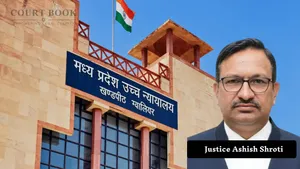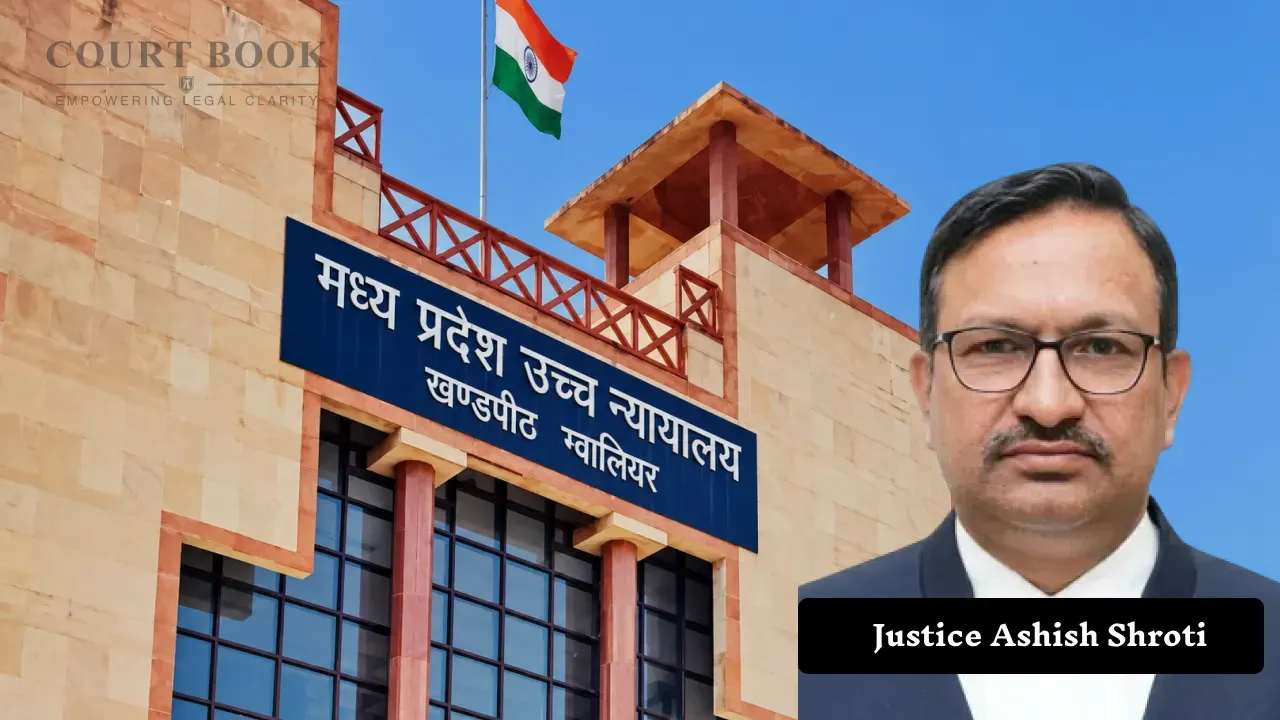
The Madhya Pradesh High Court at Gwalior has dismissed a civil revision seeking consolidation of three pending civil suits concerning family properties and Gwalior Ice Factory. Justice Ashish Shroti held that the suits could not be tried together because their parties, causes of action, reliefs and evidence were materially different.
Background
The matter arose from an order dated July 31, 2026, passed by the Principal District Judge, Gwalior. The applicant had sought consolidation of Civil Suit No. 7-A/18 and Civil Suit No. 701-A/17, pending before the 15th Civil Judge, Junior Division, with Civil Suit No. 445-A/16 pending before the 11th Additional District Judge, Gwalior.
The applicant argued that the main parties and properties involved in the three suits were similar. He also pointed out that the two suits pending before the Civil Judge had already been consolidated and submitted that all three matters should therefore be tried together.
Civil Suit No. 445-A/16 concerns a claim for declaration of share and partition of family properties. One of the properties involved is M/s Gwalior Ice Factory. The other two suits, Civil Suit No. 07-A/18 and Civil Suit No. 701-A/17, concern liquidation of the Gwalior Ice Factory and rendition of its accounts.
Justice Ashish Shroti noted that the relief sought in the partition suit was fundamentally different from the relief sought in the other two proceedings.
The Court observed:
"Thus, not only the parties but also the cause of action and the relief prayed for, are entirely different."
The High Court further considered the effect of consolidation on the parties' appellate rights. The Court noted that consolidation would deprive the parties before the Civil Judge of their right of one appeal. However, the Court clarified that this alone would not ordinarily justify refusing consolidation where the subject matter and reliefs were the same.
The Court also relied on the Supreme Court's decision in Chitivalasa Jute Mills v. Jaypee Rewa Cement, which explained that consolidation may serve the ends of justice by avoiding multiple proceedings, delay and expenses where the issues are sufficiently similar and common evidence can be used.
“Thus two suits can be, and should, be consolidated when the issues involved are similar, if not same, and the common evidence recorded for both suits and the common arguments will be sufficient to decide the suits.”
“As observed above, the issues involved in both the suits, in the case in hand, are different. The evidence to be recorded therein, would also be different inasmuch as in one case, the evidence would be about partition of family properties and in other suit(s) the evidence would be of liquidation of firm and for rendition of its accounts.”
The Court therefore found that the suits did not meet the requirements for consolidation. While one proceeding required evidence concerning partition of family properties, the other suits required evidence relating to liquidation of the firm and rendition of its accounts.
The High Court held that the requirements for consolidation were not satisfied. It found no error in the Principal District Judge's decision to reject the application under Section 24 of the Code of Civil Procedure.
Accordingly, the civil revision was dismissed.
Case Title: Parveen Bhargava v. Piyush Bhargava and Others
Case Number: Civil Revision No. 1059 of 2026
Judge: Justice Ashish Shroti
Decision Date: September 19, 2026