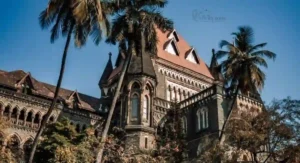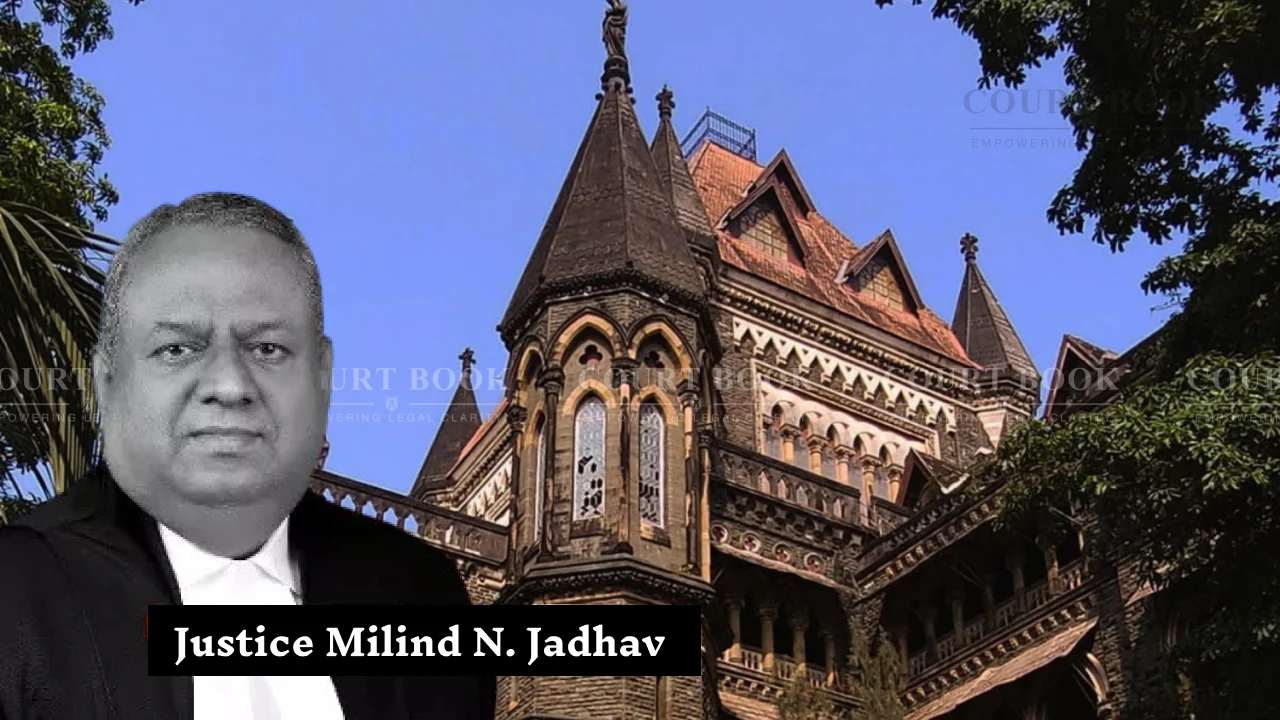
The Bombay High Court has quashed a criminal case arising from a commercial dispute after the parties informed the Court that they had fully settled their differences and the entire outstanding amount had been repaid.
Justice Milind N. Jadhav passed the order on September 18, 2026, in Kaustubh Shivkumar Vibhute v. State of Maharashtra & Anr., allowing the application subject to payment of ₹25,000 as costs.
Background
The dispute arose from a business relationship between the parties, under which substantial amounts had been advanced in connection with services and existing vendor invoices. According to the order, a significant amount remained outstanding, following which criminal proceedings were initiated alleging cheating.
By the time the matter reached the High Court, however, the parties had reconciled their dispute. The Court recorded that the entire amount had been deposited, repaid and received by Respondent No. 2 company, with no further amount remaining payable.
The parties therefore jointly sought quashing of the criminal proceedings, stating that continuation of the prosecution was affecting their business prospects. Justice Jadhav also interacted with the Director and authorised signatory of the respondent company through a video call before taking the settlement terms on record.
While considering the settlement, the High Court explained the scope of its inherent powers to prevent abuse of the court process and secure the ends of justice. The Court noted that Section 528 of the Bharatiya Nagarik Suraksha Sanhita, 2023 substantially carries forward the power earlier contained in Section 482 of the Code of Criminal Procedure.
Referring to the Supreme Court's decision in State of Haryana v. Bhajan Lal, the Court observed that criminal proceedings may, in appropriate circumstances, be quashed even where the alleged offence is technically non-compoundable. However, serious offences having wider societal implications, such as murder, rape and dacoity, ordinarily stand on a different footing.
The Court further observed that where a dispute is essentially private, civil, commercial or matrimonial in nature and does not involve a heinous offence or an impact upon society at large, a settlement can be considered while deciding a request for quashing.Justice Jadhav also emphasised that criminal law should not become a mechanism for recovering money or negotiating private settlements.
The Court explained:
"criminal law cannot be used as a bargaining chip or a tool for private settlements after draining the State and judicial resources. In simple words, Courts cannot be used as a recovery mechanism to settle scores and/or bring the parties into subjugation."
The Court said that costs may be appropriate in consent-quashing matters because criminal investigations consume police resources and judicial time. It also noted that costs can help discourage strategically exaggerated criminal complaints filed to force financial or legal settlements. At the same time, the Court clarified that costs should not be imposed mechanically where a party has not abused the legal process.
Applying these principles, the High Court directed the applicant to pay ₹25,000 to the Corpus of A.K. Munshi Yojana, a trust running medical, vocational training and special education facilities. The applicant agreed through counsel to make the payment within two weeks.
The Court accordingly allowed the application and quashed FIR No. 0224 of 2026 registered at Baner Police Station, Pune City, along with the consequential proceedings, subject to payment of the directed costs.
The application was disposed of, with the matter listed for compliance on October 9, 2026.
Case Details
- Case Title: Kaustubh Shivkumar Vibhute v. The State of Maharashtra & Anr.
- Case Number: Criminal Application (ST) No. 18957 of 2026
- Judge: Justice Milind N. Jadhav
- Decision Date: September 18, 2026