

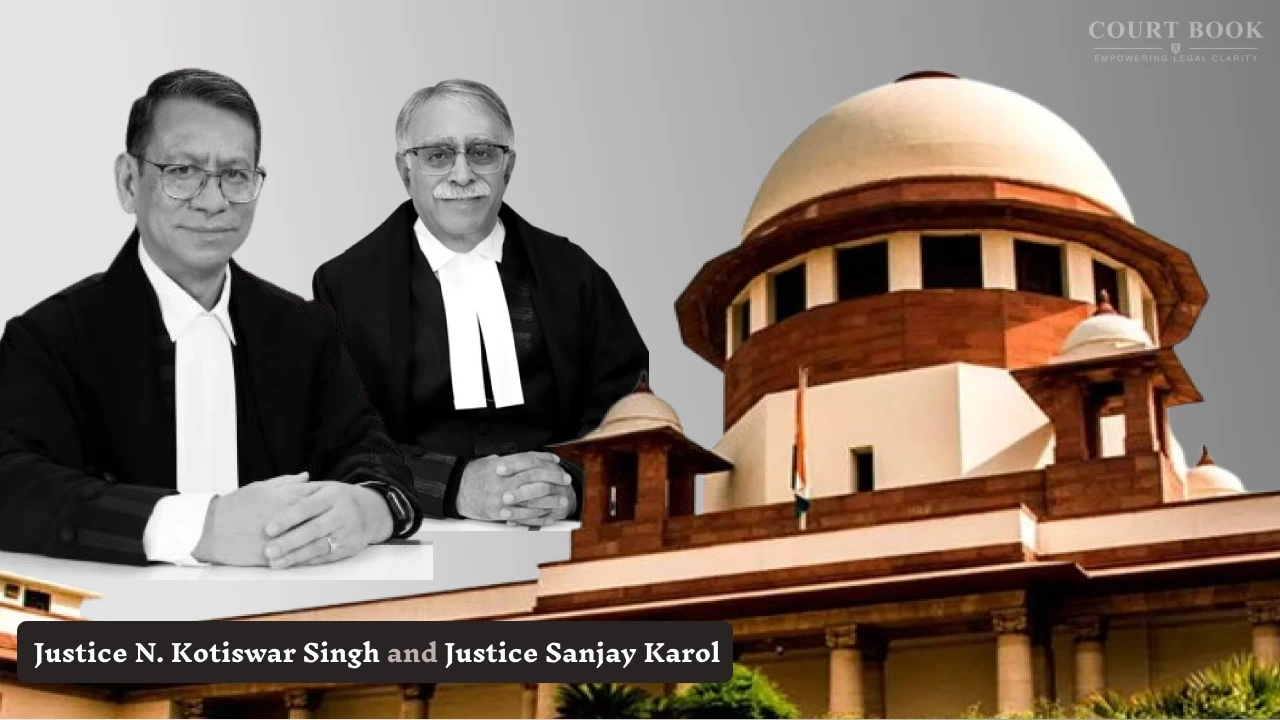
The Supreme Court has ruled that an employer cannot delay processing an employee's application for voluntary retirement on medical grounds and later use that delay to reject a dependent's claim for compassionate appointment. Setting aside the Bombay High Court's judgment, the Court directed The New India Assurance Company Limited to appoint the employee's son under its Compassionate Appointment Scheme, holding that administrative delay cannot defeat a legitimate claim.
Background of the Case
The case arose after an employee of The New India Assurance Company Limited applied for voluntary retirement on medical grounds on July 22, 2015, when he was still below 55 years of age. He enclosed a certificate issued by the Civil Surgeon stating that he had become permanently incapacitated for service.
Despite receiving the application and subsequent reminders before the employee turned 55, the company did not communicate any deficiency. It asked for a Medical Board certificate only after the employee had crossed the age limit prescribed under the Compassionate Appointment Scheme. The employee promptly obtained the certificate, but the company later rejected his son's request for compassionate appointment on the ground that the retirement had taken effect after the employee attained 55 years. The Bombay High Court upheld that decision.
Court's Observations
A Bench of Justice Sanjay Karol and Justice Nongmeikapam Kotiswar Singh held that while compassionate appointment must strictly follow the governing scheme, the employer is equally bound to administer that scheme fairly and within a reasonable time.
The Bench observed:
“The respondent-company could not remain silent till the appellant crossed 55 years and thereafter rely on the consequence of its own delayed action.”
The Court found that the employee had applied before reaching the age threshold, supplied the available medical documents, and repeatedly followed up with the employer. The delay occurred because the company communicated the requirement of a Medical Board certificate only after the employee had already crossed the prescribed age.
Rejecting the company's stand, the Court said that such an interpretation would make eligibility dependent on administrative delay rather than the employee's conduct.
The Bench further observed,
“The respondent-company could not have relied upon the said circumstance,” after its own delay had resulted in the employee crossing the age limit.
Supreme Court's Decision
Allowing the appeal, the Supreme Court set aside both the Bombay High Court's judgment dated August 19, 2023, and the company's rejection order dated July 15, 2019.
The Court directed The New India Assurance Company Limited to grant compassionate appointment to the employee's son under the applicable scheme. It also ordered that if the applicant had crossed the upper age limit during the pendency of the litigation, the company must grant the necessary age relaxation.
The appointment order has been directed to be issued within eight weeks from receipt of the judgment. The Court clarified that monetary benefits would be payable only from the date of actual appointment and also directed the company to release any unpaid service dues of the retired employee within eight weeks, if found payable.
Case Details
Case Title: Rahul S/o. Ramnarayan Madankar & Anr. v. The New India Assurance Company Limited & Ors.
Case Number: Civil Appeal arising out of SLP (Civil) No. 27425 of 2025
Judges: Justice Sanjay Karol and Justice Nongmeikapam Kotiswar Singh
Decision Date: July 16, 2026


