

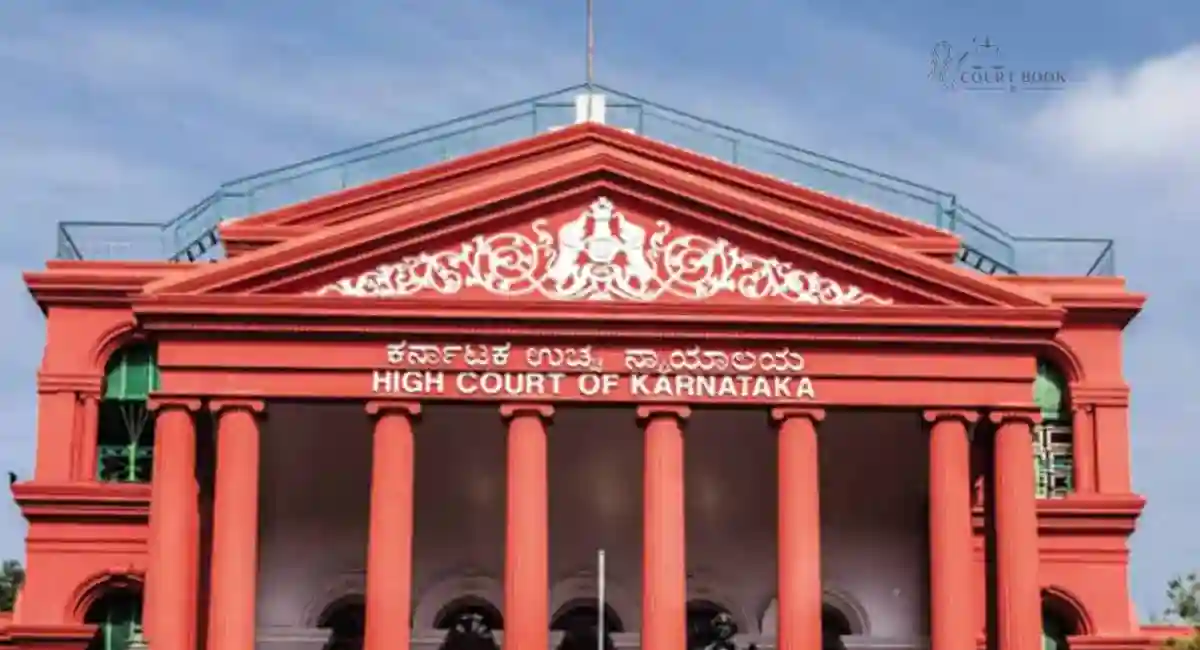
The Karnataka High Court has upheld the constitutional validity of the Karnataka Civil Courts (Amendment) Act, 2023 and the Karnataka High Court (Amendment) Act, 2023, which reorganise the appellate jurisdiction of civil courts in the State. However, while sustaining the retrospective operation of the Civil Courts Amendment Act, the Court read down the provision to ensure that concluded appeals and orders already passed are not disturbed.
A Division Bench comprising Chief Justice Vibhu Bakhru and Justice C.M. Poonacha held that the legislature was competent to enact the amendments and that the retrospective provision must be interpreted in line with the legislative intent, which was never to invalidate judgments already delivered.
Background of the Case
The judgment arose from a batch of matters comprising W.P. No. 17588 of 2024 filed by Narayanamma and W.A. No. 200260 of 2025 filed by Babu Rao and another.
The challenge was directed against the Karnataka Civil Courts (Amendment) Act, 2023 and the Karnataka High Court (Amendment) Act, 2023. The amendments increased the pecuniary jurisdiction of Civil Judges, shifted all first appeals arising from decrees of Senior Civil Judges to District Courts regardless of valuation, and redefined the category of first appeals maintainable before the High Court. The Civil Courts Amendment Act also provided that the amendments would operate retrospectively from 28 August 2007.
The petitioners contended that the retrospective clause was arbitrary, violated Article 14 of the Constitution, deprived litigants of vested rights in the appellate forum, lacked a saving clause for judgments already delivered, and had been enacted without consultation with the High Court.
Court's Observations
The Division Bench reiterated that legislation can be invalidated only on recognised constitutional grounds such as lack of legislative competence or violation of constitutional provisions.
The Court found no merit in the challenge to the State Legislature's competence, observing that legislation relating to the jurisdiction of civil courts falls within the State's legislative domain. It also rejected the contention that the amendments were unconstitutional merely because there had been no prior consultation with the High Court.
The Bench observed:
“There is no express constitutional or statutory requirement of prior consultation with the High Court for enacting the impugned legislations.”
The Court further noted that the amendments were introduced following the Karnataka High Court's earlier decision in Smt. Thirakavva, which had highlighted the heavy pendency of Regular First Appeals and suggested transferring such appeals to District Courts to promote speedy and cost-effective justice closer to litigants. The Karnataka Law Commission also supported the proposed changes and recommended retrospective application to reduce the High Court's backlog.
Retrospective Clause Interpreted
A major issue before the Court concerned Section 4 of the Civil Courts Amendment Act, which gave the amendments retrospective effect from 28 August 2007.
The Single Judge had earlier upheld the amendments but struck down the retrospective effect, directing that the amendments would operate only prospectively. The Division Bench disagreed with that part of the decision.
Instead of setting aside the retrospective clause, the Court held that Section 4 should be read down so that it reflects the legislature's true intent.
The Bench observed:
“We find no difficulty in reading down Section 4 of the Civil Courts Amendment Act so as to exclude from its retrospective operation (i) all appeals that stand concluded by final judgments and orders; and (ii) all orders passed in proceedings that are pending.”
The Court explained that the retrospective operation would therefore apply only to pending appellate proceedings, which would continue from the stage at which they are transferred to the competent District Court. Judgments already delivered and orders already passed before the amendments came into force would remain valid and unaffected.
Decision
Allowing the writ appeal in part, the Division Bench modified the Single Judge's judgment only to the extent that the retrospective clause was not struck down. Instead, the Court read down Section 4 to exclude concluded appeals and orders already passed in pending proceedings from its retrospective operation.
The Bench concurred with the remaining conclusions of the Single Judge, upheld the constitutional validity of both Amendment Acts, directed that pending appeals be transferred to the competent courts and proceed from the stage at which they stand transferred, and clarified that all judgments and orders passed before such transfer would remain protected.
Accordingly, Writ Appeal No. 200260 of 2025 was disposed of, Writ Petition No. 17588 of 2024 was dismissed, and all pending interlocutory applications were also disposed of.
Case Details:
Case Title: Babu Rao v. State of Karnataka & Narayanamma v. State of Karnataka
Case Number: W.P. No. 17588 of 2024 c/w W.A. No. 200260 of 2025
Judge: Chief Justice Vibhu Bakhru and Justice C.M. Poonacha
Decision Date: 8 July 2026


