

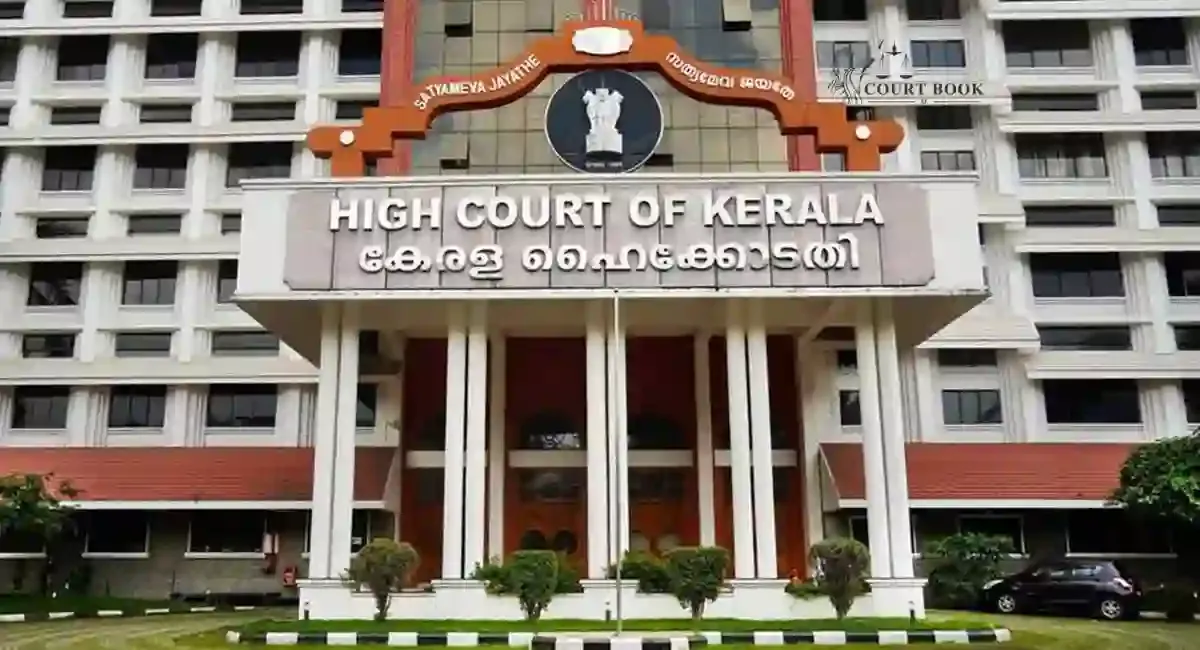
The Kerala High Court has refused to grant anticipatory bail to two men accused in a case registered under the Scheduled Castes and Scheduled Tribes (Prevention of Atrocities) Act. The Court held that the materials collected during the investigation disclosed a prima facie case under the special law, making the statutory bar against pre-arrest bail applicable.
Justice A. Badharudeen delivered the judgment while dismissing a criminal appeal filed against an earlier order of the Special Court for SC/ST Act Cases, Thrissur.
Background of the Case
The case arises from Crime No. 420 of 2026 registered at Valappad Police Station in Thrissur district. According to the prosecution, the incident took place on May 6, 2026.
The complainant alleged that the accused, along with several others, entered the courtyard of her house and allegedly caused explosions using explosive substances. It was further alleged that when she came outside after hearing the noise, one of the accused addressed her by her caste name along with abusive words and allegedly threatened her family.
The accused approached the Special Court seeking anticipatory bail, but their plea was rejected. They then challenged that order before the High Court.
Arguments Before the Court
Counsel for the appellants argued that the accused had no knowledge of the complainant's caste identity. It was submitted that, in the absence of such knowledge, offences under the SC/ST Act would not be attracted.
The defence also contended that the dispute stemmed from political rivalry between members of different political groups and that all other offences in the case were bailable.
Opposing the appeal, the complainant's counsel argued that the parties were well acquainted and had previously worked in the same political party. Therefore, the accused could not claim ignorance about the complainant's caste identity.
The State also opposed the plea and produced the case diary before the Court.
Court’s Observations
After examining the records, Justice Badharudeen noted that statements of the complainant, her husband, mother, and other witnesses supported the prosecution version at the present stage.
The Court observed that the accused and the complainant were known to each other and had shared political affiliations in the past. In such circumstances, the argument that the accused were unaware of the complainant's caste identity could not be readily accepted at the stage of bail.
Referring to earlier decisions, the Court said that knowledge of a victim's caste can be inferred from available materials during the investigation.
The bench further explained that a place
"within public view"
is not necessarily a public place. Even a private location may fall within that expression if other persons are present and capable of witnessing or hearing the alleged conduct.
“The parties are known to each other, who worked in the same political party for a considerable time,”
the Court observed while concluding that a prima facie offence under Section 3(1)(s) of the SC/ST Act was made out.
The Court also took note of the investigating officer's report regarding the criminal antecedents attributed to the appellants.
Decision
Holding that the allegations and available materials disclosed prima facie offences under the SC/ST (Prevention of Atrocities) Act, the High Court ruled that the bar contained in Section 18 of the Act applied to the case.
The Court upheld the Special Judge's order refusing anticipatory bail and dismissed the appeal.
Justice Badharudeen directed the two accused to surrender before the investigating officer immediately, stating that if they failed to do so, the investigating officer would be free to arrest them in accordance with law.
Case Details:
Case Title: Bhageesh Pooradan & Anr. v. State of Kerala & Anr.
Case Number: Criminal Appeal No. 750 of 2026
Judge: Justice A. Badharudeen
Decision Date: June 18, 2026


