

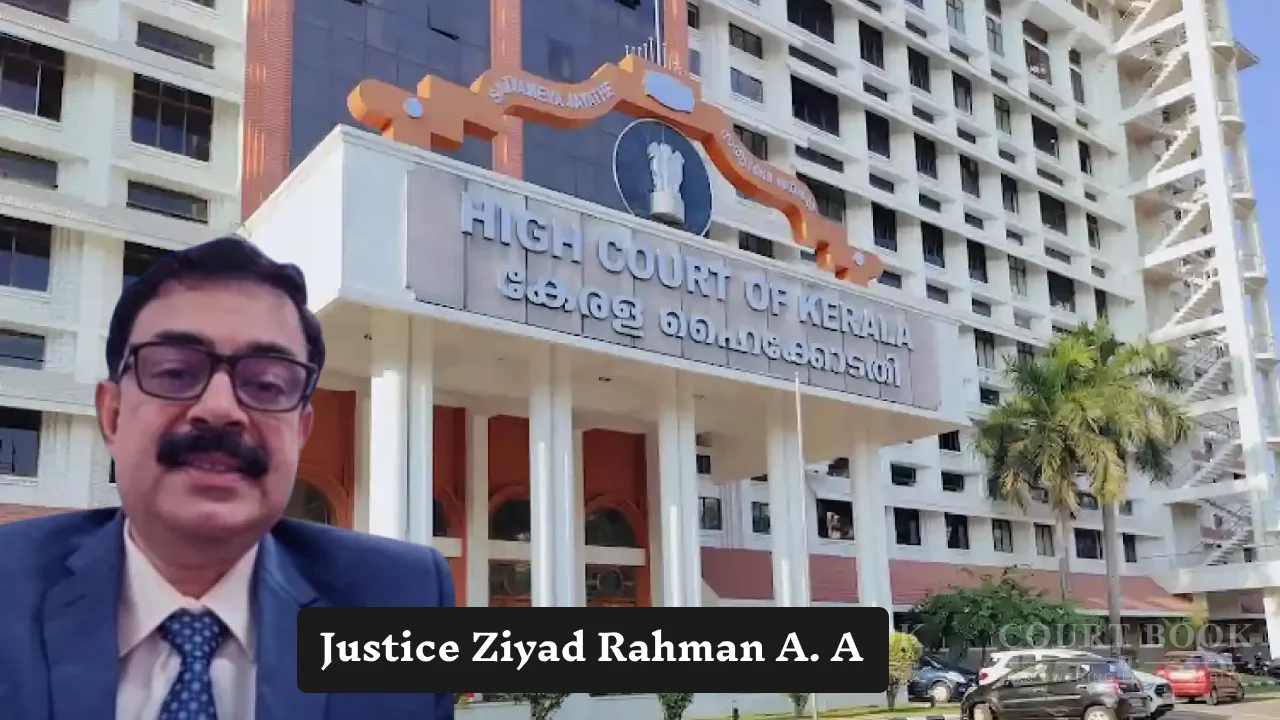
The Kerala High Court has ruled that a retired employee of a co-operative bank cannot pursue a gratuity dispute before a Consumer Commission, holding that such claims arise out of an employer-employee relationship and not a consumer-service relationship. Setting aside the District Consumer Disputes Redressal Commission's order, the Court clarified that disputes over statutory retirement benefits like gratuity must be pursued through the appropriate legal remedies.
Background of the Case
The writ petition was filed by The Tirur Service Co-Operative Bank Ltd., challenging an order passed by the District Consumer Disputes Redressal Commission, Malappuram.
The respondent, a former employee of the bank, had served from November 1, 1978, to March 31, 2016, retiring after nearly 38 years of service. According to him, he was entitled to ₹12,20,217 as gratuity under the Payment of Gratuity Act. However, the bank paid ₹10 lakh at the time of his retirement, leaving a balance of ₹2,20,217, which he later sought before the Consumer Commission.
The Consumer Commission accepted his complaint and directed the bank to pay the balance gratuity amount along with ₹25,000 as compensation and ₹10,000 towards litigation costs. Aggrieved by this decision, the bank approached the High Court.
Bank's Arguments
The bank argued that the complaint itself was not maintainable because the retired employee did not fall within the definition of a "consumer" under the Consumer Protection Act, 2019.
It also contended that disputes relating to gratuity are governed by the Payment of Gratuity Act, which provides a separate statutory mechanism for adjudication. Additionally, the bank pointed out that disputes between a co-operative society and its employees are covered under the Kerala Co-operative Societies Act and therefore could not be decided by the Consumer Commission. It further raised an objection that the claim was filed several years after retirement.
Court's Observations
Justice Ziyad Rahman A.A. first rejected the objection that the writ petition should fail because an appellate remedy was available under the Consumer Protection Act.
The Court observed that where the dispute concerns the very jurisdiction of an authority, the High Court can exercise its writ jurisdiction.
"The question to be decided is a pure question of law, touching upon the jurisdiction of the District Commission,"
the Court observed while holding that the writ petition was maintainable.
Examining the Consumer Protection Act, the Court held that a consumer is a person who hires or avails services for consideration. In contrast, an employer-employee relationship operates differently because the employee renders services to the employer in return for salary.
The Court observed,
"The employer cannot be treated as a service provider and the employee cannot be treated as a person who availed the services from the employer."
Referring to earlier Supreme Court decisions, including Jagmittar Sain Bhagat and Ministry of Water Resources v. Shreepat Rao Kamde, the High Court noted that service-related disputes involving gratuity or other retirement benefits cannot ordinarily be pursued before Consumer Forums because government or institutional employees do not qualify as consumers in such matters.
The Court also distinguished earlier cases where employees had been treated as consumers because they had contributed to separate pension or welfare schemes managed by independent authorities. It explained that gratuity stands on a different footing since it is a statutory benefit payable by the employer without any employee contribution.
Decision
Holding that the District Consumer Disputes Redressal Commission lacked jurisdiction to entertain the gratuity complaint, the Kerala High Court quashed its order.
"The jurisdiction exercised by the District Commission in this case was without any jurisdiction,"
the Court held, adding that the respondent could still pursue any other remedy available under law. Accordingly, the writ petition was allowed and the Consumer Commission's order was set aside without prejudice to the respondent's other legal remedies.
Case Details:
Case Title: The Tirur Service Co-Operative Bank Ltd. v. Moideen M.
Case Number: WP(C) No. 45358 of 2024
Judge: Justice Ziyad Rahman A.A.
Decision Date: June 29, 2026


