

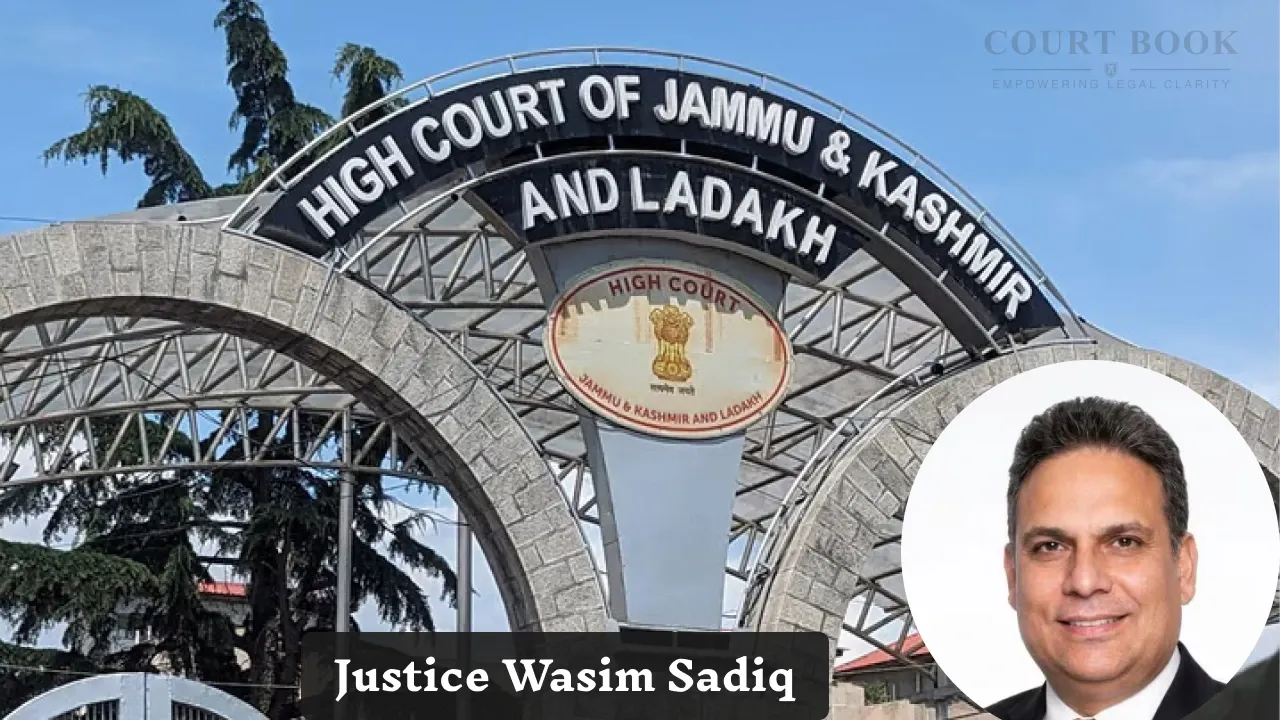
The High Court of Jammu & Kashmir and Ladakh has refused to interfere with a trial court order appointing Revenue and Agriculture Commissioners in a long-running land possession dispute from Kupwara. The Court observed that the appointment of commissioners was only meant to assist the trial court in understanding the factual position on the ground and did not decide the rights of either party.
Background of the Case
The dispute relates to agricultural land measuring 3 kanals and 17 marlas situated in Kupwara. The original civil suit was filed seeking a permanent prohibitory injunction against alleged interference with possession of the land. In June 2020, the trial court passed an interim order restraining interference with the suit property.
Later, in April 2025, the interim protection was made absolute by the trial court. However, the order was modified by the Principal District Judge, Kupwara, in July 2025, directing both sides to maintain status quo regarding possession of the land while the main suit continued.
The appellate court had also noted that there had been no site inspection or appointment of a local commissioner despite rival claims over possession.
Why the Fresh Dispute Reached High Court
Following the status quo order, allegations were raised that changes had been made on the land, including construction of a tin shed. An application was then moved before the trial court under Section 151 CPC seeking restoration of status quo and local inspection.
The trial court subsequently appointed the Tehsildar concerned and the District Agriculture Officer as Commissioners to inspect the spot and submit a report.
This order was challenged before the High Court by Bashir Ahmad Akhoon and another petitioner, who argued that the trial court had acted mechanically and beyond its jurisdiction. The petitioners contended that such an inquiry amounted to an unnecessary fact-finding exercise and effectively reopened issues already considered by the appellate court.
Court’s Observations
Justice Wasim Sadiq Nargal observed that the High Court’s powers under Article 227 of the Constitution are supervisory and not appellate in nature. The Court reiterated that interference is justified only in cases involving patent illegality, perversity or jurisdictional error.
The Court referred to earlier Supreme Court rulings and noted:
“The supervisory jurisdiction cannot be invoked to obstruct the normal course of trial or to substitute the discretion exercised by the trial Court merely because another possible view exists on the same set of facts.”
The High Court further observed that the trial court had appointed the commissioners only to ascertain the actual factual position on the spot and to effectively adjudicate the dispute pending before it.
The bench stated that appointment of commissioners did not determine ownership or possession rights of the parties. Instead, the reports would merely assist the trial court while deciding the suit.
Decision
The High Court upheld the trial court’s order dated 29 November 2025 appointing the commissioners and declined to interfere with it under Article 227 jurisdiction. The Court directed the trial court to proceed with the suit expeditiously and consider the commissioners’ reports strictly in accordance with law after hearing both parties.
Both connected petitions were disposed of, and the parties were directed to appear before the trial court on 5 June 2026.
Case Details
Case Title: Bashir Ahmad Akhoon & Anr. vs Ghulam Ahmad Malik
Case Number: CM(M) No. 548/2025 with connected CM(M) No. 289/2025
Judge: Justice Wasim Sadiq Nargal
Decision Date: 21 May 2026


