

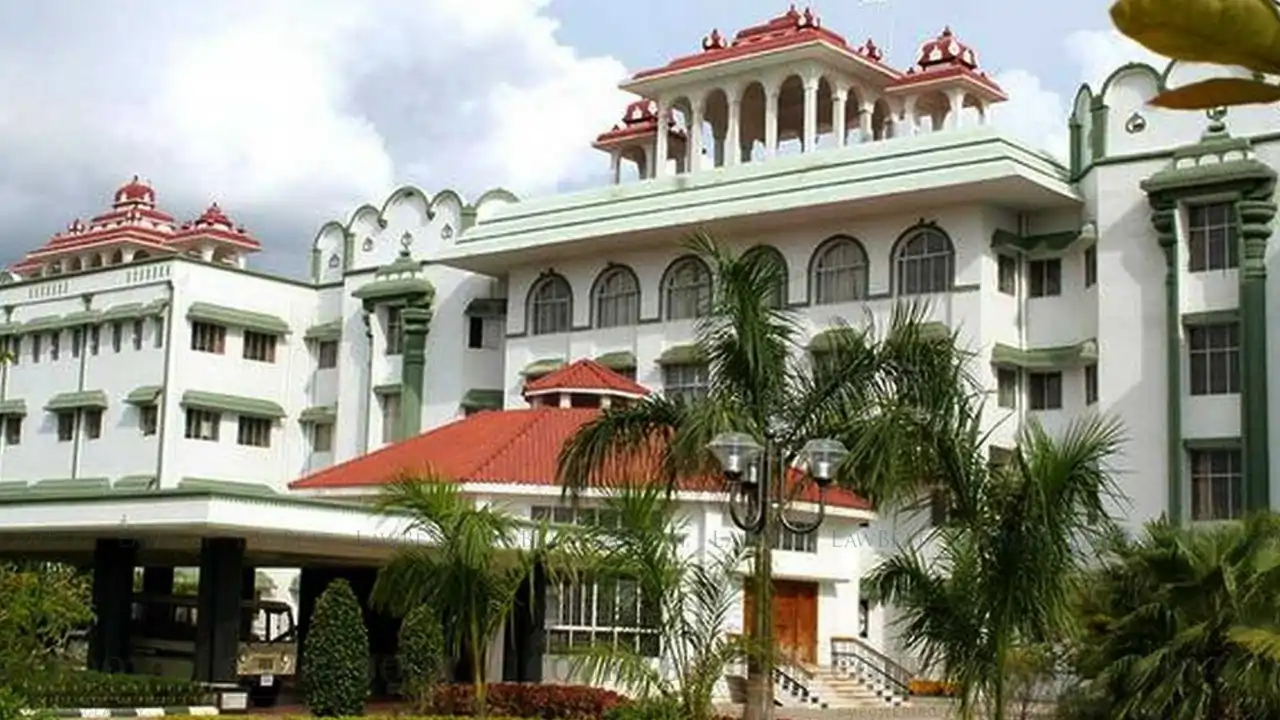
The Madurai Bench of the Madras High Court has refused to dissolve a marriage after finding that the husband failed to prove his allegation that his wife was suffering from schizophrenia. The Court held that a mere allegation of mental illness, without convincing medical evidence, cannot become a ground for divorce under the Hindu Marriage Act.
A Division Bench comprising Justice N. Anand Venkatesh and Justice K. K. Ramakrishnan dismissed the husband's appeals challenging the Family Court's refusal to grant divorce and its decision directing restoration of matrimonial relations between the parties.
Background of the Case
The couple married in July 2018 through an arranged marriage and initially lived together in Mumbai. According to the husband, he later discovered during the wife's pregnancy that she had allegedly been suffering from schizophrenia even before the marriage and that this fact had been concealed from him. He sought divorce on the ground of cruelty and alleged suppression of a serious mental condition.
The wife denied the allegations and maintained that she had never suffered from schizophrenia. She claimed the marriage was normal in its early stages and asserted that she remained willing to continue the matrimonial relationship. She also filed proceedings seeking restitution of conjugal rights.
The Family Court dismissed the husband's divorce petition and granted the wife's plea for restitution of conjugal rights, leading to the present appeals before the High Court.
The High Court examined the medical evidence relied upon by the husband and found it inadequate. The Bench noted that although several doctors were examined, no final diagnosis, clinical record, diagnostic report, or expert medical opinion conclusively establishing schizophrenia had been produced before the Court.
The Court observed that the parties had lived together normally after marriage, travelled together, attended family functions, and the wife had conceived during the marriage. These circumstances, according to the Bench, were inconsistent with the husband's claim that she had been suffering from a severe pre-existing mental disorder.
Referring to Supreme Court precedents, the Bench reiterated that schizophrenia by itself is not a sufficient ground for divorce. The spouse seeking divorce must prove that the mental disorder is of such a nature and degree that normal matrimonial life becomes impossible.
“The husband has miserably failed to prove that the wife was suffering from schizophrenia,” the Court observed while rejecting the allegation that any material fact had been fraudulently concealed before the marriage.
The Bench also took note of the fact that the wife had later completed her higher studies and had successfully undergone extensive cross-examination, which, according to the Court, reflected mental stability and capacity.
Apart from the matrimonial dispute, the Court also considered claims relating to jewellery. It upheld the Family Court's direction requiring the return of 40 sovereigns of gold jewellery, finding no reason to interfere with that conclusion.
However, the Bench set aside the order directing return of the Mangalsutra. The Court reasoned that when the wife had successfully obtained a decree for restitution of conjugal rights and expressed a genuine willingness to continue the marriage, directing return of the Mangalsutra would be inconsistent with the subsistence of the marital relationship.
The High Court dismissed the husband's appeal against the rejection of his divorce petition and confirmed the decree for restitution of conjugal rights in favour of the wife. It also upheld the order directing return of 40 sovereigns of jewellery while setting aside the direction relating to the Mangalsutra.
All other challenges raised by the husband were rejected.
Case Details
Case Title: S. N. v. M. N.
Case Number: C.M.A.(MD) Nos. 696 & 697 of 2024; C.R.P.(MD) Nos. 2029, 3231 of 2023 and 2086 of 2024
Judges: Justice N. Anand Venkatesh and Justice K. K. Ramakrishnan
Decision Date: 15 June 2026


