

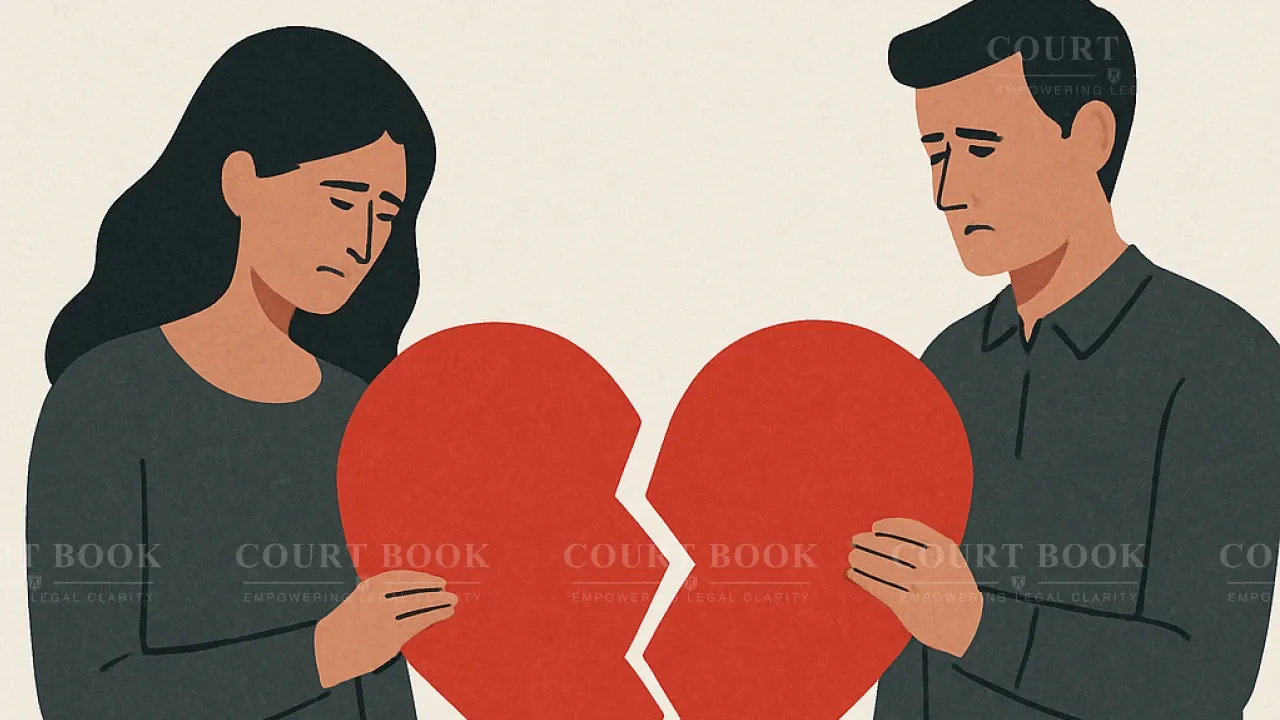
The Madras High Court has upheld a Family Court decree dissolving the marriage between a Chennai couple, holding that the husband's conduct including questioning the paternity of their child, asking the wife to undergo a DNA test, isolating her in the matrimonial home, and repeatedly humiliating her constituted mental cruelty under the Hindu Marriage Act.
The Division Bench also directed the husband to return the wife's sreedhana (bridal property) and other articles within four weeks, observing that such property remains the woman's exclusive property and cannot be treated as belonging to the husband's family.
Background of the Case
The dispute arose from three connected appeals challenging a common order of the VI Additional Principal Family Court, Chennai.
The husband, had appealed against the dismissal of his petition seeking restitution of conjugal rights and against the decree granting divorce to his wife. Meanwhile, the wife challenged the Family Court's refusal to direct the return of her jewellery and other sreedhana articles.
According to the wife, soon after the marriage solemnised on 7 December 2014, she was subjected to repeated humiliation by her husband and his family. She alleged that she was made to eat separately, excluded from family interactions, body-shamed, compared with other prospective brides, and deprived of control over her jewellery. She further alleged that after the birth of their son, the husband questioned whether the child was his and demanded a DNA test. The husband denied the allegations and sought restoration of the matrimonial relationship.
Court's Observations
After examining the evidence, the Division Bench found that several allegations made by the wife were never specifically denied either in the written pleadings or during cross-examination.
The Court noted that the wife consistently stated she was prevented from sitting and dining with other family members and was deliberately isolated inside the matrimonial home.
"The significant acts of not permitting her to sit along with the family members and not permitting her to eat along with the family members day in and day after, would have caused severe mental agony to any lady who had just entered the marital home with hopes and expectations,"
the Bench observed.
The judges further held that these incidents could not be dismissed as trivial when viewed collectively.
"The bench observed, 'These instances might seem trivial, but when viewed from the viewpoint of a newly married bride, they would have definitely affected her mental health.'"
Questioning Child's Paternity Was Serious Mental Cruelty
The Court placed particular emphasis on the allegation that the husband questioned the paternity of the child and asked the wife to undergo a DNA test.
The Bench noted that this allegation had neither been specifically denied in the written statement nor challenged during cross-examination.
"The bench observed, 'When the petitioner entered the marital home with her baby in her arms, she was questioned by the respondent who the father was. This directly affected her honour and self-respect.'"
The Court held that questioning the legitimacy of a child born during marriage amounted to continuous mental cruelty and fully justified the decree of divorce.
Sreedhana Remains Exclusive Property of the Wife
Allowing the wife's appeal regarding the return of jewellery, the High Court disagreed with the Family Court's findings.
The Bench observed that sreedhana continues to remain the exclusive property of the wife, irrespective of where it is kept after marriage.
"The bench observed, 'For every lady, any small article given by her parents would be of immense value. It has not only monetary value but also sentimental value.'"
The Court found it improbable that the wife would have removed all her jewellery while leaving the matrimonial home during pregnancy, particularly when the cupboard in which the articles were kept remained in the husband's house.
It also held that the husband had failed to specifically deny the detailed list of articles furnished by the wife and had not produced any contemporaneous protest or evidence showing that she had taken the jewellery with her.
Decision
The Madras High Court dismissed both appeals filed by the husband, thereby confirming the Family Court's decree dissolving the marriage and rejecting his plea for restitution of conjugal rights.
The Court allowed the wife's appeal relating to the return of sreedhana articles. It directed the husband to return all jewellery and other articles listed in the annexure to her application within four weeks. If the articles are not returned within that period, the wife will be entitled to recover their present value together with interest at 7.5% per annum from the date of marriage until payment.
Case Details:
Case Title: V v. S
Case Number: CMA Nos. 68 of 2024, 114 of 2024 & 2609 of 2025
Judge: Justice C.V. Karthikeyan and Justice K. Rajasekar
Decision Date: 19 June 2026


