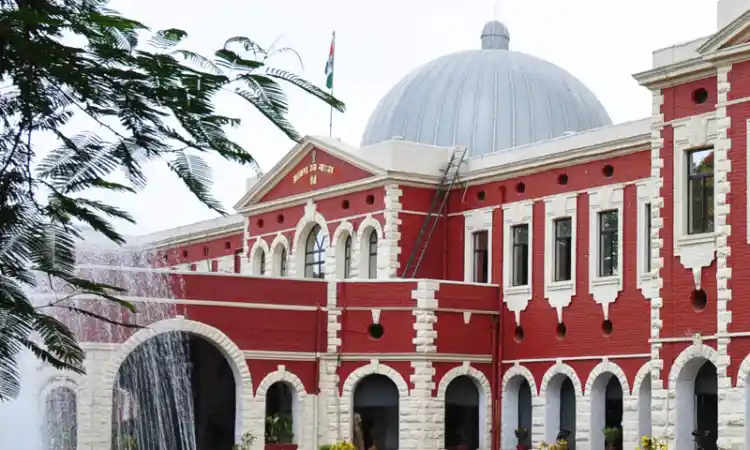
The Jharkhand High Court has held that a party cannot unilaterally withdraw from a settlement reached through court-annexed mediation after signing the agreement and acting upon its terms.
A Division Bench of Justice Sujit Narayan Prasad and Justice Sanjay Prasad directed the estranged husband and wife to comply with the settlement under which they had agreed to dissolve their marriage by mutual consent. The Court disposed of the appeal in terms of the mediation settlement.
Background of the Case
The appeal arose from a Family Court judgment dated November 14, 2024, which had dismissed the husband's divorce petition filed on grounds of cruelty and desertion under the Hindu Marriage Act, 1955.
The parties had subsequently participated in the Jharkhand High Court Legal Services Committee's Special Mediation Drive. On August 19, 2025, they reached a settlement agreeing to end their marriage by mutual consent.
Under the settlement, the husband agreed to pay ₹35 lakh as permanent alimony, ₹40 lakh towards the child's education and other expenses, and ₹5 lakh towards the child's medical expenses. The settlement also provided for the father's visitation rights and withdrawal of certain pending proceedings.
The husband later paid ₹35 lakh in two instalments. However, the wife subsequently expressed unwillingness to proceed with the settlement and indicated that she wanted to give the marriage another chance.
Court's Observation
The key question before the Bench was whether a party could withdraw from a settlement reached through court-annexed mediation and subsequently filed as a joint compromise petition after the parties had acted upon it.
The Bench observed that a settlement reached through court-annexed mediation, formally signed and placed before the Court, carries legal sanctity. Referring to the Mediation Act, 2023, the Court noted that such a settlement is binding on the parties and enforceable in the same manner as a judgment or decree.
“The option to unilaterally walk away is extinguished” once mediation has successfully concluded and the settlement has been formally signed, the Court observed while discussing the applicable legal position.
The Bench further held that the husband's payment of ₹35 lakh constituted partial performance of the settlement and strengthened the application of estoppel against the wife. A mere change of mind, it said, could not justify unilateral withdrawal from a signed and court-recorded settlement.
Decision
The High Court directed both parties to strictly comply with the mediation settlement dated August 19, 2025 within six months. It directed them thereafter to file a joint petition for dissolution of marriage by mutual consent before the competent Family Court.
The Family Court was directed to consider the petition and pass appropriate orders in accordance with law.
The appeal was accordingly disposed of in terms of the settlement.
Case Details:
Case Title: Shashi Gurung v. Mrs. Shweta Gupta
Case Number: F.A. No. 23 of 2025
Judge: Justice Sujit Narayan Prasad and Justice Sanjay Prasad
Decision Date: 20 July 2026