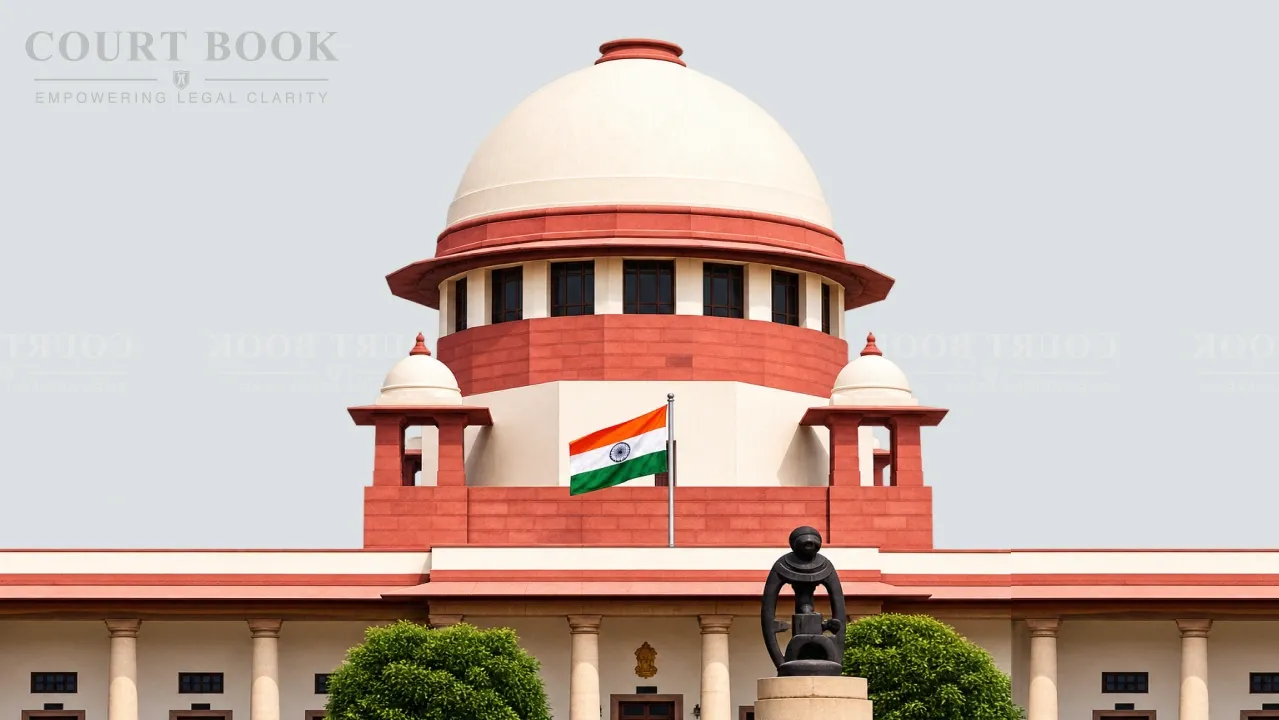
The Supreme Court has set aside a Bombay High Court order that discharged an accused in a forgery and cheating case, holding that the absence of the original document allegedly forged cannot, by itself, be a ground to terminate the criminal proceedings.
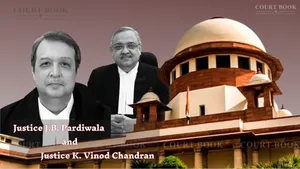
A Bench of Justice Ujjwal Bhuyan and Justice Atul S. Chandurkar delivered the judgment on September 22, 2026, in Antonetto J D’Souza v. Aldila Braganza and Others. The Court restored the criminal proceedings and directed the Magistrate to proceed with the trial in accordance with law.
Background
The dispute arose between neighbours over construction carried out pursuant to a municipal licence in Goa. The informant alleged that the accused and her father-in-law had relied upon an interpolated and forged copy of an approved building plan.
Following a complaint, an FIR was registered in July 2012 under Sections 468, 471 and 420 read with Section 34 of the Indian Penal Code. After investigation, a chargesheet was filed in 2016. The Magistrate, after considering the material on record, found sufficient grounds to frame charges against the accused.
The accused challenged the order. The Sessions Court dismissed the revision in 2021. Subsequently, the Bombay High Court initially declined to interfere with the proceedings in October 2023, observing that there was prima facie material supporting the framing of charges.However, in a later writ petition, the High Court took a different view. It held that the absence of the original building plan was significant and discharged the accused from the offences under Sections 468, 471 and 420 IPC. The informant then approached the Supreme Court.
The Supreme Court first noted that the same issue concerning the missing original plan had already been considered by the High Court's Division Bench in the earlier proceedings. That order had not been challenged further.
The Court held that the accused could not re-agitate the same issue in a subsequent proceeding after the earlier challenge had failed.
The Bench explained:
“The principle of ‘issue estoppel’ would apply as a ground of challenge raised earlier but was unsuccessful was sought to be re-agitated before the same Court by the same party.”
The Court also considered the issue independently on its merits. Referring to the earlier decision in Rama Shanker Lal v. State of U.P., it noted that non-production of the original document does not automatically make it impossible to establish forgery. Other evidence, including circumstantial evidence, may be considered during trial.
The Bench further relied upon CBI v. R.S. Pai, observing that relevant documents omitted from the chargesheet may, with the Court's permission, be produced subsequently.
The Supreme Court emphasised that at the stage of framing charges, the Court is not required to conduct a detailed assessment of whether the evidence will ultimately result in conviction.
It observed that where the material raises a grave suspicion against the accused, the matter can proceed to trial. Whether the prosecution will ultimately establish the allegations beyond reasonable doubt is a question to be determined after evidence is led at trial.
The Court therefore found that the High Court had gone too far by re-appreciating the material and discharging the accused, particularly when the same challenge had already been considered in the earlier proceedings.
The Supreme Court set aside the Bombay High Court's judgment dated August 28, 2024. It restored the proceedings in Criminal Case No. 90/S/2016/F before the Magistrate and directed the Magistrate to proceed with the trial in accordance with law.
The Court clarified that all contentions of the parties, including those of the accused, remain open for consideration during the trial and that the observations made in the judgment should not prejudice either side. Since the complaint dates back to 2012, the Court also directed that the proceedings be expedited.
The criminal appeal was accordingly allowed.
Case Details:
- Case Title: Antonetto J D’Souza v. Aldila Braganza and Others
- Case Number: Criminal Appeal No. 4092 of 2026
- Judges: Justice Ujjwal Bhuyan and Justice Atul S. Chandurkar
- Decision Date: September 22, 2026



-300x169.webp)
-300x169.webp)