The Supreme Court has struck down key provisions of the Maharashtra Poisons (Amendment) Rules, 2011, which imposed additional restrictions on the purchase and sale of methanol. The Court held that the rules, introduced after a fatal hooch tragedy, failed the constitutional tests of proportionality, reasonableness and rational connection with their stated objective.
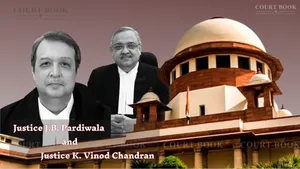
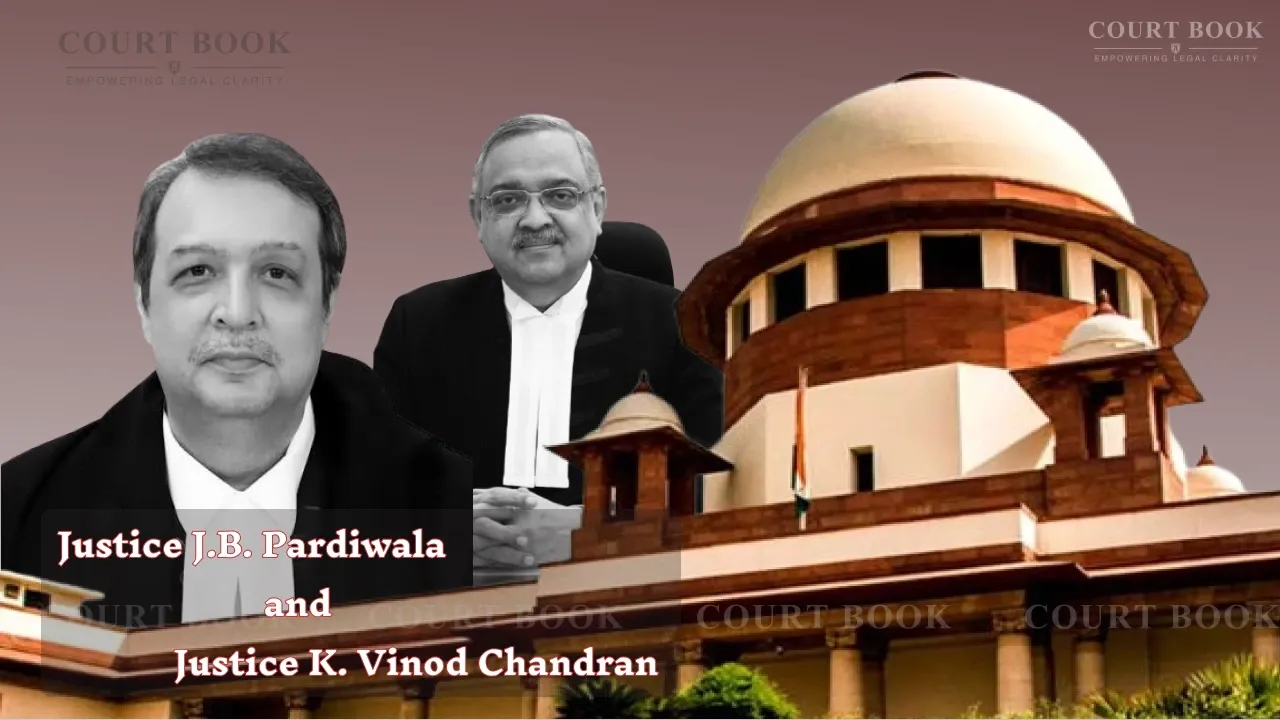
The judgment was delivered by a Bench comprising Justice J.B. Pardiwala and Justice K. Vinod Chandran on September 18, 2026.
Background of the Case
The challenge concerned Rules 18A and 18B of the Maharashtra Poisons Rules, 1972. Rule 18A required a seller to ascertain the purpose for which methanol was being purchased by verifying the purchaser's Form A licence. Except where methanol was being bought for drug manufacturing, the rule also required one gram of methylene carmine and four grams of denatonium saccharide to be added to every 100 litres of methanol before sale.
Rule 18B provided for confiscation of methanol found in possession without a valid Form A licence.
The amendments followed a 1991 incident involving spurious liquor purchased from a bar in Andheri, Mumbai. The judgment records that around 93 people lost their lives after consuming liquor containing methanol. A committee headed by P.R. Parthasarthy, then Additional Director General of Police, was subsequently constituted, and one of its recommendations resulted in the 2011 notification.
Industrial users challenged the rules, arguing that the mandatory additives affected the quality and marketability of products manufactured using methanol.
Supreme Court Examines Licensing Requirement
The Court noted that the existing Maharashtra Poisons Rules already contained several safeguards governing the sale and possession of poisons. These included licensing requirements, maintenance of sale and stock registers, inspections, and rules concerning storage, packaging and labelling.
The Bench found an important problem with Rule 18A(1). A Form A licence was primarily meant for persons selling or possessing poisons for sale, while downstream manufacturers using methanol as a raw material would generally not hold such a licence.
The Court observed:
"The sub-rule also overlooks that “ascertainment of use” is already covered under Rule 11 as well as the permit in Form B."
It held that the provision effectively prevented manufacturers and industrial consumers from purchasing methanol and also rendered the Form B permit framework ineffective.
Court Finds Additive Requirement Disproportionate
The Bench also examined the requirement to mix colourant and bitterant into methanol before sale to non-drug manufacturers.
The Court considered affidavits from several industries explaining the consequences. The material showed that the additives could leave colour or traces in finished products, affect catalysts and interfere with products intended for pharmaceutical, laboratory and other industrial applications. The judgment specifically records concerns raised by Aarti Industries, Akyl Chemicals, Balaji Amines, Balaji Formalin and Thermo Fisher Scientific India.
The Court held that the measure focused on identification of methanol but did not adequately address diversion and pilferage, which were among the causes identified by the Parthasarthy Committee.
It stated:
"The impugned rules prescribe a regulatory framework that does not prevent the misuse of methanol in liquor which takes place in the unregulated field."
The Bench further noted that the State had not shown how mixing the additives would definitively prevent deaths caused by adulterated liquor or prevent the use of other adulterants.
Article 14 And Article 19(1)(g) Violations
Applying the proportionality test, the Court held that the restrictions placed a substantial and continuing burden on industries, while the benefit relied upon by the State remained only a possibility. It also noted that less restrictive safeguards, including stronger monitoring, stock reconciliation, licence cancellation for violations and controls over transportation, were available within the regulatory framework.
The Court clarified that it did not question the legitimacy of preventing deaths caused by methanol-contaminated liquor. However, the means adopted had to satisfy constitutional requirements.
The Bench concluded that the impugned notification was manifestly arbitrary and lacked a rational nexus with the object sought to be achieved, thereby violating Article 14. It further held that the restrictions failed the proportionality test and violated Article 19(1)(g) in relation to non-drug manufacturers.
Decision
The Supreme Court ultimately held that the impugned rules were violative of Articles 14 and 19(1)(g) of the Constitution. The writ petitions were allowed, pending applications were disposed of, and the civil appeal was disposed of in the same terms.
The Registry was also directed to forward copies of the judgment to all High Courts and the Chief Secretaries of the respective States.
Case Details:
Case Title: M/S Balaji Formalin Pvt. Ltd. & Anr. v. Union of India & Anr. with connected matters
Case Number: Writ Petition (C) No. 893 of 2019 & Connected Matters
Judge: Justice J.B. Pardiwala and Justice K. Vinod Chandran
Decision Date: September 18, 2026



-300x169.webp)
-300x169.webp)
-300x169.webp)