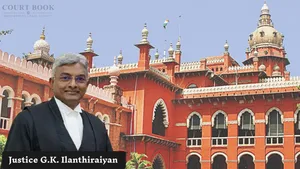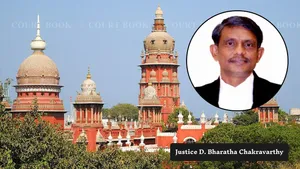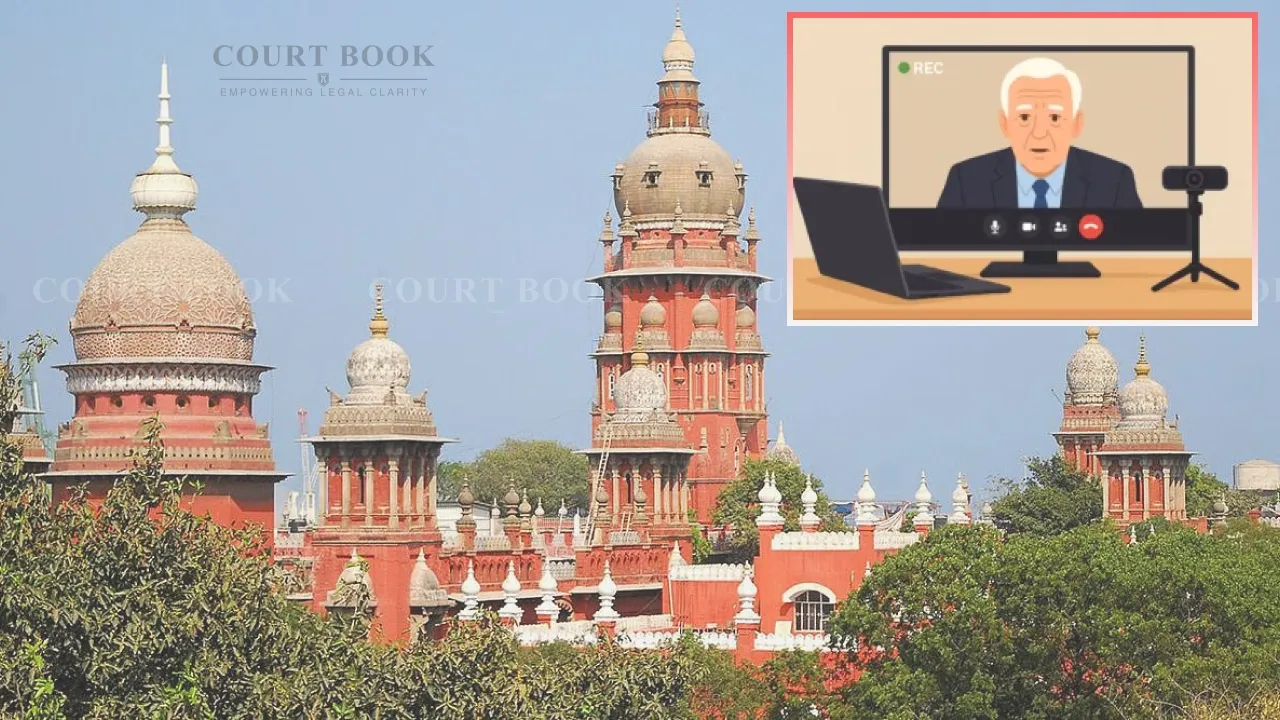
The Madras High Court has upheld an order permitting a 72-year-old doctor practising in London to appear through video conferencing (VC) for giving evidence in a long-pending partition suit. Justice N. Anand Venkatesh held that the witness’s age and health condition justified his appearance through VC mode.
The Court also clarified that the mere presence of complex documents or issues in a case cannot, by itself, be a reason to refuse examination of a witness through video conferencing when the applicable rules provide a procedure for recording such evidence.
Background of the Case
The proceedings arose from O.S.No.581 of 2012 pending before the Third Additional District Court, Coimbatore. The first respondent/plaintiff had sought partition and allotment of a 1/3rd share in the suit properties, besides other reliefs concerning an earlier decree and an injunction against alienation of the properties.
During the trial, the plaintiff’s evidence had earlier been closed after he appeared in person on three occasions but was not cross-examined. The defendants later obtained orders reopening the case and recalling P.W.1 for cross-examination.
The plaintiff, aged 72 and practising as a doctor in London, had also undergone bypass surgery and had been advised against long-distance travel. He therefore sought permission to give evidence through VC. The trial court allowed the request, leading to the two civil revision petitions before the High Court.
Court's Observation
The petitioners argued that the plaintiff had made allegations of fraud and forgery and relied upon several documents. According to them, his physical presence was necessary for effective cross-examination. They also relied on the Supreme Court’s decision in Salem Advocate Bar Association, TN v. Union of India.
Justice N. Anand Venkatesh, however, distinguished that decision, observing that it concerned recording evidence through an Advocate Commissioner. In the present matter, the evidence would continue to be recorded by the trial court itself, with the witness appearing remotely.
The Court stated:
“Therefore, the complexity that was discussed in the said judgment of the Hon’ble Apex Court will not apply to the case in hand.”
The Court further noted that the Madras High Court Video Conferencing Rules, 2026 contain safeguards and procedures for conducting proceedings through VC mode. It held that the trial court cannot refuse VC examination merely because a case involves several documents or complex issues.
Decision
Finding that the plaintiff’s age and health circumstances justified his remote appearance, the High Court held that the trial court’s order did not warrant interference under Article 227 of the Constitution.
The Court dismissed both civil revision petitions and directed the Third Additional District Court, Coimbatore, to dispose of O.S.No.581 of 2012 within four months from receipt of the order.
No costs were awarded, and the connected miscellaneous petitions were also dismissed.