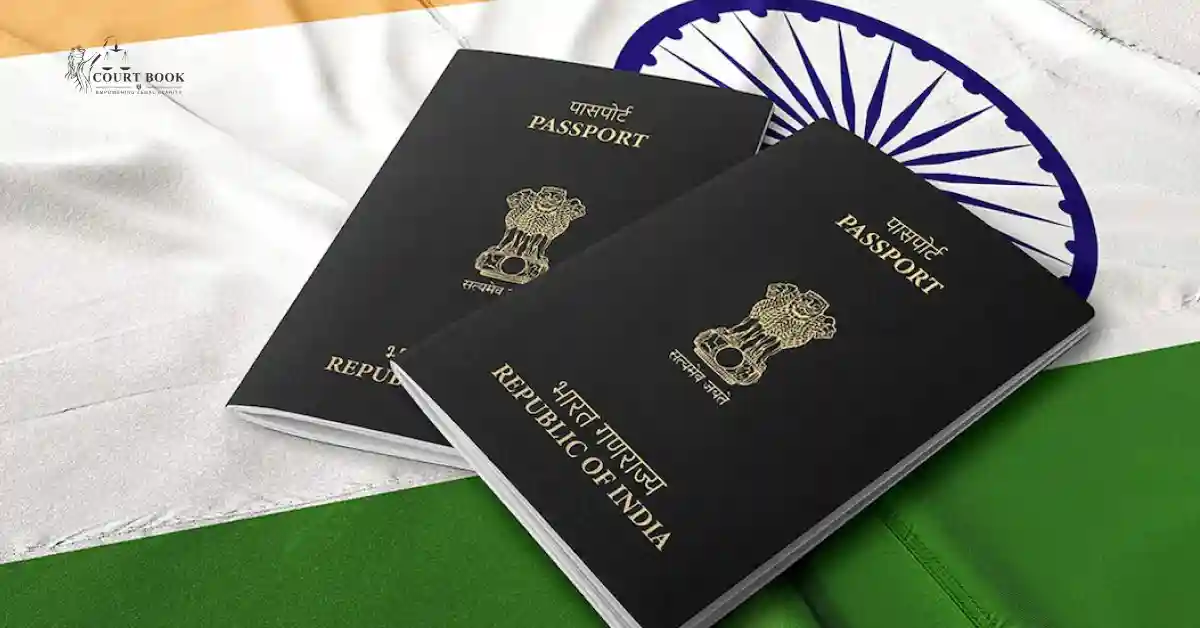
The Calcutta High Court has held that passport authorities cannot restrict the validity of a passport to one year merely because criminal proceedings are pending if the concerned criminal court has already permitted the passport's renewal. Justice Krishna Rao directed the Regional Passport Office to renew businessman Amit Kumar Agarwal's passport for the normal period of ten years, observing that the authority had misapplied the 1993 government notification while processing the renewal request.
Background of the Case
The petitioner, Amit Kumar Agarwal, approached the High Court after the Passport Office declined to issue him a regular ten-year passport. Proceedings under the Prevention of Money Laundering Act (PMLA) were pending before the Special Judge at Ranchi, where he had deposited his passport in compliance with judicial directions. As the passport was due to expire on January 28, 2026, the trial court released it solely for renewal, subject to conditions including furnishing an indemnity bond, not travelling abroad without prior court permission, and surrendering the renewed passport within five days.
After applying for renewal, the Passport Office informed him that since the trial court had not specified the passport's validity period, only a one-year passport could be issued under Notification GSR 570(E) dated August 25, 1993. The petitioner challenged this decision before the High Court.
Court's Observations
Justice Krishna Rao examined the provisions of the Passports Act, 1967, the Passport Rules, and the 1993 notification. The Court observed that the Act governs refusal, renewal and validity of passports, while the notification was intended to grant exemptions to persons facing pending criminal proceedings and not to create fresh conditions beyond the parent statute.
The Court noted that the role of a criminal court is confined to deciding whether a person should be allowed to travel abroad. Determining the duration of a passport, however, remains an administrative function of the Passport Authority under the Act and Rules.
"The validity period of the passport is to be governed by the Passports Act and the Passport Rules, not by the absence of a court-imposed tenure," the Court observed.
Justice Rao also referred to the Supreme Court's decision in Mahesh Kumar Agarwal v. Union of India, which recognised that possession of a passport and permission to travel abroad are separate issues. A person may hold a valid passport while still requiring judicial permission before leaving the country.
Why the Court Favoured a Ten-Year Passport
The High Court found that renewing the passport for only one year would serve little purpose because the petitioner was already barred from travelling abroad without the trial court's prior approval and was required to re-deposit the passport after renewal.
The Court observed that if only a one-year passport were issued, the petitioner would repeatedly have to seek release of the passport from the criminal court merely for renewal, even though the travel restrictions imposed by the trial court would continue to remain in force.
Decision
Allowing the writ petition, the Calcutta High Court directed the passport authorities to renew Amit Kumar Agarwal's passport for the normal period of ten years, subject to completion of all statutory formalities, within three weeks of receiving the judgment.
The Court further directed the petitioner to comply with the trial court's earlier orders by surrendering the renewed passport within five days and continuing to obtain prior judicial permission before undertaking any foreign travel.
Case Details
Case Title: Amit Kumar Agarwal v. Union of India, Ministry of External Affairs & Ors.
Case Number: W.P.A. No. 9256 of 2026
Judge: Justice Krishna Rao
Decision Date: August 5, 2026