

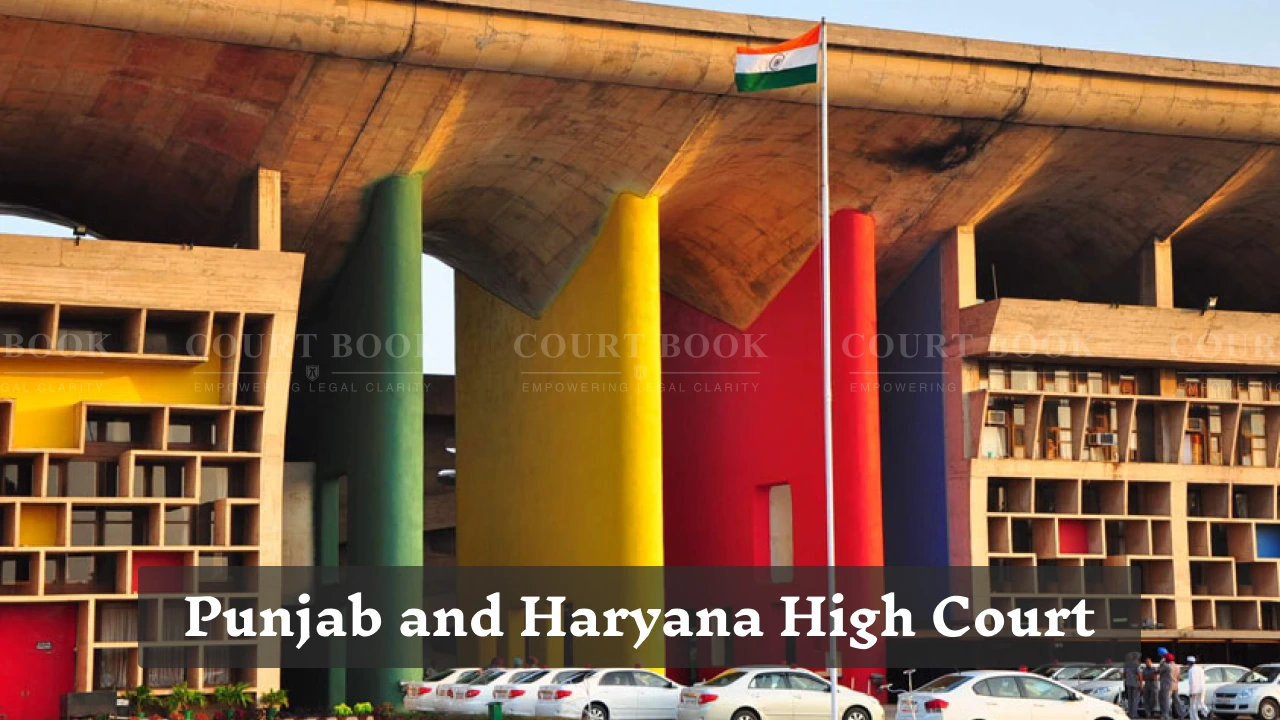
The Punjab and Haryana High Court has upheld the conviction of a man in a case involving a minor girl, while modifying the sentence considering the circumstances that emerged during the long pendency of the appeal.
Background of the Case
The case arose from an appeal filed by Dharminder Kumar against his conviction by an Additional Sessions Judge, Panchkula, in 2004 under Sections 363 and 376 of the Indian Penal Code.
As per the prosecution, the prosecutrix, aged around 16 years at the time, was allegedly persuaded by the accused on the pretext of marriage. She accompanied him to Pinjore Gardens and later to a secluded location near the Kaushalya rivulet, where sexual intercourse was alleged to have taken place without her consent.
Following investigation, the accused was charged and subsequently convicted by the trial court.
The appellant contended that the trial court had misread the evidence and that the relationship was consensual. It was argued that the age of the prosecutrix had not been conclusively established, as the prosecution relied on a school leaving certificate without producing a municipal birth record or conducting an ossification test.
The State opposed the appeal, submitting that the prosecutrix was a minor and that her testimony was consistent and reliable. It was further argued that school records constituted valid proof of age and that consent was not legally relevant in the case of a minor.
Justice Rupinderjit Chahal found no merit in the challenge to the age of the prosecutrix. It held that the school leaving certificate, supported by the testimony of her mother, was reliable evidence. The court noted that such records, when prepared prior to the incident, carry evidentiary value.
The bench observed that once the prosecutrix is established to be a minor, the question of consent becomes legally immaterial.
On the evidentiary aspect, the court relied on the testimony of the prosecutrix, stating that it was consistent and trustworthy. It reiterated that conviction can be based on the sole testimony of the victim if it inspires confidence.
The court also held that the absence of injuries does not negate the allegation, and the short delay in lodging the FIR was not fatal, noting that hesitation in reporting such incidents is understandable given social factors.
After examining the material on record, the High Court concluded that the prosecution had proved its case beyond reasonable doubt. The conviction of the appellant under Sections 363 and 376 IPC was upheld.
However, taking into account factors such as the passage of more than two decades since the incident, the appellant’s medical condition following a paralytic attack, and the overall circumstances, the court modified the sentence.
The substantive sentence was reduced to the period already undergone by the appellant.
The appeal was disposed of accordingly.
Case Details
Case Title: Dharminder Kumar vs State of Haryana
Case Number: CRA-S-1849-SB-2004
Judge: Justice Rupinderjit Chahal
Decision Date: 10 March 2026
Download Order

