

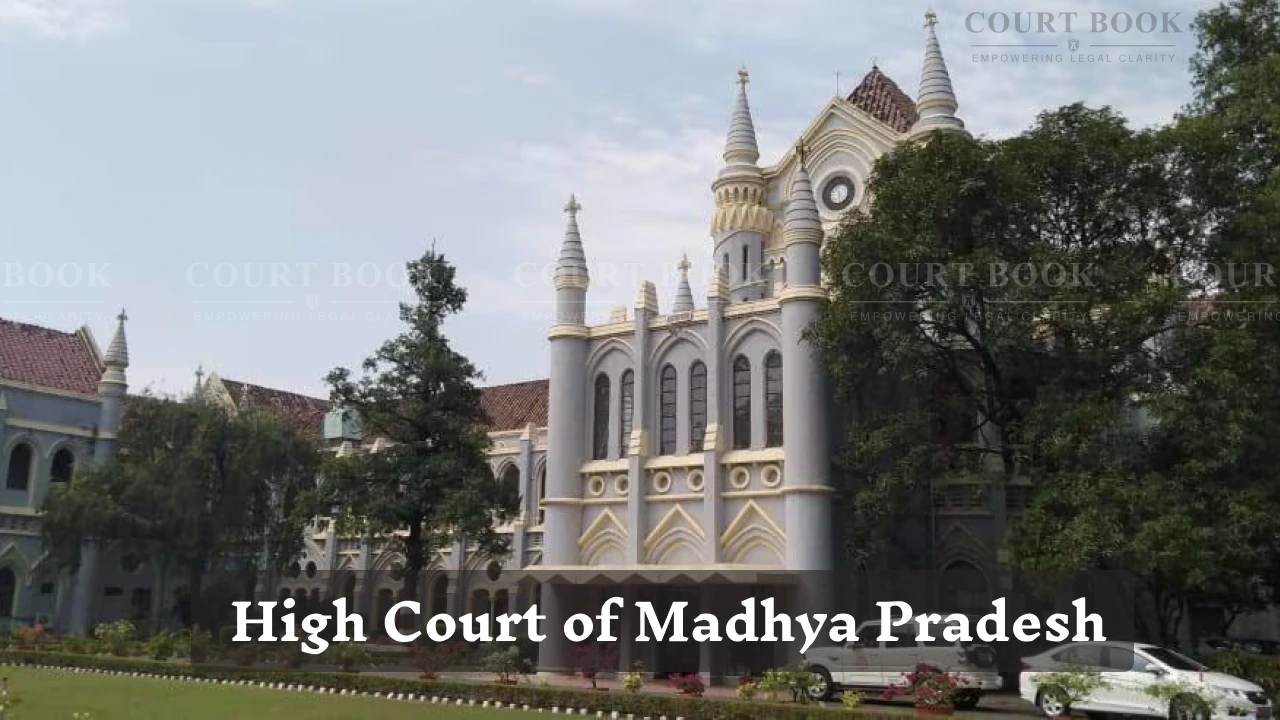
The Madhya Pradesh High Court has set aside an order of a Judicial Magistrate that dismissed a private criminal complaint for failure to provide documentary and electronic evidence to proposed accused persons before cognizance was taken. The court held that such a dismissal was legally unsustainable and directed restoration of the complaint.
Background of the Case
The petitioner, Vinay Prakash Singh alias Deepu Singh, had filed a private complaint alleging offences arising out of an incident connected to his business activities. According to the complaint, certain individuals, including police officials, unlawfully entered his premises, assaulted him, threatened him, and removed diesel stored at his farmhouse.
During the proceedings before the trial court, a dispute arose regarding the interpretation of Section 223(1) of the Bharatiya Nagarik Suraksha Sanhita (BNSS). The magistrate directed the complainant to supply all documentary and electronic evidence to the proposed accused before cognizance could be considered. The court further warned that non-compliance would result in dismissal of the complaint.
When the complainant did not comply with that direction, the magistrate dismissed the complaint on 22 January 2026.
Hearing the challenge, the High Court examined whether the magistrate had correctly interpreted the law.
The bench observed that the proviso to Section 223(1) BNSS is intended to ensure that an accused gets an opportunity of hearing before cognizance is taken. However, the court clarified that this requirement does not automatically create an obligation to provide the entire body of evidence at the threshold stage.
“The proviso to Section 223(1) BNSS is intended to ensure that the accused is heard before cognizance is taken,” the bench observed, adding that such an opportunity does not necessarily require supply of complete evidence at that stage.
The court also noted that an application filed by the complainant under Section 94 BNSS seeking production of electronic evidence was still pending. According to the bench, the trial court should have considered that application before passing an adverse order.
Further, the High Court found that the complaint had been dismissed mechanically, without examining the merits of the allegations or the overall procedural fairness of the proceedings.
Allowing the petition, the High Court set aside the magistrate’s order dated 22 January 2026 and restored the private complaint to its original number.
The court directed the trial court to proceed in accordance with law, decide all pending applications including the application under Section 94 BNSS, and provide reasonable opportunity to all parties. The High Court clarified that it had not expressed any opinion on the merits of the allegations and that all parties would remain free to contest the matter before the trial court.
Case Details
Case Title: Vinay Prakash Singh @ Deepu Singh v. Pushpendra Singh @ Dimple Singh and Others
Case Number: MCRC No. 17776 of 2026
Judge: Justice Himanshu Joshi
Decision Date: 8 May 2026


