

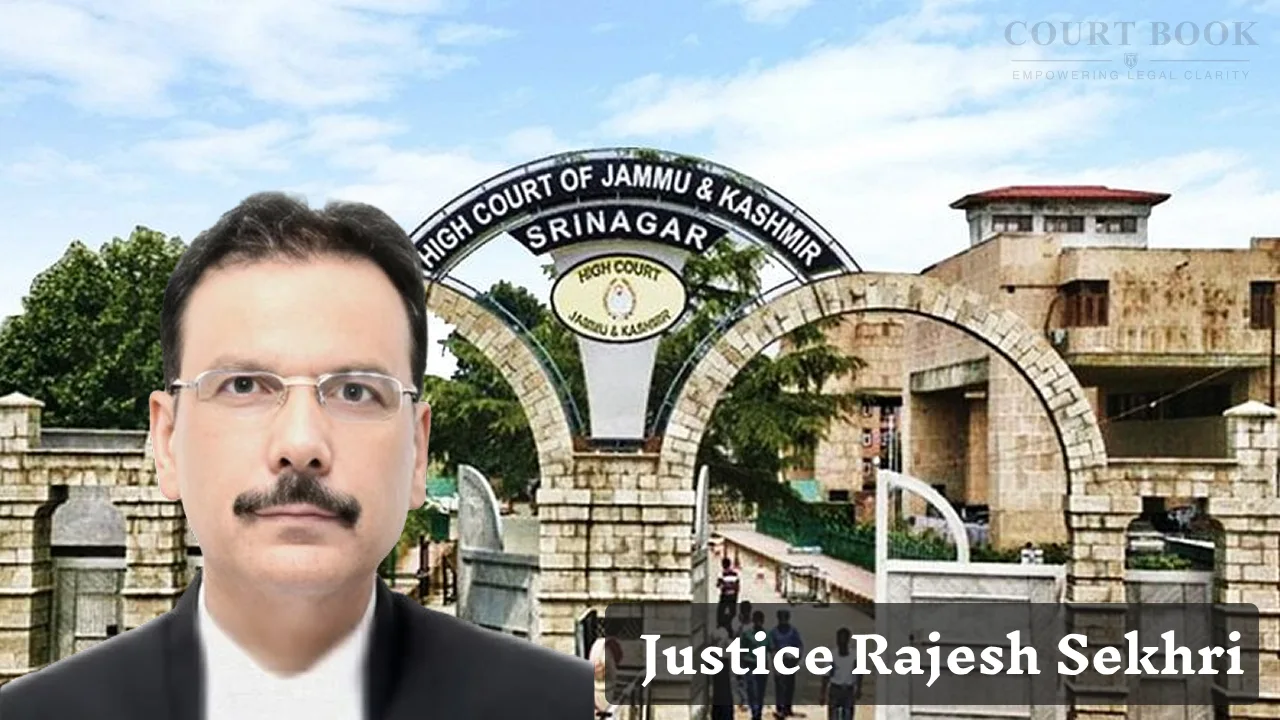
The Jammu & Kashmir and Ladakh High Court has quashed a preventive detention order passed against a Rajouri resident under the Prevention of Illicit Traffic in Narcotic Drugs and Psychotropic Substances Act (PIT NDPS Act), holding that the authorities failed to explain why ordinary legal measures were inadequate before invoking preventive detention.
Justice Rajesh Sekhri observed that preventive detention is an extraordinary measure and cannot be used in a routine or mechanical manner merely because criminal cases are pending against a person.
Background of the Case
The petition challenged Detention Order No. PITNDPS 36 of 2025 dated June 16, 2025, issued by the Divisional Commissioner, Jammu, under Section 3 of the PIT NDPS Act.
According to the detention record, the authorities relied on two criminal cases registered against the petitioner under the NDPS Act and several Daily Diary Reports (DDRs). The Senior Superintendent of Police, Rajouri, recommended preventive detention, alleging that the petitioner was repeatedly involved in illicit trafficking of narcotic drugs and that his activities posed a threat to public welfare.
The petitioner, however, argued that he was already facing trial in the criminal cases and had been granted bail. He contended that the detention order was passed without proper application of mind and that the preventive detention law was invoked despite ongoing legal proceedings.
Court's Observation
While examining the record, the High Court noted that shortly before the detention order was issued, proceedings had already been initiated against the petitioner under Section 129 of the Bharatiya Nagarik Suraksha Sanhita (BNSS), which provides preventive measures requiring security for good behaviour from habitual offenders.
The Court found that neither the sponsoring authority nor the detaining authority explained why those proceedings were insufficient to prevent any alleged activities prejudicial to public order.
Justice Rajesh Sekhri observed:
“When a person is already in custody or facing legal proceedings under Section 129 BNSS, detaining authority is obliged to specifically demonstrate the ‘compelling reasons’ and an independent application of mind.”
The Court further noted that the petitioner had been released on bail in the Section 129 BNSS proceedings only 16 days before the preventive detention order was issued, yet the authorities failed to record any reasons showing why the existing legal mechanism had become ineffective.
The judgment also explained that proceedings under Section 129 BNSS and preventive detention can legally coexist. However, the latter requires a separate and well-reasoned justification because it directly affects an individual's personal liberty.
Liberty Cannot Be Curtailed on Executive Assertions Alone
The High Court emphasised that although maintaining public order is primarily the responsibility of the administration, constitutional safeguards require authorities to exercise preventive detention powers fairly and reasonably.
The bench observed:
“State cannot be allowed to whittle down liberty of its citizens in a mechanical and arbitrary fashion.”
It further added:
“Personal liberty of a citizen cannot be curtailed on mere dogmatic assertions of the executive.”
The Court found that the detention grounds merely referred to the earlier preventive proceedings without disclosing whether the petitioner had been directed to execute a bond, whether any such bond had been violated, or why those proceedings had failed. According to the Court, this reflected an absence of independent application of mind by the detaining authority.
Court's Decision
Setting aside the detention order, the High Court held that preventive detention cannot replace ordinary legal processes unless there is a clear emergency-based justification.
Justice Rajesh Sekhri observed:
“Preventive detention cannot be allowed to be invoked by the executive in a perfunctory fashion to clip the wings of an individual unless there is emergency-based justification which ordinary laws cannot address.”
The Court also noted that the PIT NDPS Act is preventive rather than punitive in nature and found that the detaining authority appeared to have overlooked this distinction, indicating non-application of mind.
Holding that the detention order was based on vague and unsustainable grounds, the Court allowed the petition, quashed the detention order, and directed the immediate release of the petitioner from preventive detention.
Case Details
Case Title: Mohd. Kabir v. Union Territory of Jammu & Kashmir & Others
Case Number: HCP No. 135/2025
Judge: Justice Rajesh Sekhri
Decision Date: 23 April 2026


