

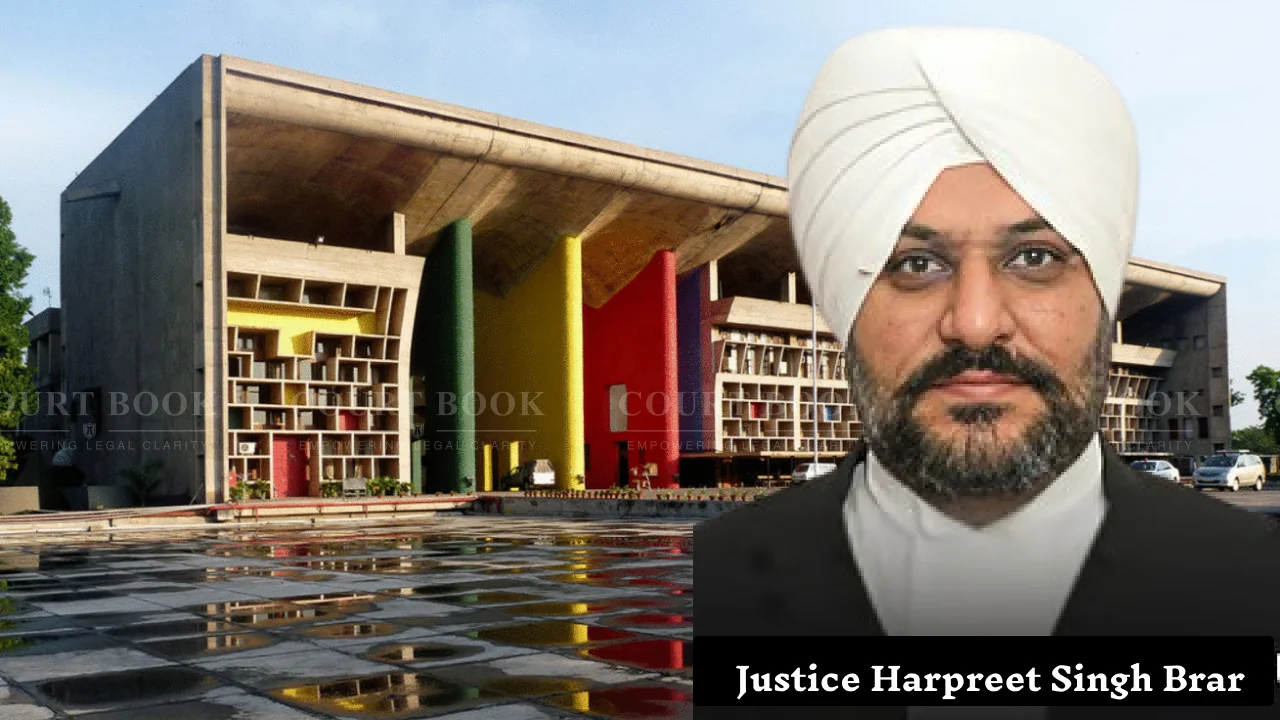
The Punjab and Haryana High Court has directed the Haryana State Federation of Consumer Co-operative Wholesale Stores Limited (CONFED) to pay nearly seven years of pending salary to a former employee, holding that withholding wages for work already taken amounts to exploitation and violates fundamental rights.
Justice Harpreet Singh Brar passed the order while allowing a writ petition filed by Duni Chand, who had claimed that he was not paid salary from October 1989 till July 3, 1996, despite continuously serving the organisation.
Background Of The Case
According to the case record, Duni Chand was appointed as a Salesman in CONFED in 1979 and was later posted to the Central Co-operative Consumer Stores Ltd., Mandi Dabwali, in 1983. He alleged that his salary stopped from September 1989 onward, though he continued to work till he was relieved from service on July 3, 1996.
The petitioner had approached the High Court multiple times over the years seeking payment of dues. Earlier court directions in his favour were allegedly not implemented by the authorities.
CONFED argued before the court that after amendments in service rules in 1983, the petitioner became an employee of the Mandi Dabwali store and not of CONFED. Since the store later went into liquidation without assets, the federation claimed it was not liable to pay the dues.
The High Court, however, found the federation’s defence inconsistent with its own records and service rules.
Justice Brar observed that the petitioner had originally been appointed by CONFED and his services continued to be governed by CONFED’s rules throughout his tenure. The court also noted that his transfers were made by the federation itself.
“The employment of the petitioner in the Store at Sirsa and Mandi Dabwali is identical and merely in the nature of a deputation,” the court observed, adding that the employer-employee relationship with CONFED never ended.
The bench further held that CONFED could not rely on amended service rules to avoid responsibility while simultaneously exercising control over staffing in cooperative stores.
The court strongly criticised the prolonged non-payment of wages and connected it with constitutional protections under Articles 21 and 23 of the Constitution.
Justice Brar said,
“The respondent-Federation, on one hand, has continued to avail the services of the petitioner, while on the other, has denied him his rightful salary.”
Referring to earlier Supreme Court rulings, the court noted that the right to livelihood forms part of the right to life and dignity. It also said that taking work without payment effectively amounts to forced labour.
The judgment described the federation’s conduct as “blatant exploitation” and said the repeated litigation forced upon the petitioner over decades reflected serious administrative apathy.
Allowing the petition, the High Court quashed CONFED’s 2010 communication denying liability and directed the federation to calculate and release salary arrears for the period from October 1989 to July 3, 1996, along with 6% annual interest.
The court also imposed exemplary costs of ₹2 lakh on CONFED, observing that the petitioner had been forced to repeatedly approach the court despite earlier favourable orders.
The entire exercise has been directed to be completed preferably within three
Case Details:
Case Title: Duni Chand vs State of Haryana and Others
Case Number: CWP-5074-2026 (O&M)
Judge: Justice Harpreet Singh Brar
Decision Date: May 1, 2026
Download Order

