

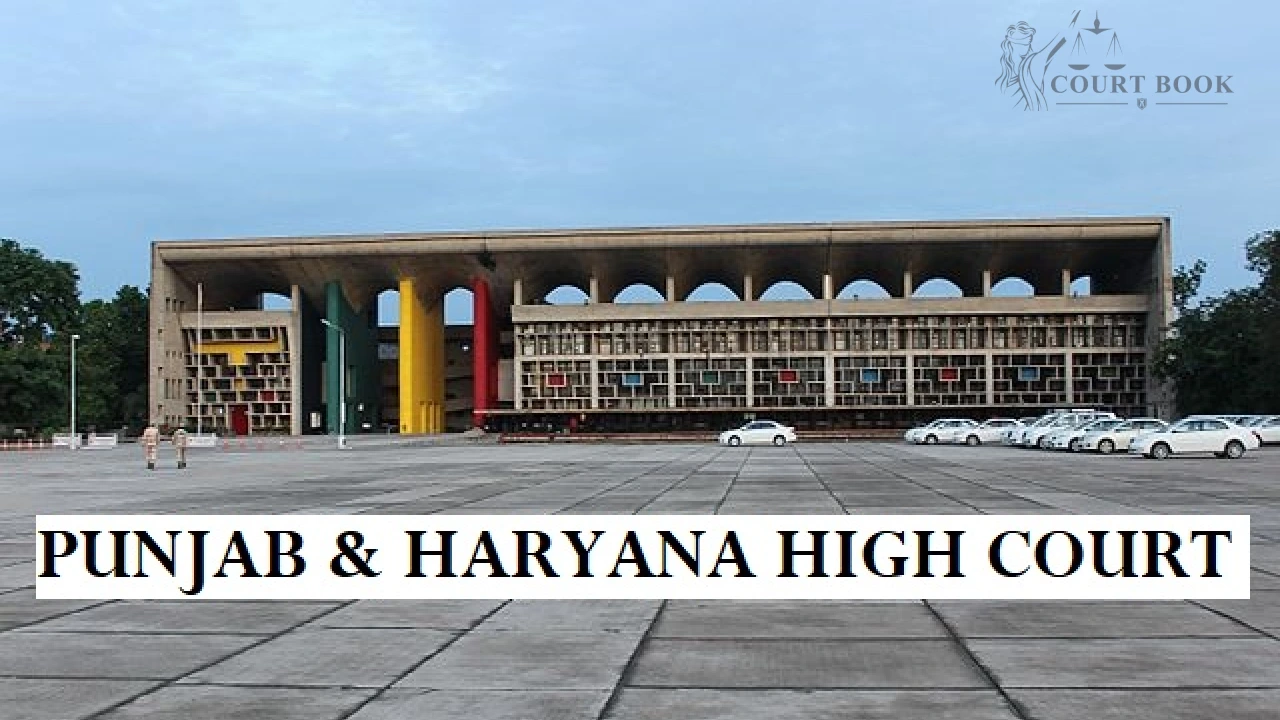
In a significant ruling affecting dozens of long-serving daily-wage employees, the Punjab and Haryana High Court has directed the Haryana government to regularise workers who have served the State for years-some for nearly three decades-without job security.
Delivering a common judgment in over 40 connected writ petitions, the Court held that the State cannot continue to extract permanent work under temporary labels while denying employees the dignity of regular service.
Read also:-Cooling-Off Period Not Mandatory: Gujarat High Court Revives Mutual Consent Divorce Appeal
The judgment was pronounced on 31 December 2025 by Justice Sandeep Moudgil.
Background of the Case
The lead case, Joginder Singh vs State of Haryana, was filed by a worker engaged as a daily wager in 1994. Like many others before the Court, he worked continuously as a Water Pump Operator or Tube-well Operator, performing essential departmental duties without any complaint about his work or conduct.
Despite multiple regularisation policies issued by the Haryana government over the years-1993, 1996, 2003, 2011, and later amendments-his services were never regularised. Repeated representations, including one made in September 2025, went unanswered.
Several similarly placed employees, including juniors, were regularised. The petitioners approached the High Court alleging arbitrary denial and unequal treatment.
Read also:-Lalu Prasad Yadav Challenges Framing of Charges in IRCTC Scam Case Before Delhi High Court
Counsel for the workers submitted that:
• The petitioners had rendered uninterrupted service for decades.
• Their work was perennial and essential to government functioning.
• The State selectively applied regularisation policies.
• Denial of consideration itself violated Articles 14 and 16 of the Constitution.
Relying on Supreme Court judgments, including Uma Devi, M.L. Kesari, and Jaggo v Union of India, the petitioners argued that long service cannot be brushed aside by merely calling workers “daily-wage” or “contractual”.
State’s Stand Before the Court
The Haryana government opposed the petitions, arguing that:
• The workers were never appointed against sanctioned posts.
• Many did not meet educational or technical qualifications.
• Engagements were intermittent, with breaks in service.
• Regularisation cannot be claimed as a matter of right.
• The petitions suffered from delay and laches.
The State also relied on earlier Supreme Court rulings cautioning courts against ordering regularisation contrary to recruitment rules.
Court’s Observations
The High Court firmly rejected the State’s defence.
“The State does not function as a private employer free to hire and discard at will,” the bench observed, adding that constitutional obligations do not vanish merely because a worker is labelled contractual.
The Court noted that judicial review extends beyond form to substance, especially when unequal treatment and long-term exploitation are evident.
Read also:-Chhattisgarh Excise Scam: High Court Grants Bail to Chaitanya Baghel in ED and ACB Cases
Citing Maneka Gandhi, the bench reiterated that arbitrariness is the antithesis of the rule of law.
The judgment carefully reconciles Uma Devi with later Supreme Court rulings. Justice Moudgil clarified that while illegal appointments cannot be regularised, the law clearly distinguishes them from “irregular” appointments.
“Uma Devi cannot be used as a licence for exploitation,” the Court said, pointing out that the one-time regularisation exercise mandated by the Supreme Court remains incomplete if eligible workers are ignored.
The Court also relied on Jaggo v Union of India (2024), where the Supreme Court held that no employee can be kept temporary indefinitely.
Rejecting the plea of delay, the Court held that the cause of action was continuing in nature.
Once a regularisation policy exists, the State has a duty to implement it fairly, particularly in a welfare State dealing with workers from the lowest economic strata.
“The State cannot profit from its own inaction,” the Court remarked.
Read also:-Supreme Court Slashes Bar Council Poll Fee for PwD Lawyers to ₹15,000, Directs Rule Changes
Final Decision of the Court
Allowing all the writ petitions, the High Court:
• Set aside orders rejecting regularisation claims.
• Directed the State to regularise the petitioners under applicable policies.
• Ordered regularisation even for those with over 10 years of service as on 31 December 2025, if not covered under earlier policies.
• Directed release of all consequential benefits, including arrears.
• Awarded 6% annual interest on delayed payments.
• Fixed an eight-week deadline for completing the entire exercise.
“This judgment shall govern all connected matters with similar facts,” the Court concluded.
Case Title: Joginder Singh & Others vs State of Haryana
Case No.: CWP-31304-2025 & connected matters
Case Type: Writ Petition (Service Law)
Decision Date: 31 December 2025
Download Judgment

