

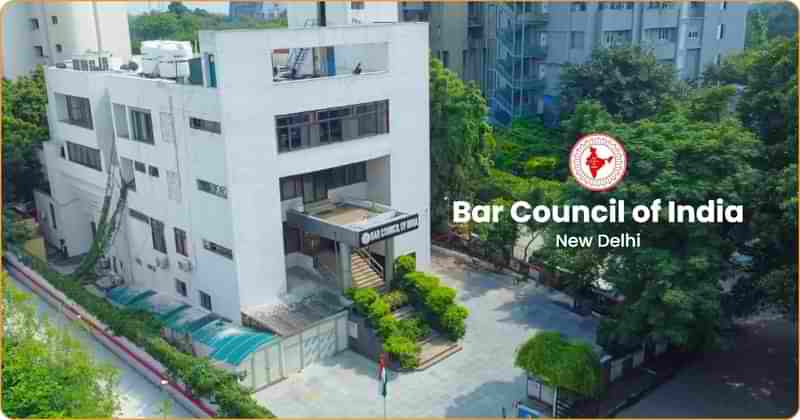
In a significant step towards making professional bodies more inclusive, the Supreme Court of India on Monday reduced the nomination fee for specially abled advocates contesting State Bar Council elections from ₹1.25 lakh to ₹15,000. The Court also asked the Bar Council of India (BCI) to begin amending its rules to ensure better representation of persons with disabilities (PwD) in future elections.
The order was passed on January 5 while hearing a petition raising concerns about financial and structural barriers faced by PwD advocates in Bar Council elections.
Read also:-Cooling-Off Period Not Mandatory: Gujarat High Court Revives Mutual Consent Divorce Appeal
Background of the Case
The petition was filed by advocate Pankaj Sinha, who challenged the existing framework governing State Bar Council elections. The plea highlighted two key issues - the absence of reservation or structured representation for specially abled advocates, and the steep nomination fee that effectively barred many from contesting elections.
Appearing for the petitioners, Senior Advocate Indira Jaisingh argued that the current system excluded PwD advocates from meaningful participation in the legal profession’s decision-making bodies.
“We had sought reservation and removal of the ₹1.2 lakh fee required to contest elections,” she submitted before the Court.
Read also:-Lalu Prasad Yadav Challenges Framing of Charges in IRCTC Scam Case Before Delhi High Court
Court’s Observations
The Bench, comprising Chief Justice Surya Kant and Justice Joymalya Bagchi, examined whether immediate directions on reservation could be issued, given that elections to several State Bar Councils were already underway.
The Chief Justice flagged the issue of affordability and asked whether a reduced fee could serve as a workable solution.
“Would it be acceptable if the fee is reduced from ₹1.25 lakh to ₹25,000?” the CJI asked during the hearing.Jaisingh responded that even this amount would remain out of reach for many young and specially abled lawyers, adding, “Even ₹25,000 is on the higher side. Let them begin earning through notary work.”
BCI’s Stand
Representing the Bar Council of India, its Chairman Manan Kumar Mishra told the Court that providing reservation in the main Bar Councils was not envisaged under the current law and would require legislative backing.
He also pointed out that since the election process had already begun in most States, introducing structural changes at this stage would be difficult. However, Mishra assured the Bench that specially abled advocates would be co-opted into various BCI and State Bar Council committees for the present term.
On the issue of fees, Mishra proposed a significantly reduced amount of ₹15,000 as a reasonable concession.
Read also:-Chhattisgarh Excise Scam: High Court Grants Bail to Chaitanya Baghel in ED and ACB Cases
The Decision
Recording the submissions and assurances, the Supreme Court passed a set of clear directions:
• Advocates belonging to the specially abled category will pay a reduced nomination fee of ₹15,000 instead of ₹1.25 lakh while contesting State Bar Council elections.
• This concession will apply only to specially abled advocates, and no parity can be claimed by other candidates.
• Since elections have already commenced, mandatory reservation was not ordered at this stage.
• The Bar Council of India was directed to initiate amendments to its rules to ensure adequate representation of specially abled advocates in future elections, in line with constitutional principles and welfare laws.
“The objective is to ensure effective and meaningful participation of specially abled advocates in decision-making bodies,” the Bench observed while concluding the hearing.
Case Title: Pankaj Sinha v. Bar Council of India & Ors.
Case No.: W.P. (C) No. 1261/2025
Case Type: Writ Petition (Civil)
Decision Date: 5 January 2026


