

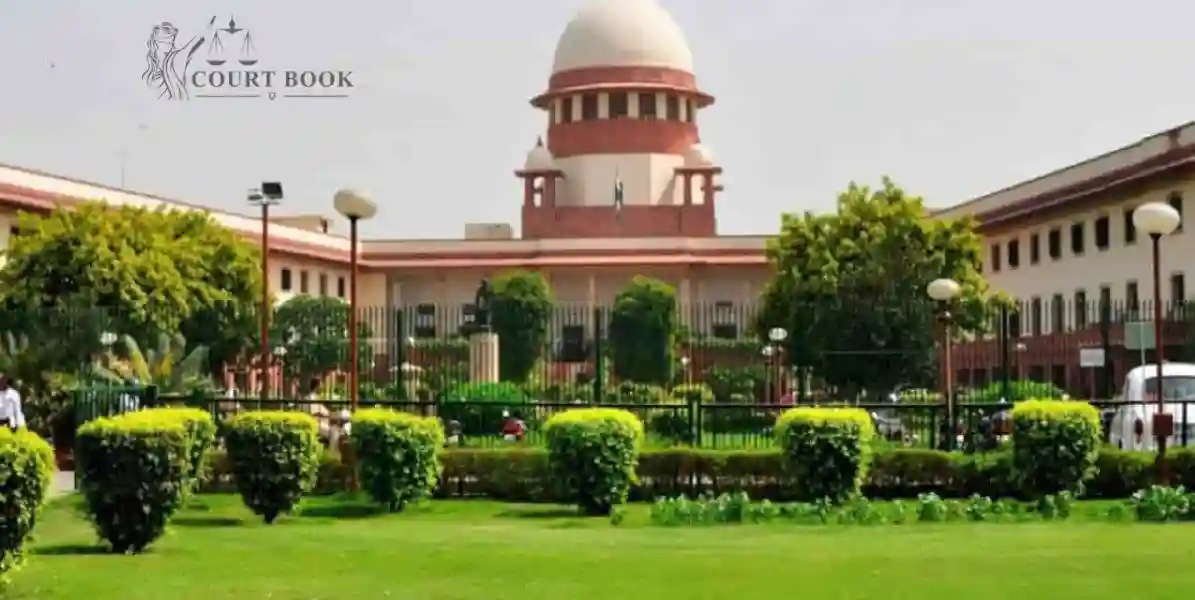
In a significant judgment on the law governing remission of life convicts, the Supreme Court has held that Haryana's 2002 remission policy, framed under Article 161 of the Constitution, continues to apply despite the introduction of the State's 2008 remission policy under the Code of Criminal Procedure (CrPC). The Court ruled that a statutory policy cannot override the Governor's constitutional power to grant remission.
A Bench of Justice Sanjay Karol and Justice Nongmeikapam Kotiswar Singh allowed the appeal filed by Parveen Kumar alias Parveen Chauhan and directed the Haryana Government to reconsider his remission application within four weeks.
Background of the Case
The appellant was convicted in a murder case arising out of a 2007 FIR and was sentenced to life imprisonment. His conviction under Section 302 IPC was upheld, while his conviction under Section 365 IPC was later set aside by the Punjab and Haryana High Court. The Supreme Court had earlier dismissed his challenge to the conviction, making the judgment final.
After completing over 14 years of actual imprisonment, the appellant sought premature release in 2022 under Haryana's 2002 remission policy. However, the State rejected his request, stating that the 2008 remission policy governed his case and that he had not completed the longer period of imprisonment required under that policy. His writ petition challenging the rejection was dismissed by the High Court, following which he approached the Supreme Court.
Court Examines the Two Remission Policies
The central issue before the Court was whether the appellant's remission claim should be considered under the 2002 policy or the 2008 policy.
The Bench closely examined both policies and found a crucial distinction. The 2002 policy specifically required remission proposals to be placed before the Governor for orders under Article 161 of the Constitution, whereas the 2008 policy expressly operated under Sections 432 and 433 of the CrPC, with the Chief Minister exercising the statutory power.
The Court observed:
"A statutory policy... cannot override an exercise of power under Article 161, for that power is distinct and independent."
According to the Bench, the constitutional nature of the 2002 policy placed it on a different footing from the later statutory policy.
Previous Supreme Court Decisions Revisited
The Court also examined earlier judgments, including State of Haryana v. Jagdish and State of Haryana v. Raj Kumar.
The Bench noted that the three-judge decision in Jagdish had already recognised the earlier remission policy as one flowing from the Governor's constitutional powers under Article 161. In contrast, the later judgment in Raj Kumar treated the 2002 policy as merely statutory.
The Supreme Court held that this view in Raj Kumar could not stand because it conflicted with the larger Bench ruling in Jagdish.
"The Policies of 1993 and 2002 are... identical in terms of their source of power under Article 161," the Court observed while concluding that the contrary finding in Raj Kumar was per incuriam, meaning it had been rendered in ignorance of binding precedent.
Court's Decision
Allowing the appeal, the Supreme Court held that the appellant's remission application must be considered under the 2002 remission policy, making him eligible to seek the benefit of its more liberal conditions.
The Bench clarified that the ruling would apply prospectively and would not reopen remission applications that had already been decided. It also observed that Haryana would now have two separate remission policies operating in their respective fields and left it to the State Government to determine its future course.
Directing immediate action, the Court ordered the Haryana Government to decide the appellant's remission application in accordance with the judgment within four weeks.
The appeal was accordingly allowed.
Case Details
Case Title: Parveen Kumar @ Parveen Chauhan v. State of Haryana & Ors.
Case Number: Criminal Appeal arising out of SLP (Criminal) No. 9920 of 2026
Judges: Justice Sanjay Karol and Justice Nongmeikapam Kotiswar Singh
Decision Date: July 1, 2026


