

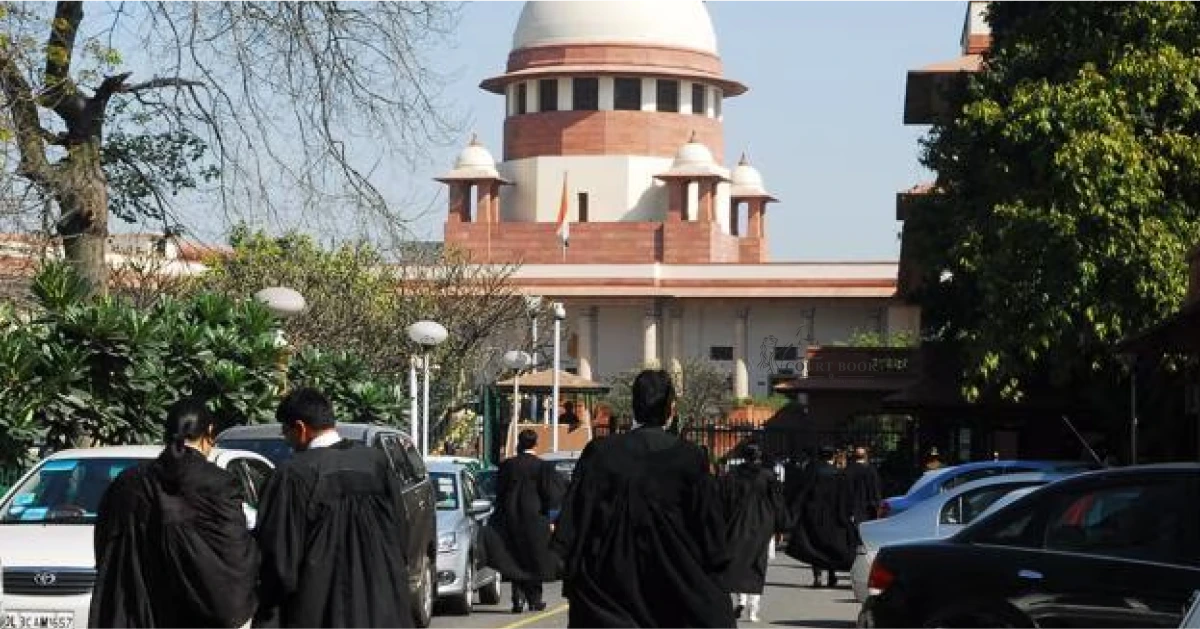
The Supreme Court considered a proposal seeking the creation of a nationwide digital verification system for advocates, a move aimed at bringing greater transparency to the legal profession and enabling instant verification of lawyers' credentials across India.
Hearing a petition filed by the Bar Association of India (BAI), the Court said the idea appeared innovative but emphasized that any such reform would require consultation with multiple stakeholders, including law universities, regulatory bodies and government authorities.
Background of the Case
The petition seeks the establishment of a National Digital Registry for the Legal Profession of India (NDRLP), a centralized database that would maintain verified records of enrolled advocates throughout the country.
According to the BAI, the present system is spread across various State Bar Councils and lacks a unified mechanism through which courts, litigants or authorities can immediately verify whether a person claiming to be an advocate is duly enrolled and professionally qualified.
The proposed registry would assign every advocate a unique national identifier linked to verified educational qualifications, enrolment details and disciplinary records. The petition also seeks a regulatory framework governing advocates' conduct on social media platforms.
Court's Observations
A Bench comprising Chief Justice of India Surya Kant and Justice V. Mohana acknowledged the potential of technology-driven reforms in the legal sector.
“This appears to be a very innovative idea. Nowadays with technology it can be done,” the Chief Justice observed during the hearing.
At the same time, the Bench pointed out that verification of advocates' credentials would require active participation from law universities and educational institutions.
The Court noted that any effective nationwide database would have to rely on authentic records regarding law graduates before advocates are enrolled into the profession.
The Bench advised the petitioner to first place a concrete framework before the Court.
“You first need to create a module kind of thing. You give a proposal, then we will see what can be done,” the Chief Justice remarked.
Discussion on Social Media Conduct
The hearing also touched upon concerns regarding the increasing use of social media by individuals presenting themselves as legal professionals.
The Court noted that it had come across instances of inappropriate online content and statements allegedly made by persons claiming to belong to the legal profession.
“We may have to constitute a new committee with a new composition. We can show you a sample of what kind of nasty statements are being made,” the Chief Justice observed.
However, the Bench stressed that the overwhelming majority of advocates act responsibly and are guided by professional ethics.
“Advocates normally are very responsible. The first thing they learn is professional ethics,” the Court said.
The Chief Justice also highlighted the importance of supporting younger lawyers through training and professional opportunities, noting that many young lawyers' associations are making constructive contributions to the profession.
Court's Decision
After hearing the submissions, the Supreme Court issued notice to the Union Government, the Bar Council of India, State Bar Councils and other concerned stakeholders.
The Court permitted the petitioner to place an additional policy paper outlining a workable framework for the proposed registry and observed that further consultation would be necessary before any direction could be considered.
The matter has been listed for further hearing after the Court's vacation period.
Case Details
Case Title: Bar Association of India & Anr. v. Union of India & Ors.
Case Number: W.P.(C) No. 727/2026
Judge: Chief Justice of India Surya Kant and Justice V. Mohana
Decision Date: June 18, 2026


