

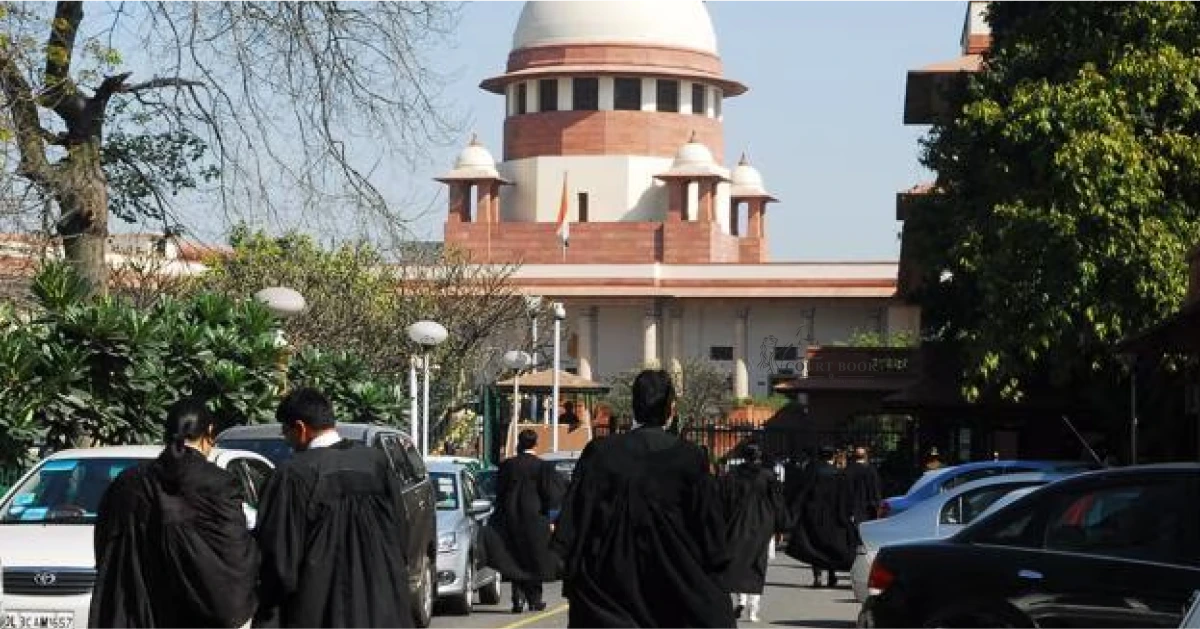
The Supreme Court has expressed serious concern over the lack of basic facilities available to women advocates in courts across India and has also endorsed the idea of creating a dedicated financial support mechanism for young lawyers struggling during the early years of practice.
Hearing a public interest petition filed by women advocates from different parts of the country, the Court observed that meaningful participation in the legal profession requires more than just entry into the field it also requires dignified working conditions and institutional support.
The petition highlighted the absence of adequately equipped Ladies’ Bar Rooms and other essential amenities in many High Courts, District Courts, Tehsil Courts, Tribunals and Commissions across the country. According to the petitioners, many court complexes either lack dedicated facilities for women lawyers or provide spaces that are inadequate for professional use.
The advocates relied on a nationwide survey and physical inspections of court premises. The findings pointed to shortages of basic facilities such as proper seating, clean washrooms, changing areas and nursing spaces for women advocates.
The petition also raised concerns about the financial struggles faced by young lawyers and suggested the creation of a support fund to help new entrants sustain themselves during the initial years of legal practice.
The Bench said the issue could not be treated as a matter of convenience alone. It noted that court complexes function as workplaces where advocates spend long hours preparing cases, meeting clients and carrying out professional duties.
“The availability of adequately equipped spaces for women professionals within Court Complexes is one such indispensable condition,” the Court observed.
Referring to Article 21 of the Constitution, the Bench further stated that access to essential infrastructure is linked to the right to live and work with dignity. The judges noted that adequate facilities are necessary for women advocates’ comfort, privacy, safety and professional functioning.
On the issue of financial hardship, the Court acknowledged that many young lawyers, particularly first-generation advocates, begin their careers without established offices, clients or reliable income.
“The absence of a steady stream of clients and the limited remuneration available during these years tends to create extreme financial hardship,” the Bench observed.
The Court warned that such challenges often force talented young lawyers to leave litigation practice, resulting in what it described as a professional “brain drain.”
To address the problem, the Court proposed the establishment of a Young Lawyers’ Professional Assistance Fund under the supervision of High Courts or an autonomous body constituted by the Union and State Governments.
The Bench suggested that the fund could be supported through contributions from senior lawyers, a portion of court fees and costs imposed in judicial proceedings. It also proposed incentives such as tax benefits and national honours to encourage donations.
According to the Court, eligible young advocates, particularly first-generation lawyers and those from economically disadvantaged backgrounds, could receive monthly stipends during the initial years of practice while working with experienced members of the Bar. The financial assistance could continue for several years and gradually reduce as advocates become professionally self-sufficient.
Clarifying that its observations were only tentative and illustrative, the Supreme Court issued notice to all respondents in the matter. The Court also requested the Attorney General for India, along with the Advocate Generals of States and Standing Counsel for Union Territories, to assist in the proceedings during the next hearing.
Case Details
Case Title: Sarita Tyagi & Ors. v. Union of India & Ors.
Case Number: W.P.(C) No. 770/2026
Judges: Chief Justice of India Surya Kant and Justice V. Mohana


