The Supreme Court has reaffirmed that a registered sale deed does not become invalid merely because the purchaser failed to pay the entire sale consideration. In a judgment delivered on August 7, 2026, the Court held that where ownership has been transferred through a valid registered sale deed, the seller's remedy is to recover the unpaid balance and not to seek cancellation of the sale deed. The ruling came while allowing a civil appeal challenging a High Court decision that had declared two sale deeds inoperative.
Background of the Case
The dispute arose from two sale deeds executed on March 10, 1975. According to the plaintiffs, they had agreed to sell their properties after facing financial difficulties and outstanding liabilities. They claimed that the purchaser paid only part of the agreed consideration, while the remaining amount was to be used to clear their loans with government departments and financial institutions.
The plaintiffs alleged that the purchaser neither cleared those liabilities nor paid the remaining amount. They later relied on subsequent agreements executed by the purchaser, promising to discharge the outstanding dues and pay the balance consideration. Based on these facts, the plaintiffs approached the civil court seeking cancellation of the sale deeds, a declaration of ownership, and a permanent injunction.
The Trial Court dismissed the suit, holding that although part of the sale consideration remained unpaid, the sale deeds contained no clause providing that non-payment would automatically cancel the transaction. The First Appellate Court affirmed that view. However, the High Court, in second appeal, reversed those concurrent findings and declared the sale deeds inoperative.
Supreme Court's Observations
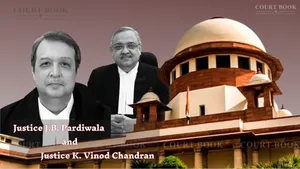
A Bench of Justice J.B. Pardiwala and Justice K. Vinod Chandran examined Section 54 of the Transfer of Property Act and earlier Supreme Court precedents on the issue.
Referring to Vidhyadhar v. Manikrao and Dahiben v. Arvindbhai Kalyanji Bhanusali, the Court noted that payment of the entire sale price at the time of execution is not an essential condition for completion of a sale.
The Bench observed,
"The sale deed executed with full knowledge of the part consideration alone having been passed, cannot be rendered void or inoperative merely because the balance consideration promised to be paid... had not been complied with."
The Court explained that once a registered sale deed is executed and ownership is intended to be transferred, title passes to the purchaser even if a portion of the consideration remains unpaid. In such circumstances, the seller's legal remedy is to recover the outstanding amount rather than seek cancellation of the registered conveyance.
The Bench also noted that the plaintiffs had waited several years before filing the suit and had chosen to seek cancellation instead of instituting proceedings for recovery of the unpaid consideration.
Court's Decision
Allowing the appeal, the Supreme Court held that the High Court had incorrectly treated the sale deeds as void solely because the balance consideration had not been paid. The Court restored the judgments of the Trial Court and the First Appellate Court.
At the same time, the Bench observed that the appellants would remain liable to pay the balance sale consideration together with interest as indicated by the Trial Court if they sought possession of the property. The Court declined to disturb the plaintiffs' possession, noting that both the Trial Court and the First Appellate Court had already refused to interfere with it.
The appeal was accordingly allowed, the High Court's judgment was set aside, and the Trial Court's decree stood restored.
Case Details
Case Title: Raziya Begum & Ors. v. Nafisa Begum Abdul Hamid & Ors.
Case Number: Civil Appeal No. 7225 of 2011
Judges: Justice J.B. Pardiwala and Justice K. Vinod Chandran
Decision Date: August 7, 2026






-300x169.webp)