The Supreme Court has dismissed a batch of appeals filed by Orient Crafts Limited concerning the tax treatment of premium received from the sale of export quota for Assessment Years 2000-01 and 2001-02.
The Court examined both the scope of the Commissioner of Income Tax’s revisional power under Section 263 of the Income Tax Act, 1961 and the legal effect of a CBDT Office Memorandum that sought to equate export quota premium with specified export incentives.
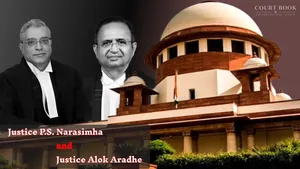
A Bench of Justice S.V.N. Bhatti and Justice N. V. Anjaria delivered the judgment on September 18, 2026.
Background
Orient Crafts Limited, a public limited company engaged in manufacturing and exporting readymade garments, had claimed deductions under Section 80HHC for the relevant assessment years.
For AY 2001-02, the company reported a premium of about Rs. 73.49 lakh from the sale of export quota. It treated the amount as part of its business profits while calculating the deduction under Section 80HHC. The Assessing Officer initially completed the assessment under Section 143(3).
Subsequently, the Commissioner invoked Section 263, which allows revision of an assessment order where it is both erroneous and prejudicial to the interests of the Revenue. The Commissioner directed a fresh assessment, treating 90% of the quota premium as an “other receipt” under Explanation (baa) to Section 80HHC.
The dispute eventually reached the Delhi High Court after proceedings before the Income Tax Appellate Tribunal. The High Court upheld the Commissioner’s exercise of revisional jurisdiction, leading Orient Crafts to approach the Supreme Court.
The Supreme Court first considered whether the Commissioner had validly exercised power under Section 263.
The Court referred to earlier decisions including CIT v. Max India Ltd., CIT v. Amitabh Bachchan and Malabar Industrial Co. Ltd. v. CIT. It reiterated that an assessment order cannot be revised merely because it results in a loss of revenue. The order must satisfy both statutory conditions: it must be erroneous and prejudicial to the interests of the Revenue.
The Court then examined the reasoning adopted by the Delhi High Court and found that the High Court had considered the relevant dispute and had recorded a finding that the Commissioner rightly exercised revisional jurisdiction under Section 263.
A central issue before the Supreme Court was the CBDT Office Memorandum dated February 23, 1998. The memorandum stated that export quota premium could technically be equated with items referred to in Section 28(iiia) to (iiic), including profits on sale of import licences and duty drawback.
The Supreme Court distinguished between the effect of such administrative instructions on tax officers and their effect on courts.
The Court relied on the Constitution Bench judgment in CCE, Bolpur v. Ratan Melting & Wire Industries, reiterating that administrative circulars bind departmental authorities but do not bind constitutional courts while interpreting statutory provisions.
The Court stated:
“The view taken on all the relevant issues is available and tenable.”
It further held that the CBDT memorandum could not create a legal fiction contrary to the express statutory scheme. According to the Court, the sale of export quota did not possess the characteristics of transactions covered by Sections 28(iiia) to 28(iiic), including the relevant export-incentive features.
The Supreme Court held that the CBDT Office Memorandum was binding on Revenue officers but not on the courts. The Court also noted that the reasoning adopted in the earlier decision concerning Nagesh Knitwears remained legally sustainable.
Finding no reason to interfere with the Delhi High Court judgment, the Supreme Court dismissed the appeals filed by Orient Crafts Limited.
The connected appeals were also dismissed, with pending applications disposed of and no order as to costs.



-300x169.webp)
-300x169.webp)