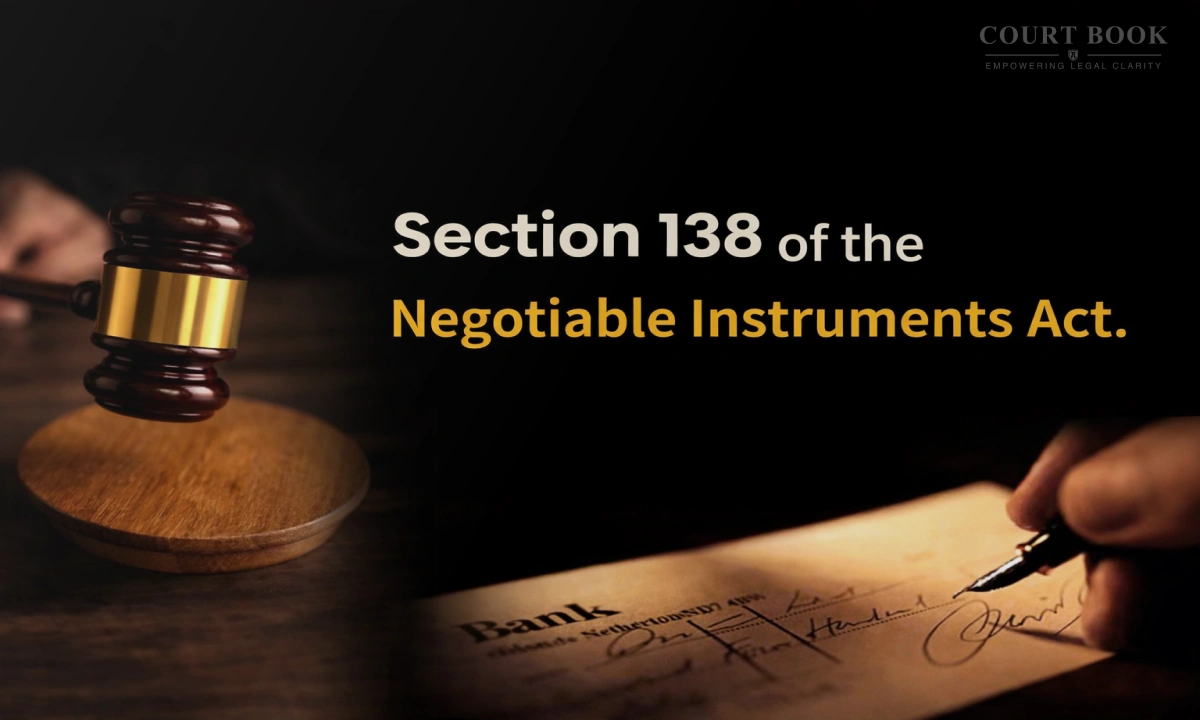
The Uttarakhand High Court has dismissed a criminal revision challenging a conviction under Section 138 of the Negotiable Instruments Act, 1881, holding that merely claiming that cheque particulars were filled in by someone else is not enough to rebut the statutory presumption attached to a signed cheque.
Justice Alok Mahra passed the order on September 8, 2026, in Ramesh Singh Nagarkoti v. State of Uttarakhand.
Background of the Case
The case arose from a ₹2 lakh transaction. According to the order, the respondent had informed the revisionist that around ₹6 lakh remained payable on a State Bank of India loan. The revisionist allegedly represented that he could get the outstanding amount reduced if ₹2 lakh was deposited with the bank.
On October 28, 2022, ₹2 lakh was handed over, comprising ₹1 lakh through cheque and ₹1 lakh in cash. Later, after a recovery certificate was issued by the bank, the revisionist issued a ₹2 lakh cheque to the respondent. The cheque was dishonoured with the endorsement “Insufficient Funds”. Despite statutory notice, payment was not made.
The Chief Judicial Magistrate, Almora, convicted the revisionist on December 2, 2023, sentencing him to one year’s simple imprisonment and a ₹2.20 lakh fine, including ₹2 lakh compensation. The Sessions Court later dismissed his appeal on July 17, 2026.
Court’s Observation
Before the High Court, the revisionist argued that the cheque was a blank signed cheque handed to another person and that its particulars were subsequently filled in and misused. The Court noted that his signature on the cheque was admitted.
The Court explained that once execution of the cheque or its signature is admitted, the presumptions under Sections 118(a) and 139 of the Negotiable Instruments Act arise. These presumptions can be rebutted, but the accused must present material creating a probable defence against the existence of a legally enforceable debt or liability.
Referring to the Supreme Court’s decision in Bir Singh v. Mukesh Kumar, the High Court observed:
“The mere fact that the particulars of the cheque were subsequently filled in by the payee or any other person does not, by itself, invalidate the cheque or absolve the drawer of liability.”
The Court further noted that the revisionist had not produced convincing material showing that the cheque was handed over for a purpose unrelated to the alleged liability or that it was unlawfully obtained and misused. Difference in handwriting between the signature and other particulars was also held insufficient, by itself, to rebut the statutory presumption.
Decision
The High Court held that the trial court and appellate court had properly appreciated the evidence and that no perversity, illegality, material irregularity or jurisdictional error had been established. It therefore found no ground to interfere with the concurrent findings.
Accordingly, the criminal revision was dismissed.
Case Details:
Case Title: Ramesh Singh Nagarkoti v. State of Uttarakhand
Case Number: CRLR/646/2026
Judge: Hon’ble Alok Mahra, J.
Decision Date: September 8, 2026



-300x169.webp)