The Nainital bench of the Uttarakhand High Court has refused to quash a bigamy complaint filed by a woman against her husband, ruling that proof of the "Saptapadi" ceremony is not mandatory at the stage of summoning an accused. Justice Siddhartha Sah dismissed the plea, holding that whether the essential rites of a second marriage were actually performed is a question best left for trial.
Background Of The Case
The case began when Sarojini Dhapola filed a criminal complaint against her husband, Kharak Singh Dhapola, accusing him of contracting a second marriage without dissolving their first one. The couple had married in March 1988, and the complainant alleged that her husband married again in July 2010 while their marriage was still legally intact.
After she was examined under Section 200 of the CrPC and a police report from Thana Mukhani was placed on record, the Judicial Magistrate at Haldwani summoned the husband in August 2016 under Sections 494 and 504 of the IPC the provisions dealing with bigamy and intentional insult. He challenged this order through a criminal revision, but the 2nd Additional Sessions Judge, Nainital, dismissed it in August 2021. He then approached the High Court under Section 482 of the CrPC, seeking to have both the summoning order and the revisional order set aside, along with the entire criminal proceedings.
Arguments Raised
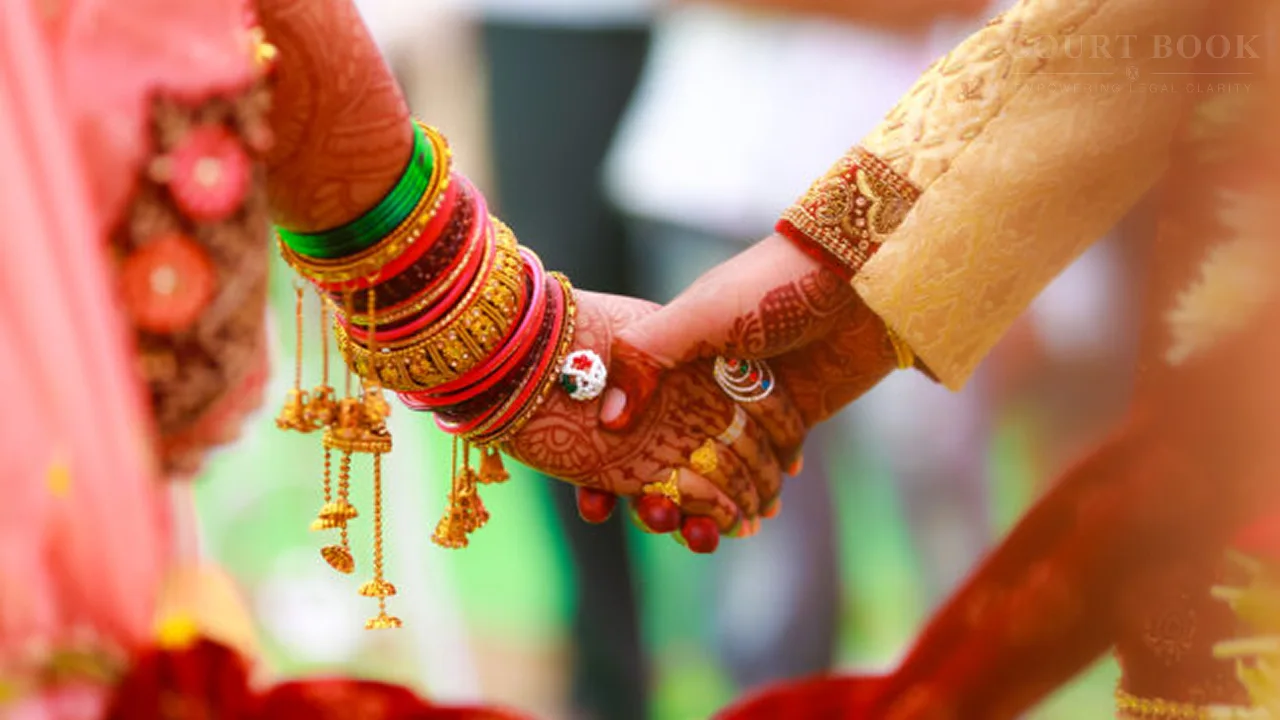
The husband's counsel leaned heavily on an Allahabad High Court ruling in Nisha vs. State of U.P., arguing that without evidence of the Saptapadi ceremony the seven steps considered essential under Hindu law to solemnise a marriage no case under Section 494 could stand even at the complaint stage.
The complainant's side countered this with a Delhi High Court judgment in Pooja Sharma Bajaj vs. Kunal Bajaj, which had taken the opposite view. That judgment, relying on the Supreme Court's ruling in K. Neelaveni vs. State, held that it would be unfair to expect a wife to gather evidence of ceremonies performed at a second marriage she wasn't even present at.
Court's Observation
Faced with these conflicting precedents, Justice Sah sided with the Delhi High Court's reasoning and the Supreme Court's position in K. Neelaveni. The court noted that it has been held by the Supreme Court that whether essential ceremonies of marriage were performed or not is a matter of trial.
The bench observed that insisting on proof of every marriage ritual before even issuing summons would leave a wife helpless she may know her husband is living with another woman as husband and wife, yet be unable to act simply because she cannot prove a particular ceremony. The court held that Saptapadi is one of the essential ceremonies that must be examined during trial, not at the initial stage of taking cognizance.
Final Decision
The High Court found no error in either the summoning order or the judgment of the revisional court. Consequently, Justice Siddhartha Sah dismissed the Criminal Misc.
Application under Section 482 of the CrPC, along with any pending applications, in an order dated July 31, 2026.
Case Details
Case Title: Kharak Singh Dhapola v. State of Uttarakhand and Another
Case Number: Criminal Misc. Application No. 1176 of 2021
Judge: Justice Siddhartha Sah
Decision Date: 31 July 2026






-300x169.webp)