

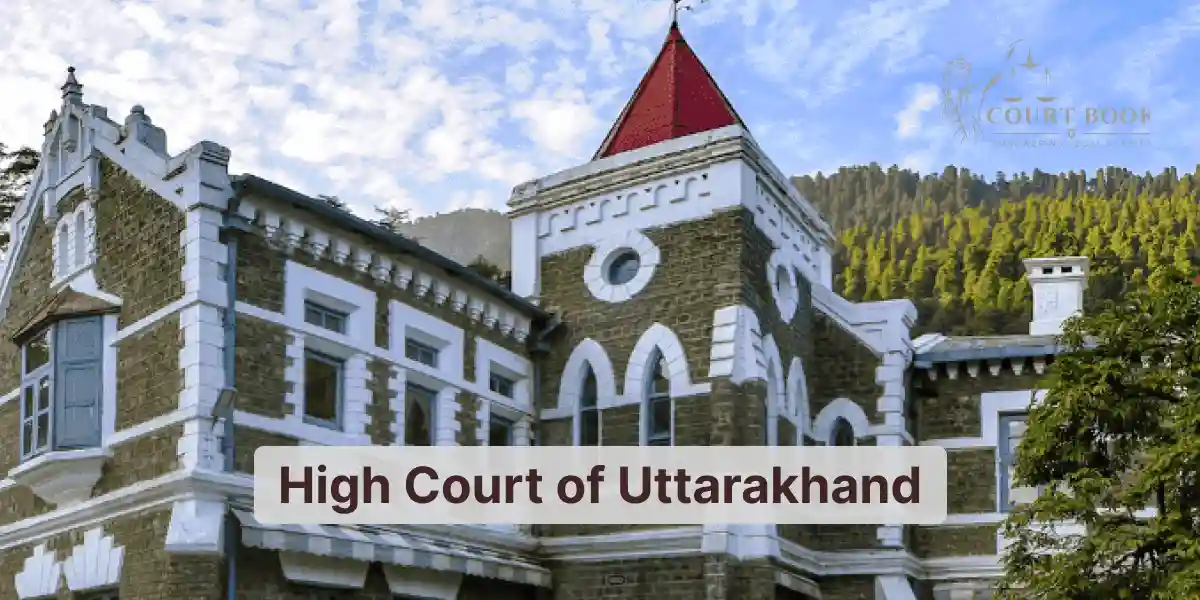
The Uttarakhand High Court has dismissed a challenge to the promotion policy of Uttarakhand Power Corporation Limited (UPCL), holding that employees absorbed from the erstwhile Uttar Pradesh Power Corporation Limited (UPPCL) constitute a separate "protected class" and cannot be compared with employees appointed directly after the creation of Uttarakhand.
A Division Bench of Justice Manoj Kumar Tiwari and Justice Pankaj Purohit ruled that the distinction in qualifying service for promotion to the post of Junior Engineer does not violate the constitutional guarantee of equality.
Background of the Case
The petition was filed by Rahul Giri and another employee, both serving as Technician Grade-II in UPCL. They questioned Clause 20(B) of the UPCL Junior Engineer (Electrical & Mechanical) Service Bye-laws, 2018, which requires Technician Grade-II employees to complete ten years of qualifying service before becoming eligible for departmental promotion to Junior Engineer.
The petitioners argued that employees who had originally served under the Uttar Pradesh State Electricity Board (UPSEB) or UPPCL and were later absorbed into UPCL continued to enjoy an earlier rule requiring only five years of service. According to them, this created unfair discrimination between employees performing similar duties.
Court's Observations
The Bench examined the history of UPCL's formation after the creation of Uttarakhand and noted that employees absorbed from UPPCL had been given a specific assurance through an office memorandum issued on December 18, 2002. That assurance protected their existing service conditions after absorption into UPCL.
Rejecting the challenge under Article 14 of the Constitution, the Court observed,
"Article 14 forbids class legislation but it does not forbid reasonable classification."
The judges further explained that a valid classification must rest on an intelligible basis and must have a reasonable connection with the purpose behind the rule.
Referring to the absorbed employees, the Bench observed,
"Persons who were appointed in UPPCL and became employee of the UPCL by absorption of service constitute a distinct class of persons."
The Court held that the assurance given in 2002 prevented UPCL from altering the service conditions of those absorbed employees to their disadvantage. Since the petitioners were appointed after the corporation came into existence, they were not covered by that protection.
Decision
The High Court concluded that the proviso to Clause 20(B) creates a reasonable classification with a clear objective and therefore cannot be treated as discriminatory.
The Bench observed that the absorbed employees belong to a protected category because of the assurance contained in the 2002 office memorandum, while no similar protection was available to the petitioners.
Holding that the classification satisfies the constitutional test of equality, the Court dismissed the writ petition and declined to interfere with the UPCL Service Bye-laws, 2018.
Case Details
Case Title: Rahul Giri and Another v. State of Uttarakhand and Another
Case Number: Writ Petition (S/B) No. 357 of 2021
Judge: Justice Manoj Kumar Tiwari and Justice Pankaj Purohit
Decision Date: 12 June 2026


