

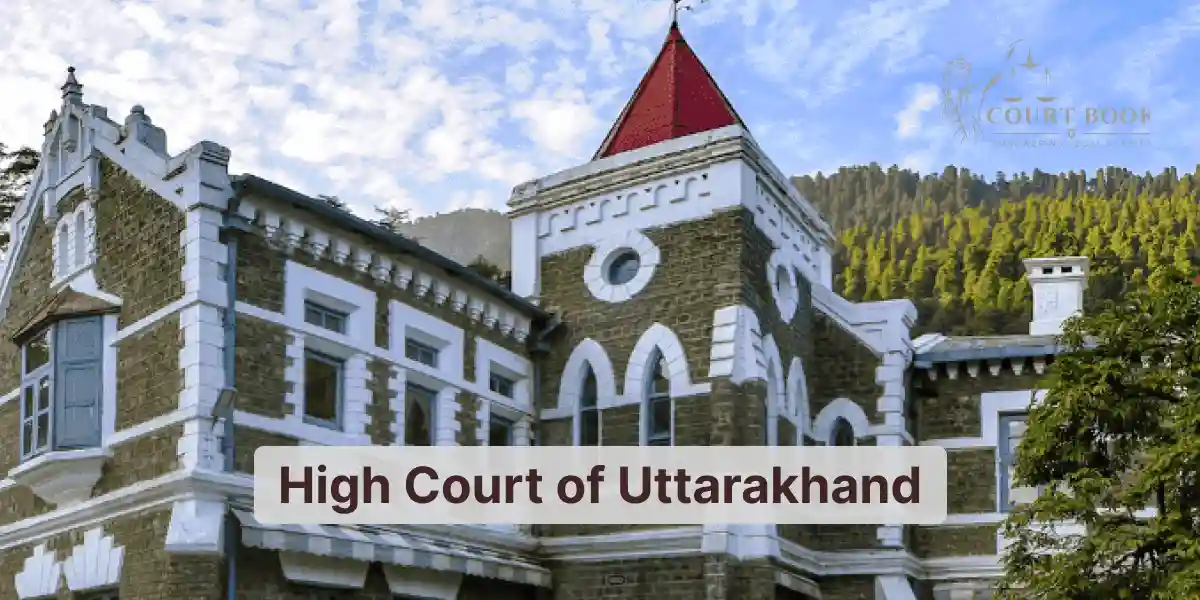
The Uttarakhand High Court has dismissed a writ petition filed by a village Pradhan seeking rejection of an election petition at the threshold over an alleged defect in the supporting affidavit. The Court held that such a defect is curable and cannot, by itself, lead to dismissal of an election challenge.
Justice Manoj Kumar Tiwari passed the order while hearing a petition arising out of an election dispute relating to Gram Panchayat Bhogpur in Haridwar district.
Background of the Case
The dispute began after respondent Smt. Rishu Saini challenged the election of Smt. Santosh Kumari as Pradhan of Gram Panchayat Bhogpur under Section 131 of the Uttarakhand Panchayati Raj Act, 2016.
Santosh Kumari later moved an application under Order VII Rule 11 of the Code of Civil Procedure (CPC), seeking rejection of the election petition. Her primary contention was that the affidavit filed along with the election petition did not comply with Rule 94A of the Conduct of Elections Rules, 1961.
The Prescribed Authority-cum-Sub-Divisional Magistrate, Haridwar, rejected the application on January 28, 2026. A revision petition against that order was also dismissed by the First Additional District Judge, Haridwar, on May 15, 2026. Thereafter, the matter reached the High Court.
Arguments Before the Court
Counsel for the petitioner argued that the election petition lacked necessary material particulars and failed to disclose a proper cause of action. It was also argued that the affidavit accompanying the election petition was not in the prescribed format and, therefore, the election petition deserved rejection.
On the other hand, the respondent contended that the objection before the Prescribed Authority was confined to the alleged defect in the affidavit. It was further argued that the election petition was supported by an affidavit and any deficiency in its format could be corrected.
Court’s Observations
The High Court relied on several Supreme Court decisions, including Thangjam Arunkumar v. Yamkham Erabot Singh, and noted that the requirement of filing an affidavit in election matters is not so rigid that every defect would automatically invalidate the proceedings.
Referring to the Supreme Court's view, the Court observed:
“The requirement to file an affidavit under the proviso to Section 83(1)(c) is not mandatory. It is sufficient if there is substantial compliance. As the defect is curable, an opportunity may be granted to file the necessary affidavit.”
Justice Tiwari also discussed the settled law governing Order VII Rule 11 CPC and emphasized that rejection of a plaint is a drastic power that must be exercised cautiously. The Court noted that only the pleadings in the petition can be examined at that stage and disputed factual issues cannot be decided summarily.
The Court found that the election petition contained an affidavit and that the objection raised by the petitioner related only to its form, not its absence.
Decision
Holding that any defect in the affidavit was curable and did not justify rejection of the election petition, the High Court declined to interfere with the orders passed by the Prescribed Authority and the revisional court.
“The defect, if any, in the affidavit is curable and the court may grant opportunity to the election petitioner to file necessary affidavit,”
the Court observed while refusing to exercise its writ jurisdiction.
Accordingly, the writ petition was dismissed. The Court, however, clarified that the petitioner would remain free to raise all available contentions before the Prescribed Authority during the election proceedings.
Case Details:
Case Title: Smt. Santosh Kumari v. Smt. Rishu Saini and Others
Case Number: Writ Petition Misc. Single No. 1432 of 2026
Judge: Justice Manoj Kumar Tiwari
Decision Date: June 8, 2026


