

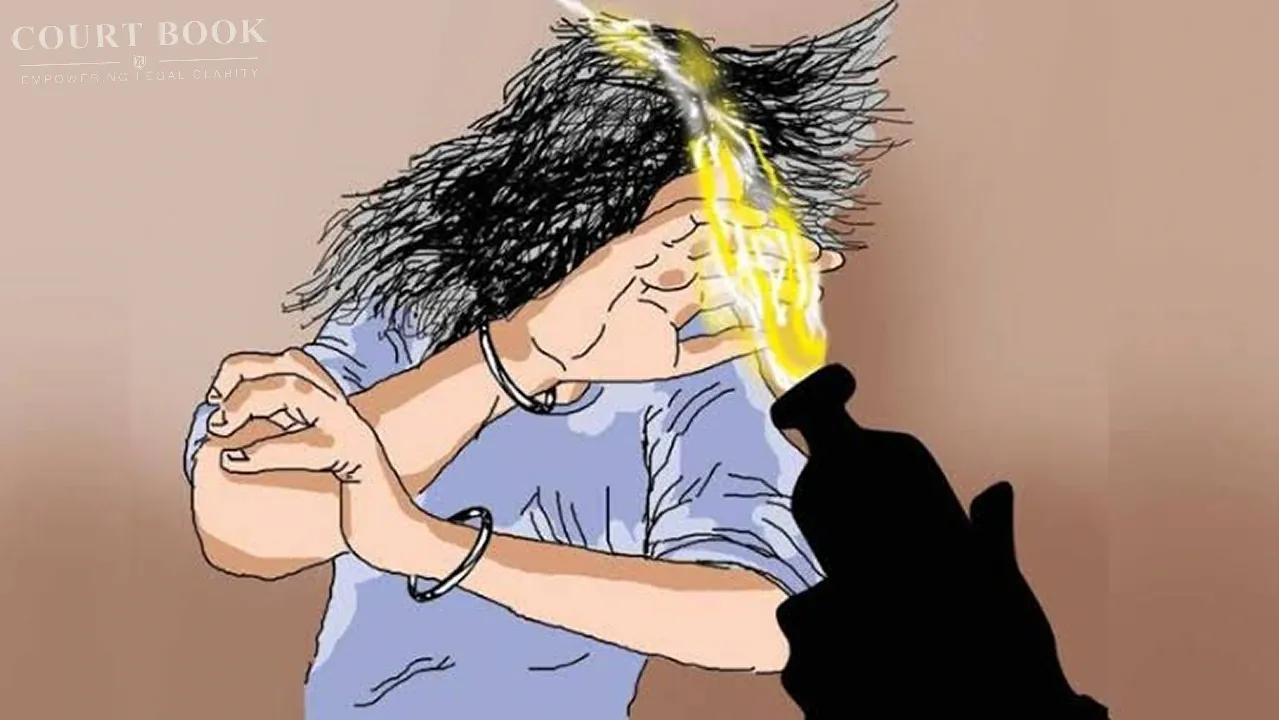
The Uttarakhand High Court has upheld the conviction and life sentence awarded to a man found guilty of carrying out an acid attack on his brother's family in Almora district, ruling that the death of one of the victims due to septicemia after prolonged treatment was a direct consequence of the acid burn injuries.
A Division Bench held that the prosecution had proved the charges beyond reasonable doubt and found no reason to interfere with the trial court's judgment convicting the appellant under Sections 302, 326A and 504 of the Indian Penal Code.
Background of the Case
The appeal arose from the conviction of Raghunath Singh in connection with an incident that took place on September 10, 2018, in a revenue police area of Almora district. According to the prosecution, a quarrel broke out between the appellant and his brother Sher Singh over a personal dispute. After exchanging abuses, the appellant allegedly went inside his house, brought a jerkin containing acid along with a mug, and threw the acid on several members of Sher Singh's family.
Multiple family members sustained corrosive burn injuries. Two women—Jaya Devi and Neema Devi—suffered the most severe burns and were referred first to Sushila Tiwari Government Hospital in Haldwani and later to Safdarjung Hospital in New Delhi. Jaya Devi died on November 20, 2018, during treatment after developing septicemia resulting from the burn injuries.
The trial court subsequently convicted the appellant and sentenced him to life imprisonment for murder along with separate sentences for the acid attack and intentional insult, all to run concurrently.
Arguments Before the High Court
On behalf of the appellant, it was argued that the FIR had been lodged after an unexplained delay, that there were inconsistencies in the testimony of prosecution witnesses, and that the investigation suffered from serious defects. The defence also contended that the deceased had died more than two months after the incident due to septicemia, making the conviction for murder legally unsustainable.
The State opposed the appeal, submitting that the delay in lodging the FIR stood fully explained because the victims themselves were hospitalized with serious acid burn injuries. It also relied upon the testimony of multiple injured eyewitnesses and medical evidence to establish the prosecution case.
Court's Observations
The High Court rejected the challenge based on the delayed FIR, observing that the informant and other injured family members were undergoing treatment immediately after the incident.
The Bench noted that the FIR was lodged only after volunteers from the District Legal Services Authority met the injured informant in the hospital.
Referring to Supreme Court precedents, the Court reiterated that the testimony of injured witnesses carries special evidentiary value because their presence at the scene cannot ordinarily be doubted.
"The delay is thus duly explained,"
the Bench observed while holding that the prosecution version did not become doubtful merely because the FIR was lodged later.
The Court further found that the statements of the injured witnesses consistently described how the appellant, after quarrelling with the family, went inside his house, returned with acid and deliberately threw it on the victims, including children.
Addressing the defence argument regarding defects in investigation, the Bench held that shortcomings by the investigating officer cannot by themselves destroy an otherwise reliable prosecution case supported by credible eyewitnesses and medical evidence.
"The prosecution witnesses are consistent about the acid attack... minor inconsistencies do not create any doubt on the prosecution case,"
the Court observed while relying upon settled Supreme Court principles.
The Bench also noted that even the defence evidence acknowledged two important facts—that the appellant had consumed liquor on the day of the incident and that Sher Singh's family suffered burn injuries from the substance contained in the jerkin.
Finding on the Murder Charge
The Court rejected the submission that the death occurring after prolonged treatment ruled out the offence of murder.
It held that the medical evidence clearly established that Jaya Devi died from septicemia caused by the acid burn injuries sustained during the attack.
"The offence punishable under Section 302 of the IPC is clearly attracted,"
the Bench held, adding that the appellant had acted with premeditation by fetching acid from inside his house before launching the attack.
The judges further observed that the deliberate use of acid established the intention to cause death, or at least injuries likely to result in death, and described the attack as being carried out in a "gruesome and cruel manner."
Decision
Dismissing the criminal jail appeal, the Uttarakhand High Court affirmed the conviction and sentences imposed by the trial court under Sections 302, 326A and 504 IPC. The Bench held that the prosecution had successfully proved the case beyond reasonable doubt and concluded that the trial court's judgment required no interference.
Case Details:
Case Title: Raghunath Singh v. State of Uttarakhand
Case Number: Criminal Jail Appeal No. 80 of 2022
Judge: Justice Siddhartha Sah and Justice Ravindra Maithani
Decision Date: 06 July 2026


