

In a significant ruling on execution proceedings and litigation conduct, the Supreme Court on March 25, 2026 dismissed a decades-old property dispute, holding that parties cannot revive claims they previously abandoned. The Court upheld the High Court’s decision, but on different legal reasoning.
Background of the Case
The dispute dates back to 1986, when the appellants entered into an agreement to purchase a portion of a property in Hyderabad. After the seller allegedly failed to honour the deal, the appellants filed a suit for specific performance, which was decreed in their favour in 1998.
Following the decree, execution proceedings were initiated, and a sale deed was executed through court. However, during the delivery of possession, third parties (respondents) intervened, claiming independent ownership based on separate sale deeds executed in 1990.
Read also:- Graphology Reports Not Admissible Without Proving Scientific Relevance: Bombay High Court
They argued that they were bona fide purchasers and not bound by the earlier decree, as they were not parties to the original suit.
The case took a complex turn because the appellants had earlier filed two separate suits challenging the respondents’ sale deeds. However, both suits were dismissed for default due to non-prosecution.
The respondents argued that this dismissal barred the appellants from re-agitating the issue during execution proceedings. On the other hand, the appellants maintained that dismissal for default does not amount to a decision on merits and therefore cannot operate as res judicata.
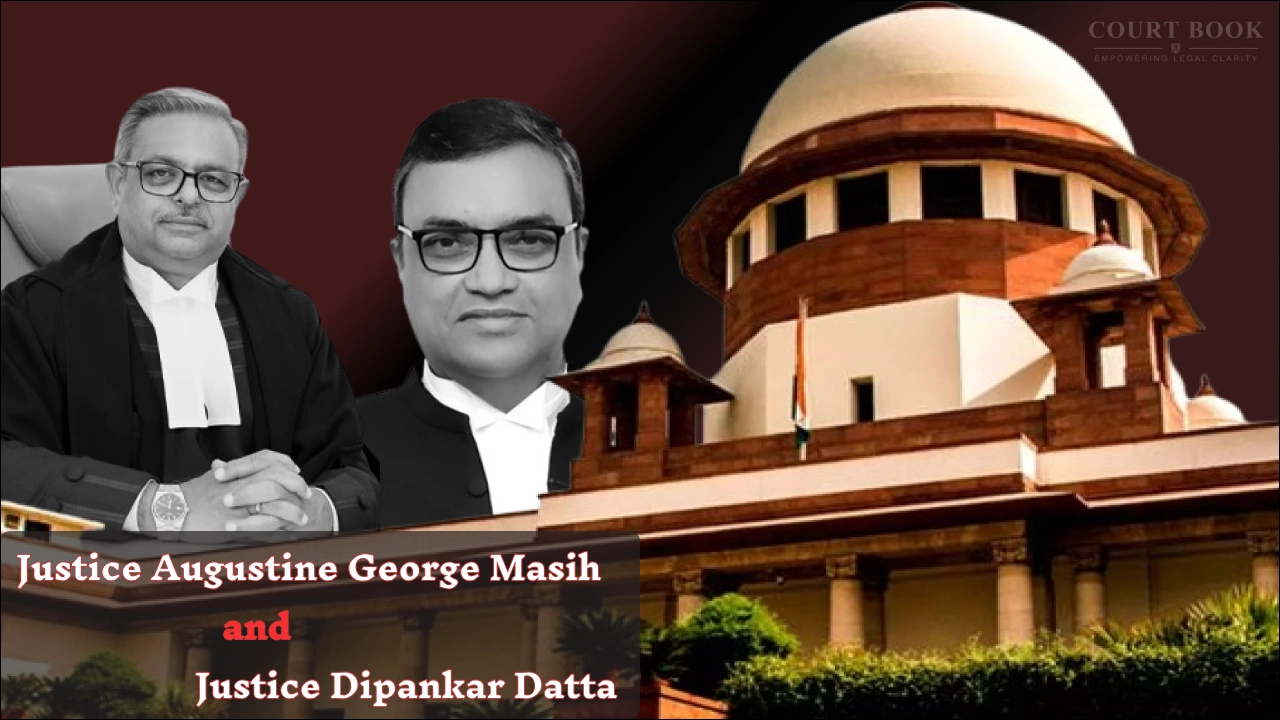
The bench of Justice Dipankar Datta and Justice Augustine George Masih clarified an important legal point.
“The dismissal of a suit for default… cannot ordinarily be regarded as a final adjudication,” the Court observed, rejecting the strict application of res judicata in such cases.
Read also:- Supreme Court Quashes Dowry Cruelty Case Against In-Laws, Flags ‘Vague Allegations’ and 7-Year Delay
However, the Court went beyond this technical issue and closely examined the conduct of the appellants.
It noted that the appellants had full knowledge of the competing claims and had even initiated legal proceedings earlier, but chose not to pursue them. This, the Court said, attracted broader legal principles preventing repeated litigation.
“The process of the court cannot be used to revive what has already been consciously abandoned,” the bench remarked.
The Court emphasized that even if strict res judicata does not apply, parties cannot be allowed to litigate the same issue repeatedly through different proceedings.
It relied on the principle that a litigant who had the opportunity to prove a claim but failed to pursue it cannot later reopen the same issue.
The judges were particularly critical of the appellants’ approach, noting that they allowed crucial suits to lapse and later attempted to secure relief indirectly through execution.
Such conduct, the Court said, amounted to an “abuse of the process of court.”
Upholding the conclusions of the appellate court and the High Court, the Supreme Court dismissed the appeal.
“The appellants stand precluded to reap the benefit of the decree through execution proceedings,” the Court held.
The appeal was dismissed, with parties directed to bear their own costs.
Case Details
Case Title: Sharada Sanghi & Ors. v. Asha Agarwal & Ors.
Case Number: Civil Appeal No. 2609 of 2013
Judges: Justice Dipankar Datta & Justice Augustine George Masih
Decision Date: March 25, 2026
Download Judgment

