

The Supreme Court of India has upheld the acquittal of a man accused of possessing more than 11 kg of charas, ruling that failure to follow mandatory safeguards under the Narcotic Drugs and Psychotropic Substances (NDPS) Act rendered the prosecution case unreliable.
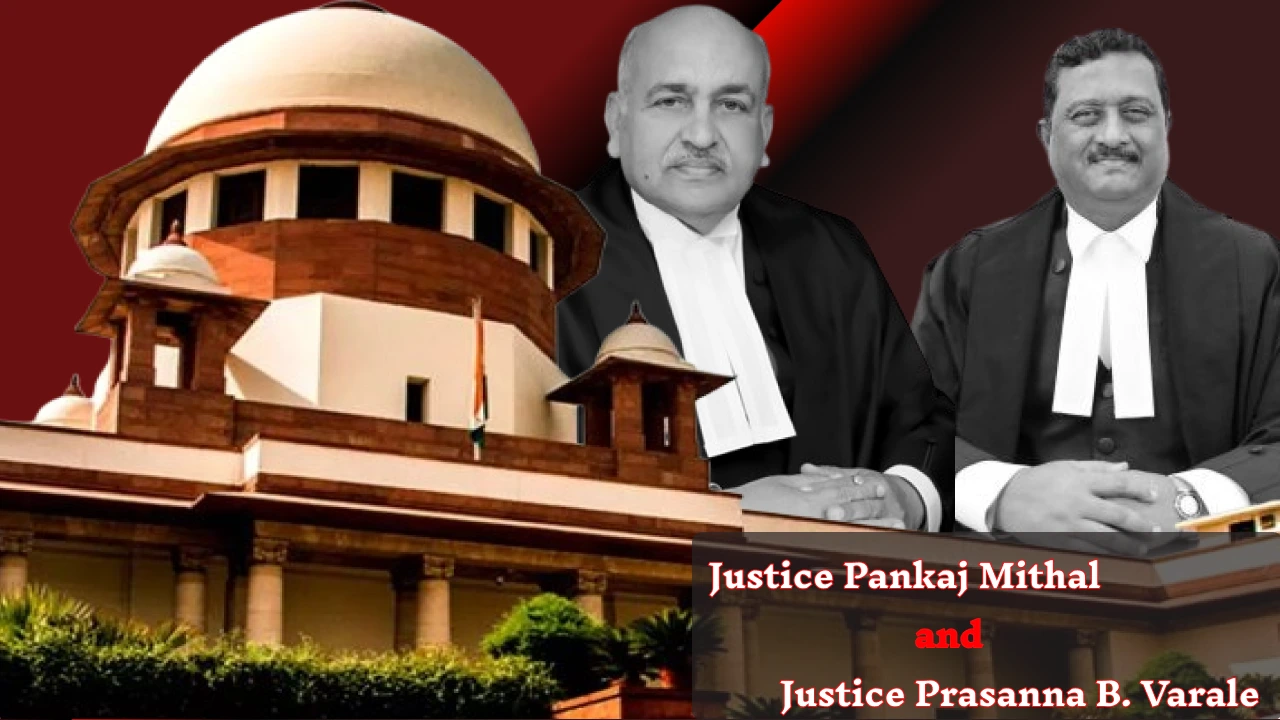
A Bench comprising Justices Pankaj Mithal and Prasanna B. Varale dismissed the appeal filed by the State of Himachal Pradesh against the acquittal of accused Surat Singh, affirming the Himachal Pradesh High Court’s decision.
The Court held that police officers had provided an illegal third option during the search process, which violated Section 50 of the NDPS Act and vitiated the entire trial.
Background of the Case
According to the prosecution, the incident occurred on 13 March 2013 when a police team was conducting routine “nakabandi” in Himachal Pradesh. During the operation, the accused was allegedly spotted carrying a backpack and attempted to flee after noticing the police.
Upon apprehension, police searched the bag and claimed to recover charas weighing 11 kg and 50 grams. The substance was sealed and sent for forensic examination, and a charge sheet was later filed against the accused under Section 20 of the NDPS Act.
A trial court convicted the accused in 2014 and sentenced him to 10 years’ rigorous imprisonment along with a ₹1 lakh fine. However, the Himachal Pradesh High Court later set aside the conviction and acquitted him.
The State subsequently approached the Supreme Court challenging the acquittal.
The State argued that the High Court had wrongly overturned the conviction, asserting that the contraband was recovered from the bag carried by the accused and not from his personal search.
Read also:- Kerala High Court Warns of Attaching State Treasury Over ₹47 Crore Victim Compensation Delay
It further contended that the recovery was a chance recovery during routine police checking and that the testimony of prosecution witnesses corroborated the seizure.
On the other hand, the accused argued that the search procedure violated Section 50 of the NDPS Act, which requires the accused to be informed of the right to be searched before a Magistrate or a Gazetted Officer.
The defence maintained that police had incorrectly offered a third option-being searched by the investigating officer in the presence of witnesses-which is not permitted under the law.
The Supreme Court agreed with the High Court’s reasoning and noted that the procedure followed by the investigating officer was contrary to the statutory requirement.
Quoting the High Court’s findings, the Supreme Court observed:
“According to Section 50 of the NDPS Act, the accused must be apprised of his legal right to be searched either before a Magistrate or a Gazetted Officer. There is no third option to be searched before a police officer.”
The Court further noted that offering such an additional option violates the mandatory safeguards provided under the NDPS Act and renders the search procedure legally defective.
Another factor that weakened the prosecution case was contradictory testimony regarding the weighing of the seized contraband, which cast doubt on the reliability of the investigation.
The Supreme Court concluded that the High Court had correctly assessed the evidence and legal provisions.
It held that there was no reason to interfere with the acquittal, particularly since appellate courts should not overturn acquittals unless the findings are clearly perverse or impossible.
Accordingly, the Court dismissed the appeal filed by the State of Himachal Pradesh.
Case Title: State of Himachal Pradesh vs Surat Singh
Case Number: Criminal Appeal No. 96 of 2018
Download Judgment

